![[DE Copy] COP28_Louisa_1600x900](/sites/default/files/styles/bosch_16d9_medium/public/images/media/2023-12/imago370393607_IMAGO_Xinhua_1600x900.jpg.webp?h=8abcec71&itok=XAMz1FHB)
In the end, the final Declaration fell short of what we wanted to see. In the best case the so-called ‘transition away from’ fossil fuels that the final document mentions might be the beginning of the end of the fossil fuel era. Yet, the fossil-fuel statement remains too vague. There are still billions of dollars handed out in fossil fuel subsidies every year and the agreement lacks hard accountable boundaries for the production of fossil fuels for 2030 and 2050.
Civil society organisations must hold governments to account
As such it is pivotal that civil society organizations worldwide hold their governments and the fossil fuel industry accountable to finally end the production and burning of fossil fuels. Only with a rapid phase out of fossil fuels do we still have a small chance to limit global warming to 1,5 degrees.
This is also a key concern for the global food and agricultural system. An analysis by the Global Alliance for the Future of Food shows that food production, transport, and storage account for at least 15 % of fossil fuels used annually.
![[DE Copy] LouisaPrause](/sites/default/files/styles/bosch_4d3_medium/public/images/media/2023-11/2309_mib_i_prauselouisa.jpg.webp?h=04d92ac6&itok=1pnNt9Lv)
"We will continue to support our partners in the upcoming years to continue the struggle to phase out fossil fuels in the agro-food sector."
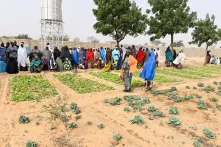
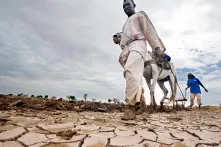
Living in a warming world not only means, we need to massively increase our efforts to mitigate climate change, we also need to adopt to changing climate conditions. This is particularly challenging for those living in poor countries in the global South that are hit the hardest by the negative consequences of climate change and have the least resources to react to these changes. At the same time, these countries contribute the least to climate change. Many of our partners advocated strongly for climate justice around the global goal for adaptation that was another focal point of negotiations in Dubai.
The Fund is designed to support climate-vulnerable developing countries. However, so far countries have pledged only 792 Million Dollars, even though UNEP estimates the annual adaptation needs at USD 160-340 billion by 2030 and USD 315-565 billion by 2050. Financing around the Global Goal on Adaptation more broadly remained too vague in the final document. Much needs to be done if the industrialized countries are to take their global climate responsibility seriously.

![[DE Copy] 800x600 Global Centre for Climate Mobility _ Rising Nations Initiative _ Josh Orter.jpg](/sites/default/files/styles/bosch_3d2_small/public/images/media/2026-02/800x600%20Global%20Centre%20for%20Climate%20Mobility%20_%20Rising%20Nations%20Initiative%20_%20Josh%20Orter_1600x900%20%281%29%20Kopie.jpg.webp?h=8abcec71&itok=nrxKqCcm)