![[DE Copy] FRK_3680_0.jpg](/sites/default/files/styles/bosch_16d9_medium/public/images/media/2023-08/FRK_3680_0.jpg.webp?h=a8abb7ad&itok=opJIypxo)
Experts at the Robert Bosch Center for Tumor Diseases (RBCT) at the Bosch Health Campus in Stuttgart are conducting research on new, innovative cancer therapies. Since the end of 2021, the RBCT also implements a patient advisory board, which gives patients and their families more opportunities to participate in their own treatment. We spoke with Prof. Dr. Hans-Georg Kopp, Clinical Director of the Robert Bosch Center for Tumor Diseases, and Karin Strube, spokeswoman for the Patient Advisory Board, about the participation opportunities for those suffering from various cancers.
Professor Kopp, how did the Patient Advisory Board come about? What was the initial goal?
Kopp: We simply realized how important it is to be closer to the patients’ perspective. We are now following the example of the USA, where patient advocacy has been in place for a long time. It began there in the 1980s, when the pressure to develop drugs against HIV became great. In Europe, people are much slower to realize - especially when trying to generate scientific knowledge and implement innovations more quickly - that it is of great advantage to involve the patients in their own care. After all, the patients are the ones directly affected. If you can't explain the purpose of a research project to them, then you really have to consider whether you need it at all.
![[DE Copy] Patientenbeirat](/sites/default/files/styles/bosch_original_medium/public/images/media/2023-08/patientenbeirat-1.jpg.webp?itok=8IWJDmOj)
![[DE Copy] Patientenbeirat-Katrin-Strube-FRK_3876.jpg](/sites/default/files/styles/bosch_original_medium/public/images/media/2023-08/Patientenbeirat-Katrin-Strube-FRK_3876.jpg.webp?itok=Din3i5Ze)
How exactly does the RBCT's collaboration with the Patient Advisory Board work? Can you give us any specific examples?
Kopp: There are several, diverse examples of cooperation. For example, we work closely together in preparing our Cancer Information Day. This is an annual event for interested parties, relatives, and those affected. Until now, we thought people were more interested in psychosocial issues, for example, how they deal with cancer. But through the Patient Advisory Board, we've learned that people also want to know what's new: what new therapies have been developed and when approval for a drug is coming. This was very helpful for us to learn. We will also be involving the Patient Advisory Board in research topics. We very much hope for the cooperation of the members, because those who are themselves affected they themselves are affected are closer to the source regarding their needs.
Ms. Strube, how many people are currently active on the Patient Advisory Board? In what form and how often are meetings held?
Strube: We currently have seven people on the advisory board - all with different illnesses. I myself am a sarcoma survivor, then we have one person with GIST, which is a malignant tumor of the gastrointestinal tract, also there are two people with leukemia and a relative of a patient with pancreatic cancer, one person with lung cancer, and a breast cancer patient. We have arranged to meet quarterly on a fixed cycle, but we have had miscellaneous out-of-sequence meetings to get to know the different work areas of the RBCT / BHC even better and to be able to acquire even more background knowledge. And of course, as people are in different places, it's good that we can accomplish a lot via video conferencing. In doing so, we determine certain topics or include questions that preoccupy the patients and exchange information with physicians on the topics of new therapies, natural remedies, and medications.
Which topics play a particularly important role in the Patient Advisory Board from the patients' point of view? What are your primary aims?
Strube: In general, I would say that we patients always have a different take on things than the doctors. While doctors primarily look at disease, we patients primarily look at life. We just want to live our lives and do the things we normally do. That's what we want to communicate to physicians. And there are diseases that are widespread, where research has been going on for decades, but has hit a brick wall, for example with Alzheimer's disease. And that's where it's important for patients or family members to speak up and say: Please keep researching anyway, we need this therapy, we need these drugs. Especially for rare diseases, such as sarcoma in my case, the respective therapies are life-saving. However, in the 25 years since I became ill, hardly anything has changed in terms of therapy, because very little research is being done on these rare diseases. That I am still alive today is truly a miracle! On the other hand, a lot of research is being done on more common diseases such as breast, bowel, and prostate cancer, and therefore huge progress is being made in therapy options.
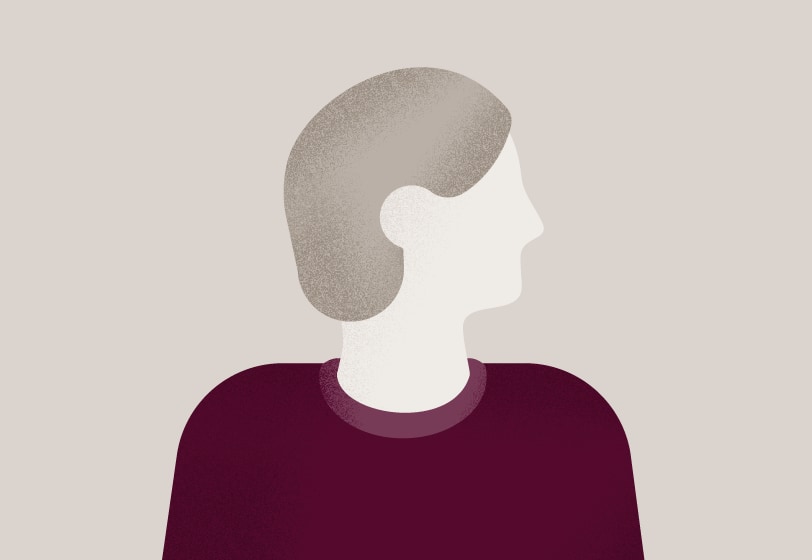
"It's important for patients to speak up and say: Please keep researching anyway, we need this therapy, we need these drugs.“
Professor Kopp, can the Patient Advisory Board make a contribution to improving cancer research and treatments?
Kopp: I think so. Certainly the Patient Advisory Board can speed things up and influence various things. And above all, from my point of view, it can help to focus on the essentials.
Ms. Strube, in addition to chairing the Patient Advisory Board, you are also active on the Patient Research Council of the National Center for Tumor Diseases (NCT) South West, of which the Bosch Health Campus is also a member. To what extent do you have a say as a spokesperson for patients?
Strube: Exactly. With NCT South West, we officially started on June 1st and I don’t know how many applications I’ve signed since then. This is because clinical trials may now no longer be applied for without the signature of a patient research council. This means that patients do have an influence and I get a lot of calls from scientists. And so far, the cooperation has worked very well. I also hope that we can integrate patient participation even better here in Germany, because it is simply important that those affected have a say.
Ms. Strube and Professor Kopp, what would be your advice for other clinics or patients who want to implement a similar concept?
Strube: On the one hand, we deliberately tried to represent as broad a spectrum of diseases as possible and we wanted to have more or less equal gender representation. That has actually worked out quite well. And then, of course, constant communication with doctors is very important.
Kopp: I think the hardest part is first understanding that a Patient Advisory Board makes sense. Because I don't think this insight is widespread. This means that you often have to convince the hospital management first. And I think it's also up to the patients to make their voices heard. Patient feedback is well received by clinics, especially when it is negative. So, I can only recommend that everyone raises their voice and has their say.


![[DE Copy] 800_600_BO_02161-Verbessert-RR(c)Björn_Hänssler Kopie.jpg](/sites/default/files/styles/bosch_3d2_small/public/images/media/2026-02/800_600_BO_02161-Verbessert-RR%28c%29Bj%C3%B6rn_H%C3%A4nssler%20Kopie.jpg.webp?h=7e1a7138&itok=ARW4Zsfb)