Support for the disability movement
![[DE Copy] Disability Justice_Header](/sites/default/files/styles/bosch_4d3_medium/public/images/media/2025-04/477_Ford_GlobalDisabilityConvening2024_jkratochvil_DSC_9442%20Kopie.jpg.webp?h=8b47446b&itok=lyH82UMC)
About the program
The world is facing many serious issues today, like the rise of authoritarian governments, setbacks in human rights, more conflicts and natural disasters, and cuts to funding for civil society work. These problems affect people with disabilities more than others. In a world where ableism is widespread, people with disabilities continue to fight for their rights. To support their efforts for dignity, independence, and self-representation, more resources are needed.
However, the disability justice movement is severely underfunded. The Human Rights Funders Network reports that only four percent of human rights funding goes to people with disabilities, even though one in six persons in the world has a disability. Most of this funding doesn’t directly reach them, as it often gets distributed through several channels/cascades down before it finally reaches those in need. To react to these challenges, the Robert Bosch Foundation has deepened its work on reducing inequalities in the fields of disability rights and disability justice. We seek to support the work of persons with disabilities and to strengthen the global disability movement. We aim to partner with organizations led by persons with disabilities (OPDs) either directly or through intermediaries led by persons with disabilities who engage in participatory grantmaking.
Within this work, we support four organizations: The Disability Rights Advocacy Fund, the Center for Inclusive Policy, ADD International and Interessenvertretung Selbstbestimmt Leben e.V.
Why do we support the global disability movement?
Our strategy centers the knowledge and experience of people who have faced inequality and discrimination. We recognize that people with disabilities are the best ones to bring positive change for their community and the world. Their expertise can help guide decisions and policies by offering valuable insights, as they understand how these decisions impact their communities. Involving them makes discussions and problem-solving more informed, inclusive, and effective.
What is the goal?
We wish to partner with the disability movement community to build capacities and power for the already existing advocacy work of the movement. Through our position, we also aim to strengthen access and representation of persons with disabilities in the global space and where decisions are being taken. Our intersectional approach recognizes the importance of cross-movement work, collaboration and cross-learning for sustainable, systemic change. By this, we mean how different organizations or movements working on different themes and through different means can come together to learn from and with each other. Thus, the foundation also seeks to create spaces for its partners to connect and learn from each other. When needed, we also know how to leave the room as an actor with privilege.
How does it work?
At the moment, as part of our work on disability rights and disability justice, we support four organizations: The Disability Rights Advocacy Fund, the Center for Inclusive Policy, ADD International and Interessenvertretung Selbstbestimmt Leben e.V. We support these organizations in their overall work on strengthening the disability movement. For example, by supporting local movements in the Global South, through political advocacy work in Germany, by participatory re-granting to small organizations or by enabling regional convenings or developing broader strategies.
Our Commitment to Disability Justice
Since early 2023, the Robert Bosch Stiftung has deepened its focus on disability justice. This journey was initiated by insights from the Disability Rights Advocacy Fund and later, by the invaluable contributions of individuals with lived experience who guided us and challenged us on this path. We recognized that true intersectionality demands a cross-sectoral approach to disability while also requiring us to address our own internal structures within the foundation.
In summer 2025, through online sessions with partners and critical friends, we finalized the strategic direction for our €1.1 million commitment for civil society organizations led and made of people with disabilities, made at the Global Disability Summit in April. This commitment represented 25% of our yearly team budget and aimed at addressing the issue of massive underfunding of the disability justice movement. The feedback of these dialogues shaped two core pillars that inform our direction in funding disability justice:
1. Building Core Strength of Disability Justice/Rights Movements: Providing institutional support for narrative development, exchange, capacity building, and leadership within the movement, to help it strategize, reflect and grow.
2. Supporting Intersectional Work and Solidarity: Funding initiatives that foster true inclusivity, broad participation, cross-movement collaboration, and actively challenge ableism as an interconnected system of oppression.
Based on those two pillars and a defined set of criteria, the team inequality selected organizations from a diverse pool, including organizations that directly reached out to us, partner recommendations, and applications from our economic justice call with a disability justice focus. Crucially, our funding directly supports people with disabilities and their organizations. This is particularly important because, according to the Human Rights Funders Network, currently only 4% of all human rights funding actually reaches organizations of people with disabilities. Still, the movement needs more funders dedicated to Disability Justice.
You can find more information on our new grantee partners under the sub-page “partners” on the right of this page (more to follow). Please note that we are currently not in a position to fund new partners.
News from the project
![[DE Copy] DRF_Malawi_Teaser](/sites/default/files/styles/bosch_4d3_medium/public/images/media/2025-04/800_600_Malawi%20GC%20unity%20Kopie.jpg.webp?h=79422251&itok=qJrIP6KG)
![[DE Copy] Intersectional_Principles_Teaser](/sites/default/files/styles/bosch_4d3_medium/public/images/media/2023-02/Intersectionality%20Principles_Webmagazin-Zuschnitt_800x600px-Kruthika_NS.jpg.webp?h=d29a8858&itok=ryKYFgXv)
Your contacts
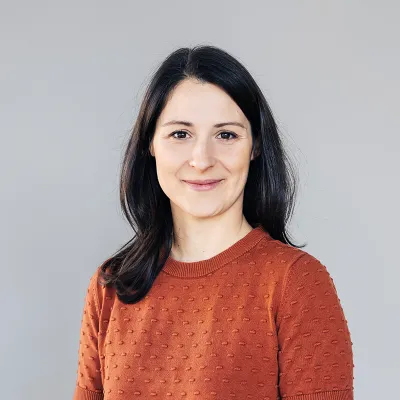
Maja Augustinović
Senior Project Manager

![[DE Copy] 099_Projektteaser_saarbrücken_manuel-frauendorf-fotografie_IMG_7053.png](/sites/default/files/styles/bosch_4d3_medium/public/images/media/2025-08/099_Projektteaser_saarbr%C3%BCcken_manuel-frauendorf-fotografie_IMG_7053.png.webp?h=827069f2&itok=3UGQSNeO)
![[DE Copy] 063_projektteaser_frankfurt_manuel-frauendorf-fotografie_IMG_4965.png](/sites/default/files/styles/bosch_4d3_medium/public/images/media/2025-08/063_projektteaser_frankfurt_manuel-frauendorf-fotografie_IMG_4965.png.webp?h=827069f2&itok=FdkpyObK)
![[DE Copy] 007_Projektteaser_zittau_dreiländereck_manuel-frauendorf-fotografie_IMG_7235.png](/sites/default/files/styles/bosch_4d3_medium/public/images/media/2025-08/007_Projektteaser_zittau_dreil%C3%A4ndereck_manuel-frauendorf-fotografie_IMG_7235.png.webp?h=827069f2&itok=ZPq9soMl)
![[DE Copy] PRIO_026_Projektteaser_emmendingen_manuel-frauendorf-fotografie.png](/sites/default/files/styles/bosch_4d3_medium/public/images/media/2025-08/PRIO_026_Projektteaser_emmendingen_manuel-frauendorf-fotografie.png.webp?h=827069f2&itok=fZ8IOXS1)
![[DE Copy] PRIO_008_Projektteaser_guben_manuel-frauendorf-fotografie_HYPERLAPSE_0300-2 (1).png](/sites/default/files/styles/bosch_4d3_medium/public/images/media/2025-08/PRIO_008_Projektteaser_guben_manuel-frauendorf-fotografie_HYPERLAPSE_0300-2%20%281%29.png.webp?h=827069f2&itok=x-wFzoh6)
![[DE Copy] PRIO_093_projekt teaser_eupen_manuel-frauendorf-fotografie_IMG_2869.png](/sites/default/files/styles/bosch_4d3_medium/public/images/media/2025-08/PRIO_093_projekt%20teaser_eupen_manuel-frauendorf-fotografie_IMG_2869.png.webp?h=827069f2&itok=SJIQdZeM)
![[DE Copy] PRIO_070_Projektteaser_agglobasel_manuel-frauendorf-fotografie_IMG_0831.png](/sites/default/files/styles/bosch_4d3_medium/public/images/media/2025-08/PRIO_070_Projektteaser_agglobasel_manuel-frauendorf-fotografie_IMG_0831.png.webp?h=827069f2&itok=CZ1HdHTU)
![[DE Copy] Projektteaser_rbs_cgr_ralingen_manuel-frauendorf-fotografie_IMG_0165.png](/sites/default/files/styles/bosch_4d3_medium/public/images/media/2025-08/Projektteaser_rbs_cgr_ralingen_manuel-frauendorf-fotografie_IMG_0165.png.webp?h=827069f2&itok=YTnG-Aqs)