![[DE Copy] Intersectional_Principles_Header](/sites/default/files/styles/bosch_16d9_medium/public/images/media/2023-02/Intersectionality%20Principles_Webmagazin-Zuschnitt_1200x900px_Kruthika_NS.jpg.webp?h=c282529e&itok=ssHp2vki)
Together with the Robert Bosch Stiftung, you developed and coordinated the program “Reducing Inequalities through Intersectional Practice”. Nine principles have now emerged from this. What are they and how were they developed?
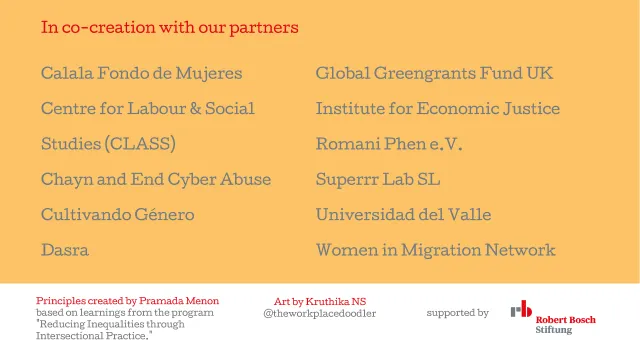
Through the Support Program, eleven partners from around the world, working on different aspects of inequality through a range of strategies, were provided with Robert Bosch Stiftung funding to deepen their intersectional practice. Partners were also supported through a one-year facilitated learning journey, through which they collectively examined common questions and challenges encountered when working with an intersectional approach.
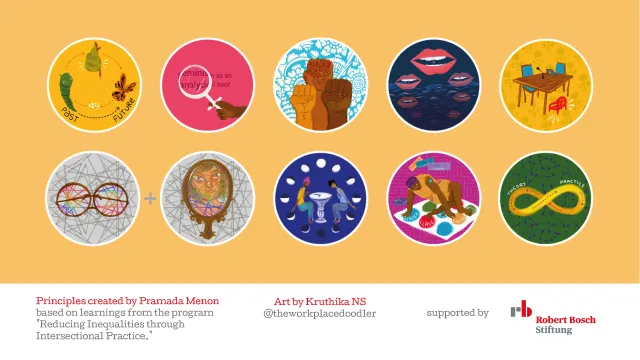
As the Program came to a close, partners had developed numerous resources within their own projects. In addition, they discussed the most important non-negotiables that are critical for their work on intersectional practices. These collective contributions were then distilled and developed into Principles by Pramada Menon, an intersectional feminist activist and Kruthika N.S., better known as @TheWorkplaceDoodler, a social justice illustrator and artist.
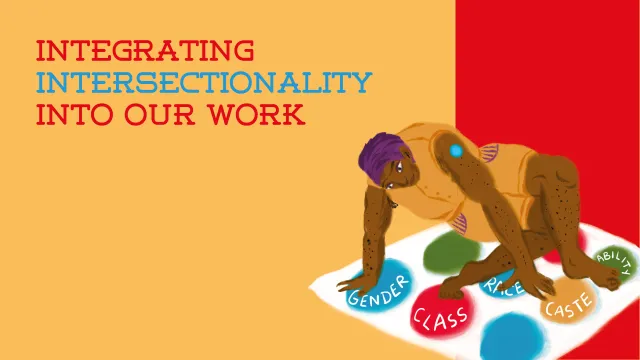
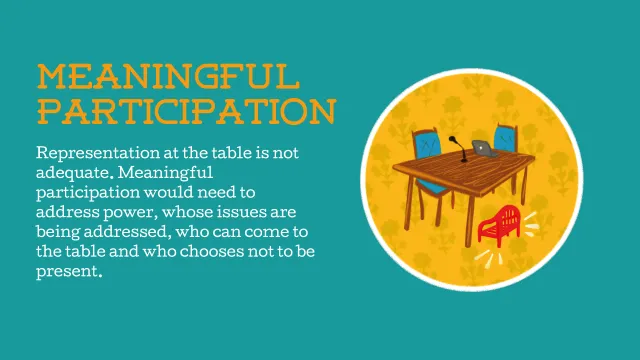
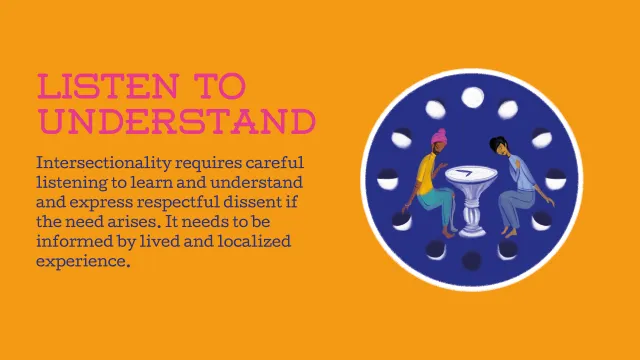
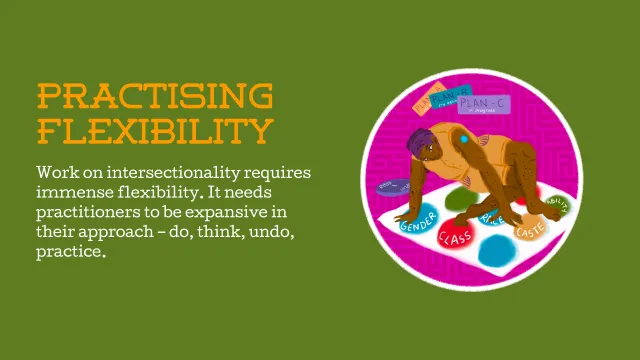
These nine principles offer a better understanding of what intersectionality is, why we need to work intersectionally and how intersectional practice can look like. These principles aim to contribute to a pathway of integrating intersectionality into our work.
What do you mean by intersectionality?
The term "intersectionality" was coined by scholar Kimberlé Crenshaw to describe the particular experiences of discrimination faced by African American women who are marginalized because of both their race and their gender. The term emphasizes the interplay of different social identities which produces distinct experiences of inequality. Other relevant characteristics besides gender and race include class, ability, religion, sexual orientation, age and citizenship.
The concept of intersectionality recognizes the multidimensionality of inequality and the interconnection of different forms of discrimination. It analyzes the role, function and impact of power structures on discrimination and privilege. An intersectional perspective can be used to draw attention to existing systems of oppression in society and to challenge, break through and change them. Intersectionality thus holds the potential for promoting social justice, solidarity and fairness.

“The principles are meant to inspire, catalyze, encourage, and act as a reminder that there are multiple, practical ways to meaningfully and intentionally adopt an intersectional approach.”
Who are these principles for? How can they be used in practice?
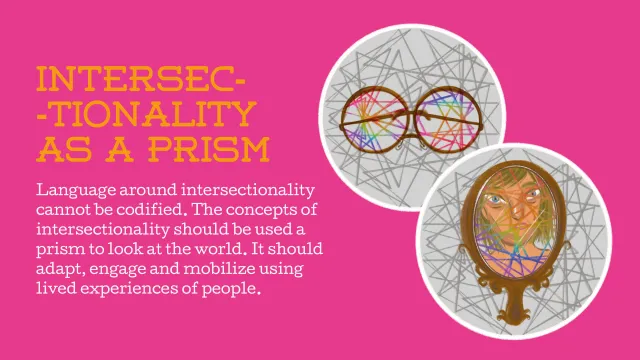
Because intersectionality is a prism through which to look at the world, the principles are relevant to a wide range of contexts, issue areas and approaches. It is particularly important to integrate an intersectional perspective in any work that involves social change, and especially when addressing inequalities. This means that these principles can be used by non-governmental organizations, public sector bodies, social movement actors, activists and funders. Private sector bodies and academic institutions will also find that they can be applied in those contexts as well. They are a guide setting out some of the most important aspects of intersectional practice. They can be used to support your own process of self-reflection, helping you to chart out pathways for further development. It is only in this way that inequalities and the power imbalances resulting from them are dismantled in concrete and sustained ways.
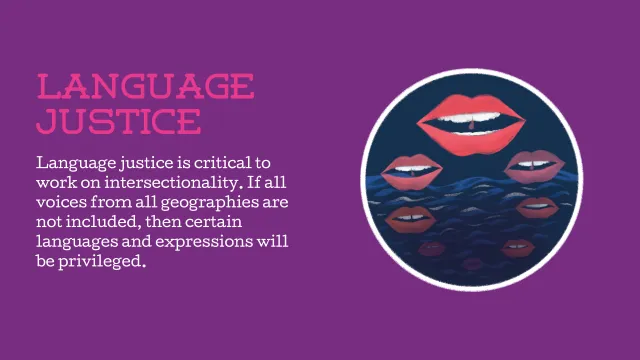
We see these principles as a gateway to going even further. All of the Support Program partners have developed useful tools and resources that offer practical ways to thoughtfully integrate an intersectional approach – within social movement spaces, within the digital sphere, within philanthropy, within urban communities along with many other areas. We encourage you to use these principles as a stepping stone to explore, to learn and to expand your understanding and engagement with intersectional practice.

Where can I get more information and how can organizations receive support to embed intersectionality into their own work?
There are many routes to learn more about intersectional practice; your intention is a key starting point. Whoever feels inspired by the work of the partner organizations and would like more information, can contact them directly or contact the Robert Bosch Stiftung.
The Support Program will continue to share its insights with the wider community in the coming year.