![[DE Copy] Musikprojekt der Jugendarbeit von Silbersack Hood e.V.](/sites/default/files/styles/bosch_16d9_medium/public/images/media/2023-12/Kinderauftritt%20von%20Musikprojekt%20%40Nico%20Vogelsaenger_1600x900.jpg.webp?h=2e111cc1&itok=cZks8otL)
For almost two years, our LEVEL up! funding program has supported 10 migrant organizations across Germany. The aim is to support migrant and post-migrant organizations in key stages of development, as they "level up." The projects are active in a wide variety of social areas. Three project managers speak about their work.
Broadening safe spaces for Roma and Sinti in Saxony
In her work at Romano Sumnal e.V., the Association of Roma and Sinti in Saxony, Timea Capusneanu experiences the positive impact that engagement on a personal level can have on people’s everyday lives. The LEVEL up! grant has supported her work with children and young people in Torgau Nordwest, a neighborhood of housing blocks where many immigrants, including Roma from southern European countries of the EU, live in precarious conditions.
"There's simply nothing in the neighborhood – it's hard to imagine."
"There's simply nothing in the neighborhood – it's hard to imagine. Just a supermarket, a bakery that's open for three hours and a pub," the reserved woman says intently. The children are stigmatized, and discrimination and racism are part of everyday life. "They constantly hear humiliating statements from classmates, but also from teachers. They deal with verbal assaults on a daily basis. If they react physically, of course there's trouble." There are also many drug problems. "Many are very ambitious and understand their situation – they are very aware of the whole social thing and would do anything to get out of it. But will they make it?"
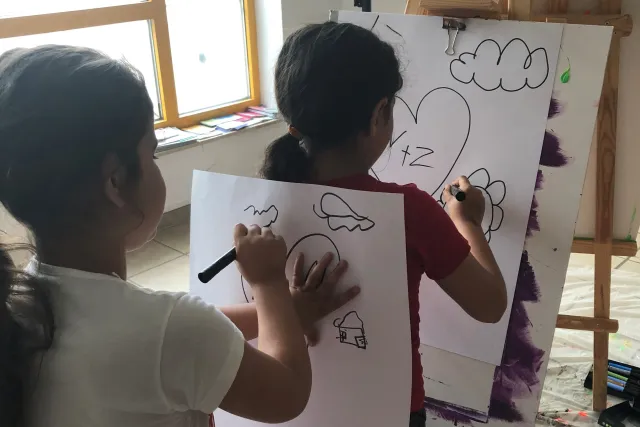
Timea Capusneanu and her team have been offering socio-cultural activities since 2022. They want to support the children and show them alternatives to violence. They organize excursions and vacation projects, have founded a group for girls and networked them with other young people from the area. It is especially important to build up a relationship based on trust, says Timea Capusneanu. "I can see the young people have been opening up more and more over the years, that it means a lot to them that they can come into our space and feel safe."
Her work often feels like a drop in the ocean, she says: "When I have to deal with the bureaucracy, it crushes my motivation. But working with the children and young people gives me the incentive to keep going."
First an open sports club, now a recognized youth welfare organization in Hamburg
Nassy Ahmed-Buscher deals every day with children and young people who are often labeled as "problematic" by schools or authorities. Together with her brother Kareem, she founded Silbersack Hood Talent Promotion in Hamburg St. Pauli in 2021, a non-profit organization with a wide range of sports, cultural and educational activities for children, young people and adults. It embraces the motto that diversity is an opportunity and a resource.
The project quickly became a success story. During the pandemic, Nassy Ahmed-Buscher’s brothers trained daily at Hamburg’s Silbersack sports field. Soon more and more children joined them, wanting to watch and take part. It didn't take long before the first donations came in. Today, the talent promotion program offers sports, music, art and education as well as, most recently, a comprehensive program during the school holidays. A team of 60 people, including teachers, trainers, artists and musicians, are involved here, 55 as volunteers. Funding from the LEVEL up! program financed the management office.
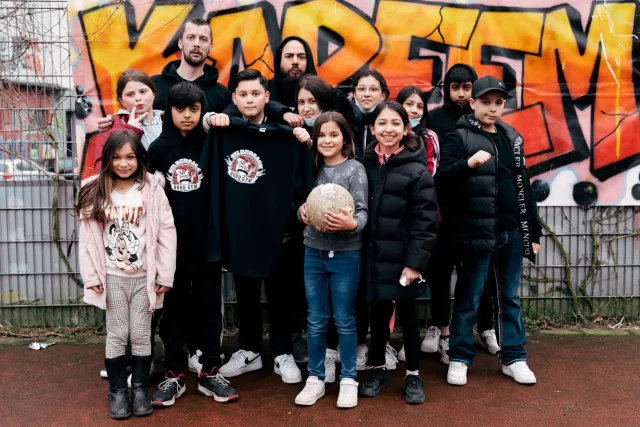
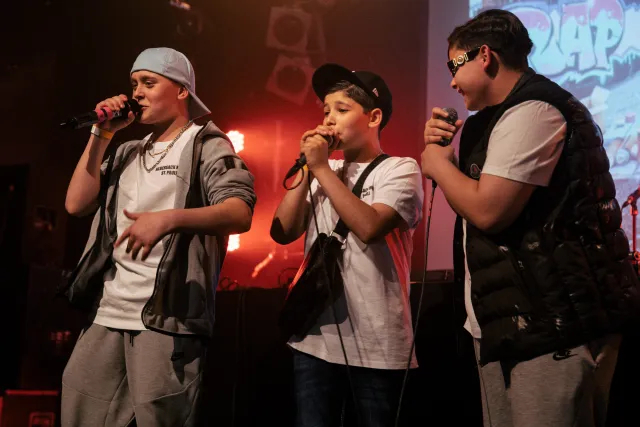
"90 percent of people who live here have a migration background. Many families live in poverty and are uneducated," says Nassy Ahmed-Buscher. "Prostitution, weapons, drugs – the children here are confronted with all of this every day. But also the adults. That's why we also offer people who have already given up a place in our team, for example as trainers – people who would otherwise be marginalized, so that they can pass on their expertise and their view of life," she says.
The Silbersack Hood, closely networked with schools and authorities, is now a recognized provider of independent youth welfare services. A milestone. Because now it can also become involved at other levels, for example in local youth welfare committees. "We are much more than just an aid project," says Nassy Ahmed-Buscher. "We are one big colorful family and we get an incredible amount back." The next step is adult education. And her big dream for the project: its own gym.
Empowerment for Tamil women in North Rhine-Westphalia
Nithy Shabesan is a woman with a warm smile. Her women's café at the Verein für tamilische Künstler e.V. (Tamil artists association) is located in Dortmund's Unionsviertel district. The association, which she runs on a voluntary basis together with her husband, is an important point of contact for the 2,000 or so Tamils living in Dortmund and the surrounding area. It is committed to preserving Tamil culture and literature, passing it on to future generations and making it better known in Germany.
The women's café and the work with women, says Nithy Shabesan, is particularly close to her heart. "At our meetings, the women get the opportunity to do something different, something for themselves. They are often under pressure at home, there's housework and they often have no chance to relax. In our café, we chat a lot, laugh, do handicrafts, dance together and do sports," she explains.
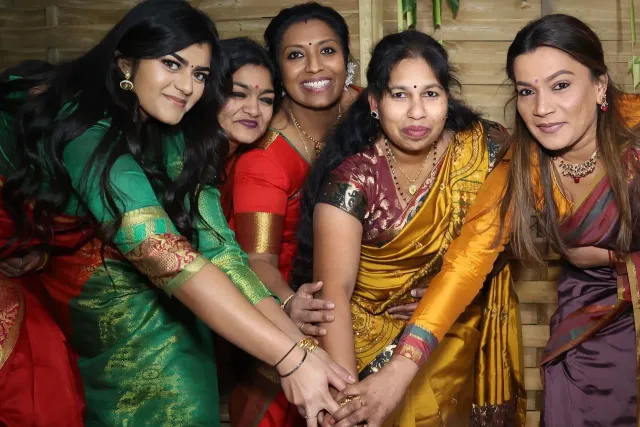
Most of the women come from Sri Lanka and many have been living in Germany for over 20 years. Women with a migration background often have a particularly difficult time in society, says Nithy Shabesan. "The language barrier often prevents women from doing things themselves. That's why we offer German language courses. But technical training for women is particularly important to me – so they can write their own emails or send a fax, make their own phone calls, fill out forms from public offices or go to the doctor on their own," says the trained computer scientist. "If a woman can go to the doctor on her own and no longer needs me, that's a success for me."
With the project money from LEVEL up!, Nithy Shabesan has financed an additional women's counseling service as well as an employee for office work and project applications. Today, the Tamil women's community has become one big family, she says. In the future, she would like to enable the women to do even more, to open them up to the world and the country where they live, for example, through excursions.
![[DE Copy] gedreht_imago0102094628h_(c)IMAGO_Panthermedia 800x600.jpg](/sites/default/files/styles/bosch_3d2_small/public/images/media/2023-07/gedreht_imago0102094628h_%28c%29IMAGO_Panthermedia%20800x600.jpg.webp?h=827069f2&itok=yHnkIq2R)
![[DE Copy] Geflüchtete Mütter_Reportage_800x600](/sites/default/files/styles/bosch_3d2_small/public/images/media/2023-07/Gefluechtete-Muetter_003_VerenaM%C3%BCller_800x600.jpg.webp?h=827069f2&itok=Eat1dY4q)