UN Special Rapporteur on extreme poverty and human rights
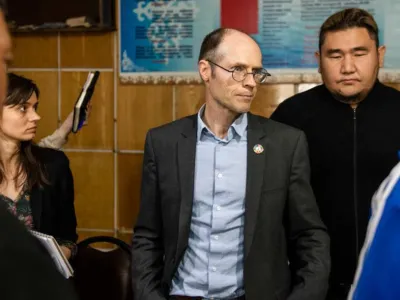
About the project
Special Rapporteurs are part of the Special Procedures, the UN Human Rights Council's independent fact-finding and monitoring mechanisms that address either specific country situations or thematic issues in all parts of the world. Special Procedures experts work on a voluntary basis; they are not UN staff and do not receive a salary for their work. They are independent from any government or organisation and serve in their individual capacity.
Since taking up his role on 1 May 2020, the current UN Special Rapporteur on extreme poverty and human rights, Olivier de Schutter, has sparked global conversations and effected policy change in areas that lie at the core of poverty and inequality.
Robert Bosch Stiftung is supporting the Special Rapporteur on three initiatives over the remaining two years of his mandate: Firstly, his advocacy for social protection for all through a ‘Global Fund for Social Protection'. Secondly, his work to advance a new approach to global poverty that goes beyond the dangerous fixation with economic growth at all costs. And thirdly, the increased participation of people in poverty in economic decision-making.
Why do we support the project?
Extreme poverty is a multidimensional phenomenon. It is not just a lack of sufficient income. For people living in extreme poverty, many human rights are inaccessible. They often have no access to education, health services, clean drinking water and basic sanitation. In addition, they are often excluded from meaningful participation in the political process and are prevented from seeking justice for human rights violations. The Mandate of the Special Rapporteur was created to raise awareness of the plight of those living in extreme poverty, to draw attention to the human rights consequences of the systematic neglect for millions living in extreme poverty and to intervene in debates that seek to end poverty and ensure human rights. According to United Nations forecasts, 575 million people are still expected to be living in extreme poverty in 2030. Conventional approaches to poverty reduction, which are the base of those estimates, will – in other words – not be able to end poverty.
What is the goal?
The overarching goal of this project is to influence the post-2030 agenda in such a way as to transition to a development path that prioritises the realization of human rights, rather than an increase in GDP. This will be essential to end poverty and reduce inequalities. Changing attitudes to economic growth and its ability to eradicate poverty is an ambitious goal, yet, the experience of Olivier de Schutter, who was previously Special Rapporteur on the Right to Food (2008-2014), shows that shifting dominant narratives is possible. The same challenge is true of the goal of increasing the participation of people in poverty in policymaking. The international organizations and member states that design international and national policies are often removed from the reality of the lives of people living affected by poverty, but their voices are crucial to bringing about lasting change.
How does the project work?
Work on all three main initiatives supported by the Robert Bosch Stiftung – the Global Fund for Social Protection, ending poverty without growth, and increasing the participation of people in poverty in decision-making has already begun. The work of the Special Rapporteur will continue to include consultations with people in poverty, academics, civil society, anti-poverty groups and international organizations, through events at the United Nations and through his wider advocacy work. He continues to act as a link between the UN, international and national organizations. The key to the transition to a post-growth development model is the greater participation of people living in poverty in economic decision-making. To this end the Special Rapporteur and his partners will continue to work on furthering the Instrument for the Deliberative Elaboration and Evaluation of Policies (IDEEP), a tool that guides decision-makers towards ensuring strong participation in the design, implementation and assessment of projects or policies that have impacts on people in poverty.
Who is the target group?
The target groups are international organizations and the Member States that draft international and national policies, which are often removed from the reality of the lives of people living in poverty. Particular attention will be paid to those negotiating the next generation of global development goals so that post-growth is explicitly mentioned.
Learn more
For more information on the Special Rapporteur on extreme poverty and human rights, please visit the website of the UN Human Rights Council.
Your contacts
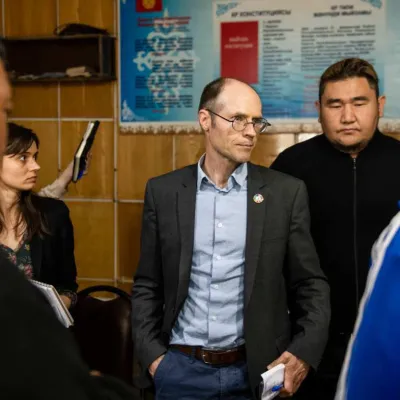
UN Special Rapporteur on extreme poverty and human rights

![[DE Copy] 099_Projektteaser_saarbrücken_manuel-frauendorf-fotografie_IMG_7053.png](/sites/default/files/styles/bosch_4d3_medium/public/images/media/2025-08/099_Projektteaser_saarbr%C3%BCcken_manuel-frauendorf-fotografie_IMG_7053.png.webp?h=827069f2&itok=3UGQSNeO)
![[DE Copy] 063_projektteaser_frankfurt_manuel-frauendorf-fotografie_IMG_4965.png](/sites/default/files/styles/bosch_4d3_medium/public/images/media/2025-08/063_projektteaser_frankfurt_manuel-frauendorf-fotografie_IMG_4965.png.webp?h=827069f2&itok=FdkpyObK)
![[DE Copy] 007_Projektteaser_zittau_dreiländereck_manuel-frauendorf-fotografie_IMG_7235.png](/sites/default/files/styles/bosch_4d3_medium/public/images/media/2025-08/007_Projektteaser_zittau_dreil%C3%A4ndereck_manuel-frauendorf-fotografie_IMG_7235.png.webp?h=827069f2&itok=ZPq9soMl)
![[DE Copy] PRIO_026_Projektteaser_emmendingen_manuel-frauendorf-fotografie.png](/sites/default/files/styles/bosch_4d3_medium/public/images/media/2025-08/PRIO_026_Projektteaser_emmendingen_manuel-frauendorf-fotografie.png.webp?h=827069f2&itok=fZ8IOXS1)
![[DE Copy] PRIO_008_Projektteaser_guben_manuel-frauendorf-fotografie_HYPERLAPSE_0300-2 (1).png](/sites/default/files/styles/bosch_4d3_medium/public/images/media/2025-08/PRIO_008_Projektteaser_guben_manuel-frauendorf-fotografie_HYPERLAPSE_0300-2%20%281%29.png.webp?h=827069f2&itok=x-wFzoh6)
![[DE Copy] PRIO_093_projekt teaser_eupen_manuel-frauendorf-fotografie_IMG_2869.png](/sites/default/files/styles/bosch_4d3_medium/public/images/media/2025-08/PRIO_093_projekt%20teaser_eupen_manuel-frauendorf-fotografie_IMG_2869.png.webp?h=827069f2&itok=SJIQdZeM)
![[DE Copy] PRIO_070_Projektteaser_agglobasel_manuel-frauendorf-fotografie_IMG_0831.png](/sites/default/files/styles/bosch_4d3_medium/public/images/media/2025-08/PRIO_070_Projektteaser_agglobasel_manuel-frauendorf-fotografie_IMG_0831.png.webp?h=827069f2&itok=CZ1HdHTU)
![[DE Copy] Projektteaser_rbs_cgr_ralingen_manuel-frauendorf-fotografie_IMG_0165.png](/sites/default/files/styles/bosch_4d3_medium/public/images/media/2025-08/Projektteaser_rbs_cgr_ralingen_manuel-frauendorf-fotografie_IMG_0165.png.webp?h=827069f2&itok=YTnG-Aqs)