Image
6:00 a.m.: The alarm goes off. I turn on the radio. Make myself a cup of black tea, like I do every morning. I listen to the news, enjoy my tea, slowly wake up. My five-year-old son is long since up and wants to play a game. We can’t, unfortunately. We have a strict schedule to keep. We have to get dressed, have breakfast, and so on. I call my daughter, eight years old, asking, “Are you up yet?” No, she is not.
7:00 a.m.: Things drag on until 7:00 before my daughter finally gets up, gets dressed, and we hurry off at 7:15 – as is the case nearly every morning. We usually ride our bikes – that’ll wake you up. But today I pile the kids into the car, as we’re all feeling a little under the weather. First we swing by the preschool to drop off my son. Then it’s off to the Martinschule for my daughter and me. I walk her to her classroom – she’s in a different building than I am – say goodbye, and go to my office. Colleagues and students greet me along the way.
The school day begins with circle time
7:40 a.m.: In the secretary’s office, my first glance falls on the list of absent students. “Are there any new doctor’s notes?” I ask. The list is currently growing by the day. Two integration aides are absent, but I think the team can handle it. One 6th grade teacher is missing.
I head to the school administration office, which I share with Wolfram Otto (a coordinator for grades 5 to 8, like me), Johanna Hertzsch (head of grades 9 to 12), and Benjamin Skladny (principal of the Martinschule). I turn on my computer and cast a quick glance over the roughly 20 emails that show up every day. Another person has called in sick. Brief consultation with my colleague on how best to deal with it. Who’s taking over their lessons? We never cancel them. Teamwork is very important to us; everyone helps where they can.
I head to the school administration office, which I share with Wolfram Otto (a coordinator for grades 5 to 8, like me), Johanna Hertzsch (head of grades 9 to 12), and Benjamin Skladny (principal of the Martinschule). I turn on my computer and cast a quick glance over the roughly 20 emails that show up every day. Another person has called in sick. Brief consultation with my colleague on how best to deal with it. Who’s taking over their lessons? We never cancel them. Teamwork is very important to us; everyone helps where they can.
Image
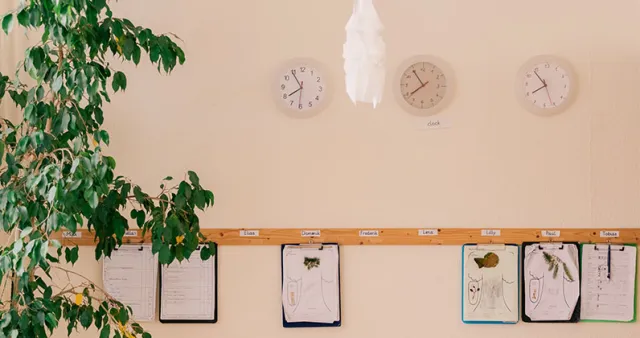
7:45 a.m.: I go to the grade teams and ask about any help they may need. Do they need to bring in outside substitute teachers, or can the absences be dealt with within the team? “We can handle it within the team today.” Well, that’s settled for now.
8:00 a.m.: The school day begins with circle time. The students plan and discuss their daily goals together with their core group leaders. On the way to the office, a coworker approaches me: “Christine, do you have a minute?” They may even specifically ask, “I need some more help with the educational plans. Can you help me with them?” We agree on a time to meet. Another few steps. “Hi Christine ... I’m worried about a student’s behavior...” I listen. Take mental notes. I’ll come and see you as soon as I can.

Who’s taking over the sick coworkers’ lessons? We never cancel them. Teamwork is very important to us.
8:15 a.m.: I make some tea and sit down at my computer. Answer some emails, including sick notices, substitute plans, etc. Then I take care of scheduling for the speech and hearing specialist, who comes by for individual student appointments. When does she have time? When does it work best for the teachers and students?
8:20 a.m.: A consultation appointment is coming up soon. It’s about a student with behavioral problems whom I’ve been monitoring for some time. We want to confer among the grade team involved on the best way to handle the student in future – all on the basis of positive behavioral support methods. Which means finding out the background behind his behavior and how we can best support him to learn and grow. I read over my thoughts, which I already wrote down beforehand, and add some more notes.
8:30–9:45 a.m.: I then confer with my fellow school administrators Wolfram Otto and Johanna Hertzsch. We need to clarify several general matters, like requests for teachers and teaching supplies or questions about further school and staff development. We take some time to go over them.
Students who are proud of achievements in math – these kinds of moments matter
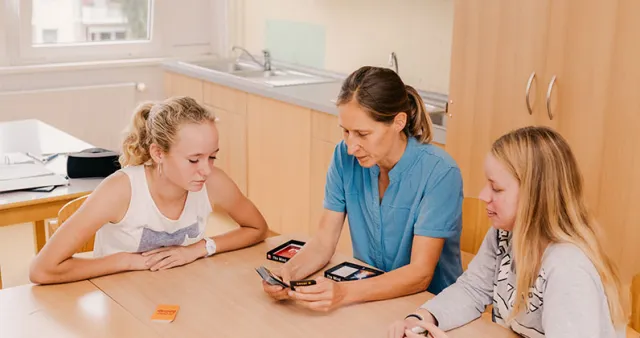
9:55–10:55 a.m.: Maths tutoring with a group of six 6th grade students: the students decide which focus areas they want to work on. I give suggestions and actively direct the conversation, asking, “How did you calculate that?” I encourage them. A boy gets stuck: “I don’t get it.” I can see tears coming to his eyes. I give a gentle push, ask questions, and he finds the solution on his own. And he’s proud of himself: “I can do it!” I get excited with him.
Image

10:55–11:55 a.m.: No break. Maths tutoring for the 5th grade is about to start. Or rather, one-on-one tutoring with one boy. We haven’t met before. Right now it’s about establishing a relationship with each another, about encouragement, getting an idea of his interests. We carefully feel our way through it. Successfully so: full of pride and with sparkling eyes, he later reports to classmates and learning guides, “I worked with big numbers!” These kinds of moments are what matter.
12:00–12:30 p.m.: Lunch break. But I’m constantly checking in with coworkers: “What’s next? How are things going?” Problems and requests for help are voiced. It’s often about difficulties with children who behave differently than expected. I listen, ask questions, make appointments to talk.
A student acting out: Is his behavior a cry for help?
12:30 p.m.: During recess, I sit down with the student with behavioral issues and monitor how he interacts with classmates. Does he try to spend time with them? Why does he react aggressively, and when? That’s also important to know so we can help him. Then a conversation with the current integration aide. The sun is shining, and we decide together to have our talk outdoors. The fresh air does us good and helps with analyzing the situation. What behavior is taking place? In which situations? What happened immediately before? This is because we start from the premise that every behavior serves a personal purpose. On that assumption, what meaning could the behavior have for the boy? What behavior does he need to learn next? But also: What does he do well? What are his interests? How can we resume contact? Establish a good relationship? We use a functional assessment to analyze the function of his behavior – could it be a cry for help, or is he aggressive for other reasons? – in order to create an action plan for the support team together.
2:30 p.m.: No time to catch my breath. Now it’s off to the team meeting for the 5th grade. It’s about the teams finding their own rhythm, getting a sense of the mood. And constantly posing questions: Are arrangements in the team working? Are there any conflicts? Are there areas that could use some support? In the end, we find that the team is on the right track. My colleague leads the rest of the meeting, while I set off to the 7th grade.
3:00–4:00 p.m.: Discussion in the 7th grade team. Once again, it’s about getting a feel for the mood among the team, answering questions, and offering help if needed. Then comes the case review. Thoughts are exchanged, refined, and compiled into an action plan.
Image
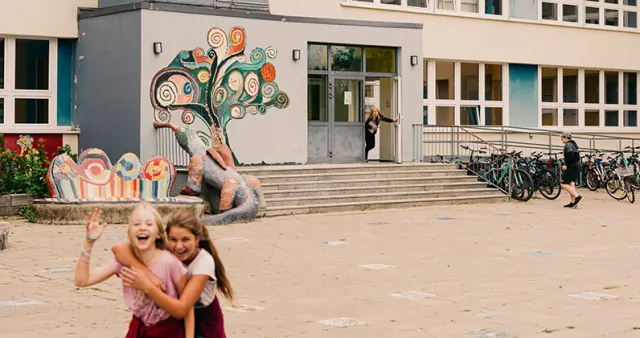
4:00 p.m.: Time to head home? Almost. My husband has already picked up my son on his bicycle and brought him to soccer practice. I collect my daughter from the Martinschule’s after school center, and together we drive home.
Time to head home – but still no switching off
4:30 p.m.: Arrive at home. Relax for a bit. Catch my breath. Take a look in the fridge. What do we need for dinner? A few things. So we go shopping at a food co-op just around the corner. We purchase organic, primarily locally-sourced products. After that, cooking with my daughter: mashed potatoes with sausages. My daughter prepares a salad. All on her own – and she is incredibly proud.
6:00 p.m.: The “boys” come back from soccer. They need a little time to come down from their adventures first. Then supper together.
7:00 p.m.: One more bedtime story, and the children go to sleep.
8:00 p.m.: The tension of the day subsides for me, but only very briefly. Then my thoughts return to the day I’ve just had. I reflect: How did maths tutoring go? Where were there sticking points? I still can’t switch off, so I write down a few notes and thoughts about the student with the problematic behavior. I just can’t let it go. What better ways are there to support him? Then I plan lessons for the next day. I’m thinking about what the students have achieved individually today, and where and how they need more help. It is important that we offer them different tasks to choose from. Completely tailored to their needs. And then, finally: time to relax.
9:00 p.m.: I switch off again, this time properly. I think about other things that are not job-related and then continue with my good book before going to bed At last, sleep.



![[DE Copy] Teaserbild_Schulbarometer 25-26_4.jpg](/sites/default/files/styles/bosch_3d2_small/public/images/media/2026-03/Header_Schulbarometer%2025-26_4.jpg.webp?h=827069f2&itok=pVomuLo7)
![[DE Copy] DSP25_neu_teaser.jpg](/sites/default/files/styles/bosch_3d2_small/public/images/media/2025-09/DSP25_neu_teaser.jpg.webp?h=827069f2&itok=p9uFKzqk)