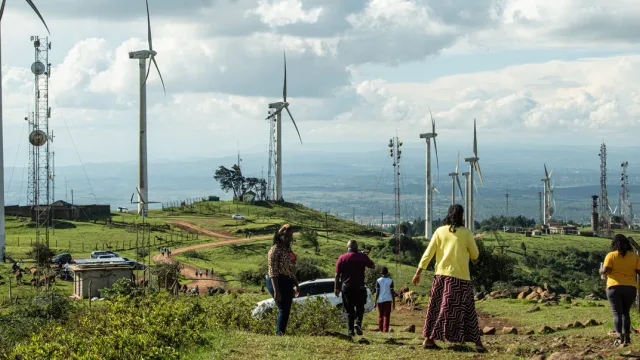
Global temperatures are rising, and millions of people are already feeling the effects of climate change. The African continent in particular is expected to see average temperatures rise faster than the global average over the course of the 21st century. The looming climate crisis not only threatens sustainable development, but will also have far-reaching consequences for humanity, including more frequent and intense extreme weather events, water scarcity, declining crop yields, rising sea levels, and growing health and sanitation risks. Climate change is also increasingly becoming a major driver of migration and displacement. The large-scale loss of habitats and livelihoods will have devastating consequences, and interest in the links between climate change and migration is steadily growing at both global and regional levels.
So far, the debate around migration and climate change has largely focused on the risks and negative consequences, understandably so, given that many of the researchers and experts involved are working to mitigate these impacts. Yet history shows that migration has always been one way in which people adapt to a changing climate. Migration could therefore also be part of the response to global warming, whether through seasonal migration to more fertile areas or through remittances that enable migrants to improve living conditions in their communities of origin.
Migration Can Help Power the Green Transition
Less attention, however, has been paid to the new opportunities migration can offer countries as they transition towards a low-carbon, climate-resilient future.
Urgent action is needed to prevent global warming from having catastrophic consequences. Countries around the world, from Germany to Ghana, need to transform their energy, industrial, land-use and urban systems to achieve climate neutrality, while making their economies and societies more resilient to emerging climate risks. Such a far-reaching transition will require workers with new skills and expertise, whether to manufacture solar panels, install charging stations for electric vehicles, introduce new agricultural practices or build more energy-efficient homes.
According to the International Labour Organization (ILO), the transition to a green economy could create 24 million jobs between 2018 and 2030, for example in renewable energy, while only six million jobs could be lost in carbon-intensive sectors such as fossil-fuel-based power generation. A report by ODI argues that both domestic and international labour migration can help meet the workforce needs of the low-carbon transition, alongside targeted skills development for local workers and those displaced from high-emission industries. This issue therefore needs to move to the heart of Europe-Africa relations, both in migration and climate policy.
Many actors, including international organisations, businesses, civil society groups, cities and philanthropic organisations, are already working on climate action, fair migration, skills development and labour market policy. Yet they often operate in silos, rarely engage with one another and have limited insight into each other’s challenges and perspectives.
To develop effective measures and practical solutions together, these silos need to be broken down. Crucially, this dialogue must extend beyond the usual stakeholders. It should also involve agents of innovation such as diaspora organisations, foundations, think tanks, city representatives and social enterprises that are able to think and act beyond established processes.
Key Actions and Objectives
- Comprehensive and ambitious investment: Donors need to increase funding for existing research into green technologies and support partnerships between Europe and Africa in this area. The private sector should ensure that such investments are guided by environmental, social and governance (ESG) criteria.
- Broadening the range of available policy options: This could include developing the skills needed for the green transition, expanding skills partnerships in the regions concerned, and enabling migrants and refugees to participate in the green economy in destination and transit countries.
- Strengthening the capacity of key actors: This requires additional funding and targeted expertise, as well as bridging the gap between governance structures and the political will needed to support these initiatives, particularly in the context of the Africa-Europe partnership.
Skills Partnerships as a Key Element of Migration Policy
Labour migration has always played a central role in periods of economic and structural transformation. Building on this experience, policymakers now need to focus on targeted measures that facilitate labour mobility and help pave the way towards climate-neutral economies. These include removing information and administrative barriers, facilitating access to visas, and developing strategies for social and economic integration.
A key prerequisite is the creation of frameworks across countries and sectors that enable migrants to enter and participate in national labour markets. By better matching labour and skills needs with available talent, migration can fulfil its potential to support the transition to low-carbon economies.
New models of skills partnerships can provide valuable guidance. Initiatives supported by the International Labour Organization (ILO) have explored the potential of skills partnerships for different countries and key actors in education and vocational training. The ILO also highlights that the recognition and portability of skills across borders can help address skills mismatches and labour shortages while improving productivity. Initiatives to improve skills portability in Africa therefore recommend aligning labour market needs more closely with existing occupations and qualifications, while strengthening strategies for skills development and employability.
But achieving this will require bold action from everyone involved. Labour, migration and climate policies are already contested fields, and bringing them together will inevitably create further debate. This is precisely why thought leaders and policymakers need to break new ground. The first step is to have the courage to see migration as a potential means of achieving climate goals, rather than simply as something to be reduced or stopped.
Policymakers and non-governmental actors alike need to test new ways of thinking and working that break down policy silos. This approach also fits the broader direction of the Robert Bosch Stiftung’s migration work, which treats climate change and future-oriented migration policy as interconnected challenges.
A New Agenda for Africa-Europe Relations in 2021
However, this will require bold action from everyone involved. Labour, migration and climate policies are already highly contested, and bringing these areas together is likely to create further debate. Thought leaders and policymakers therefore need to break new ground, starting with the courage to see migration as a means of achieving climate goals rather than simply as something to be reduced or stopped.
Policymakers and non-governmental actors alike need to experiment with new ways of thinking and working in order to break down policy silos.
Learn more
This article draws on ideas developed and discussed at a joint event organised by ODI and the Robert Bosch Stiftung in collaboration with the Calouste Gulbenkian Foundation and the Open Society Foundations. The event brought together experts in climate, migration and labour policy to identify shared challenges and explore potential solutions.