Education – Equal Opportunity in Education for Every Child
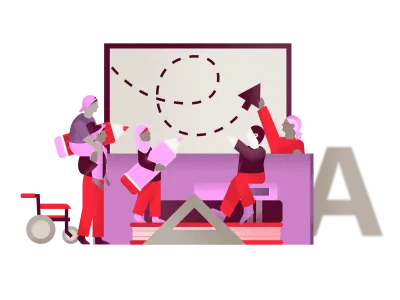
As social background still too often determines educational success, we work to ensure equal opportunities for all children.
In Brief
- The Robert Bosch Stiftung is committed to strengthening education to ensure the best possible opportunities for all children and young people in Germany.
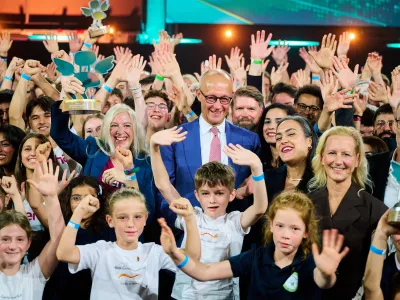
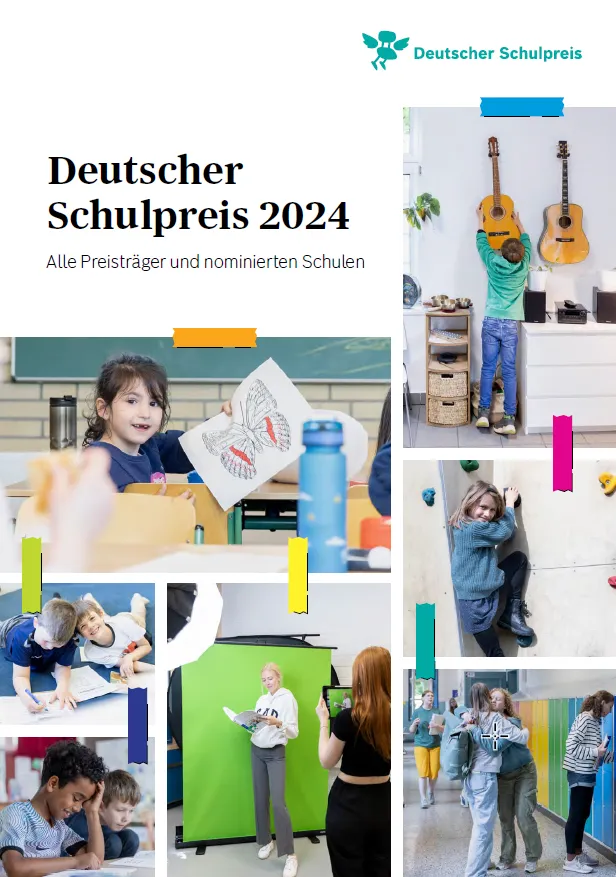
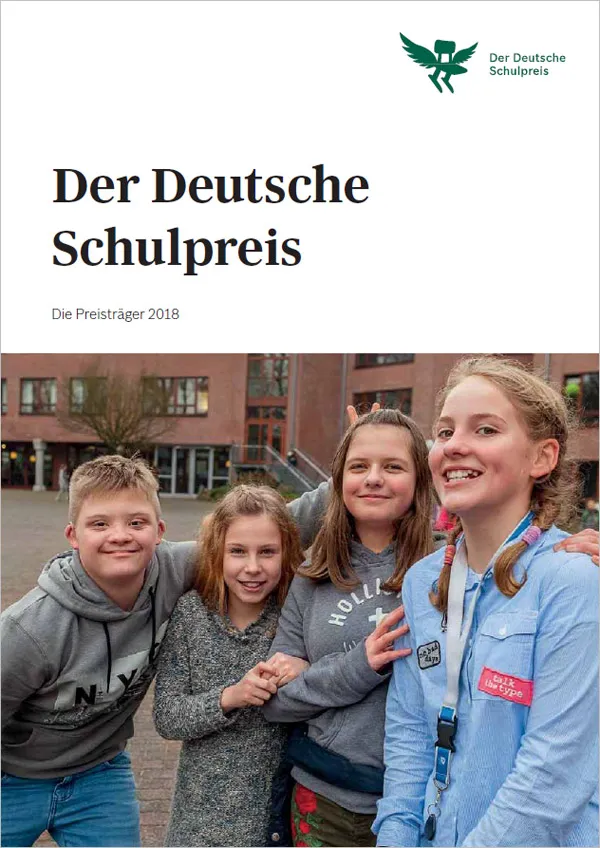
- We have made it our mission to identify best practices, for instance through the annual German School Award.
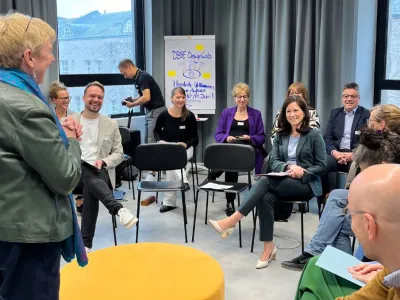
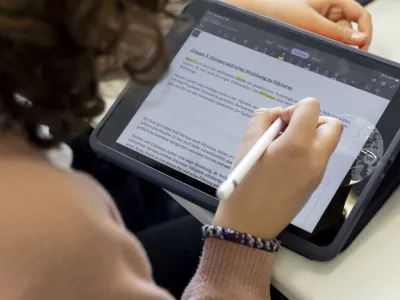
- We share best practices, for example through an online platform for schools, the Deutsche Schulportal (German School Portal).
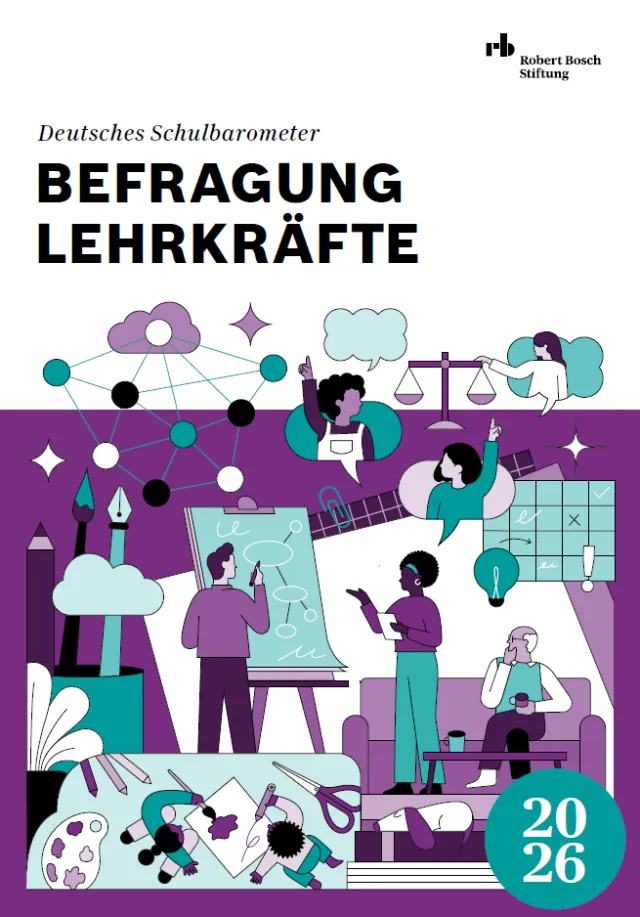
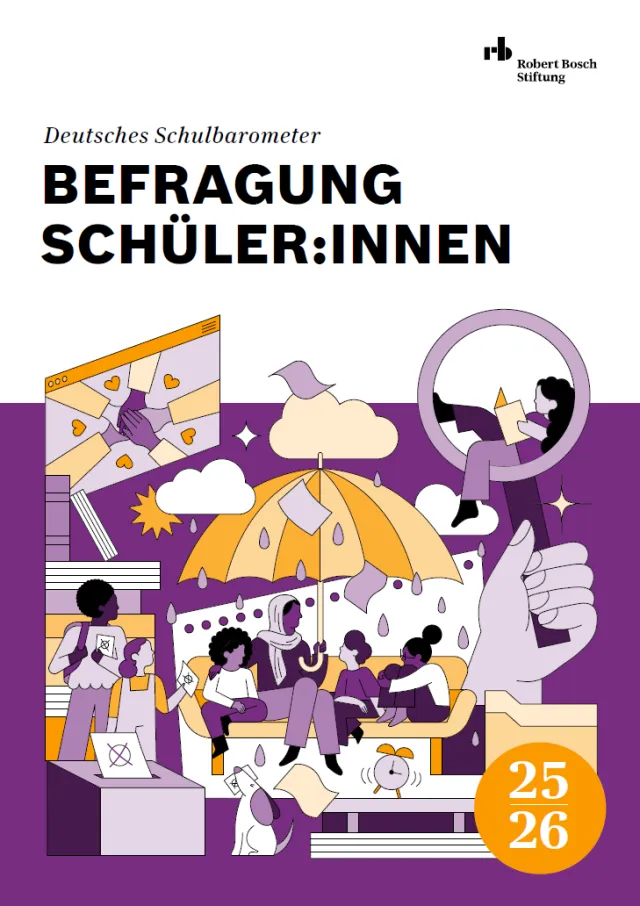
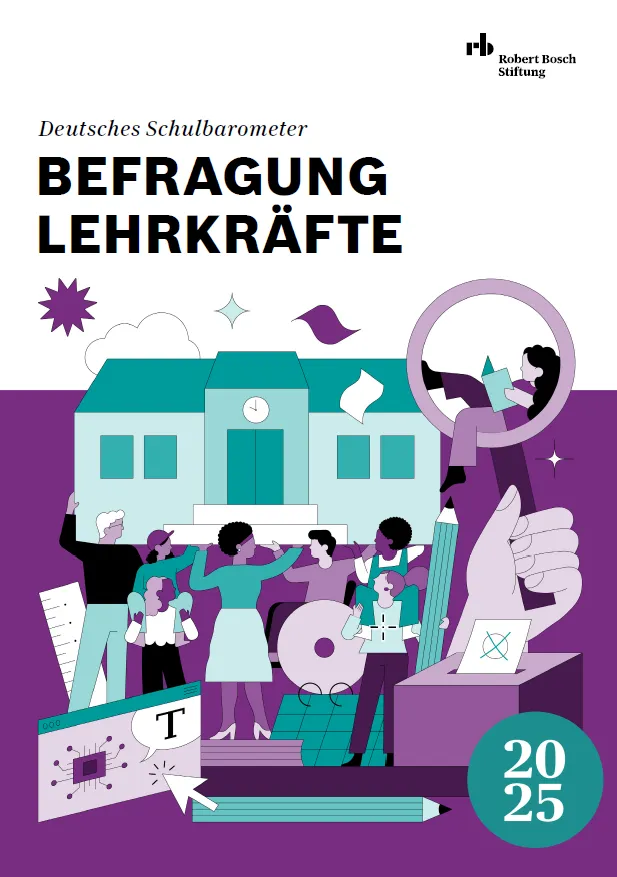
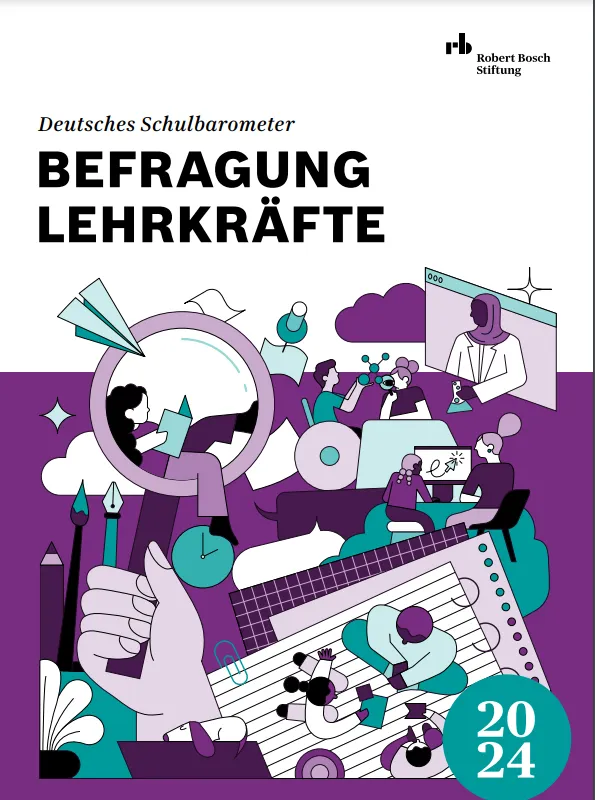
- We promote the transfer of knowledge between researchers and educators, among other things by regularly compiling fresh data on the situation in schools for the German School Barometer.
- We strengthen and connect stakeholders across the education system.
- Our cooperations with state-level ministries of education and state education institutes ensure effective framework conditions and lasting impact.
What are the Challenges?
The educational success of children in Germany is still too often determined by their social background. A system already under strain is further burdened by a shortage of skilled staff as well as ongoing geopolitical conflicts and economic crises. Everyone is affected: educators are under increasing pressure, while students’ academic performance is declining and their mental health is suffering.
Insights & Understanding
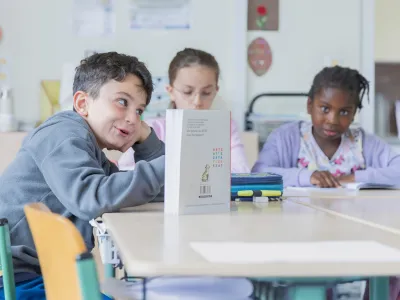
![[DE Copy] Teaserbild_Schulbarometer 25-26_4.jpg](/sites/default/files/styles/bosch_4d3_medium/public/images/media/2026-03/Header_Schulbarometer%2025-26_4.jpg.webp?h=827069f2&itok=Dr_-gEUo)
![[DE Copy] DSP25_neu_teaser.jpg](/sites/default/files/styles/bosch_4d3_medium/public/images/media/2025-09/DSP25_neu_teaser.jpg.webp?h=827069f2&itok=nGCEjYYV)
![[DE Copy] 800_600_Patrick Wendt_DSP25.jpg](/sites/default/files/styles/bosch_4d3_medium/public/images/media/2025-06/800_600_Patrick%20Wendt_DSP25.jpg.webp?h=b0de3659&itok=7VHJrbSX)
![[DE Copy] Sport vernetzt_Header](/sites/default/files/styles/bosch_4d3_medium/public/images/media/2024-09/Header.jpg.webp?h=35c5d4cc&itok=BSG8dLTY)


How We Create Impact
We focus on two areas: the quality of preschools and schools, and the resilience and adaptability of the education system as a whole. We do this by:
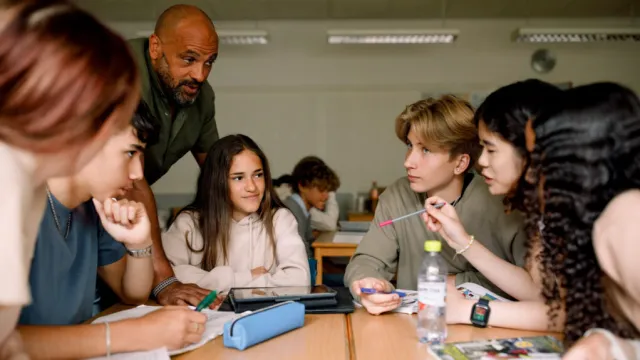
Creating good learning environments: We improve the places in which children and young people learn and grow. Through targeted training and networking, we help preschools and schools develop in a structured and independent way. We are convinced that a good education is created locally.
Making the system more effective: We ensure all levels of the system work together to spread innovation beyond individual educational institutions. We connect stakeholders from state-level ministries of education, school authorities, school supervisors, and state education institutes to make the system more responsive.
Our projects regularly show that an education system that learns and adapts depends on rigorous data. Data helps us understand developments, track goals, and solve problems.
FAQ
Answers to Frequently Asked Questions (FAQs) in Education
Why does Germany Need the Robert Bosch Stiftung to Strengthen its Education System?
As an independent organization, Robert Bosch Stiftung is a partner to the education system. It does not replace public responsibilities but enriches the system with new ideas and impulses. Its independence enables it to test innovative approaches flexibly and quickly. To this end, it brings together people from preschools and schools, academia, public administration, and politics to develop solutions collaboratively. As a facilitator of dialogue, it helps ensure that successful practices from the field become visible and can spread throughout the education system.
Does Germany Have an Education Problem?
Germany is one of the world’s wealthiest countries, yet its education system faces significant challenges. Recent studies show that social background still has too strong an influence on educational outcomes, that students’ competencies in key areas are declining, and that the number of young people leaving school without a diploma is increasing.
At the same time, a shortage of skilled staff in preschools and schools is further exacerbating the situation.
However, analysis alone is not enough. Across Germany, there are committed individuals, schools, and projects that compellingly demonstrate how high-quality education can succeed. This is precisely where the Robert Bosch Stiftung comes in: its role is to make these positive examples from practice visible, support them, and help ensure they can serve as inspiration in other contexts as well.
Why is it so Difficult to Improve Preschool and School Education in Germany?
Improving the education system requires, above all, persistence. Real change does not happen overnight, and the system itself is highly complex. Because education in Germany is the responsibility of the federal states, there are 16 different systems, each with its own curricula and regulations. This makes it difficult to scale good ideas nationwide.
Another challenge is the “lone ranger” dynamic: committed teachers in Hamburg are often unaware of the excellent solutions developed by their peers in Munich. As a result, many effective projects remain confined to a single location and have only a short-lived impact. Without a strategy for how successful approaches can be adopted elsewhere, their potential often dissipates.
The Robert Bosch Stiftung addresses these three key challenges—time, complexity, and transfer. It actively promotes exchange between the federal states, connects leading minds, and ensures that proven solutions do not remain isolated but can gain traction and take root in other settings as well.
Publications
![[DE Copy] 250827_DSP_Publikation2025_Webversion teaser.jpg](/sites/default/files/styles/bosch_original_medium/public/images/media/2025-09/250827_DSP_Publikation2025_Webversion%20teaser.jpg.webp?itok=GF-ReP9X)
![[DE Copy] DatengeschuetzteSchulentwicklung_Cover.png](/sites/default/files/styles/bosch_original_medium/public/images/media/2025-07/DatengeschuetzteSchulentwicklung_Cover.png.webp?itok=6VzrdijO)
Your Contact Persons
![[DE Copy] Stella Voutta_Profilbild](/sites/default/files/styles/bosch_3d2_small/public/images/media/2023-07/Voutta_Stella_01.png.webp?h=1b222ed7&itok=i_gPLeNZ)
Dr. Stella Voutta
Senior Vice President
![[DE Copy] Corinna Gottmann](/sites/default/files/styles/bosch_3d2_small/public/images/media/2024-06/Corinna_Gottmann_headshot_1146_800px_webFav.png.webp?h=4c94fedf&itok=Qey6eclo)
Corinna Gottmann
Director
Andrea Preußker
Director