Why are we running this project?
Climate change, conflict, and peacebuilding are interconnected issues. Environmental justice involves equitable distribution of environmental resources and meaningful participation of all citizens. Decision-making has to focus on responsibility and accountability, while enhancing marginalized and minority groups' capabilities. Representation from both sides is essential in addressing the impact of climate change in Israel, and grassroots action on peacebuilding can build inter-community trust and cooperation. Participants, both Israeli and Palestinian, can become change agents within their communities using their knowledge, experiences, and willingness to work together for social change. The course will encourage dialogue and create working relationships that will contribute over time to promoting environmental and climate justice, which can create cooperative incentives, enhance trust, and rework conflict-laden identities to contribute to peace processes.
What are our goals?
Our vision is to establish inclusive climate activism in Israel that promotes collaboration and individual action in the Palestinian-Israeli political context while striving to achieve environmental justice. Specifically, we seek to provide participants with necessary tools and knowledge based on the social theory of change. These resources will empower them to create intervention plans for environmental community initiatives, leading to substantial and positive outcomes that can be measured. Secondly, we aim to create a secure and inclusive environment for successful joint environmental actions guided by principles of social justice, and professional mentorship.
How does the project work?
The project will be implemented at the School for Peace. The course discusses, among other issues, Intersectional Theory, and the links between land planning and environmental organizations. The course further includes three key tours to see and discuss related issues on the ground and to talk about effective changes.
The Palestinian and Jewish facilitators play an essential role in the implementation of the dialogue sessions, creating a safe and conducive environment in which participants can share their perspectives and ideas. They help to steer the conversations towards constructive and respectful dialogue in order to achieve the goals of the project.
Good to know
this project is groundbreaking in the Arab-Israeli context as it brings together Palestinian and Jewish citizens of Israel and fosters inter-community grassroots action towards peacebuilding. Moreover, this program integrates a climatic and environmental justice approach through a peacebuilding lens.
Inter-community approaches can be effective in addressing existing power imbalances by identifying and tackling root causes like discrimination, inequality, or exclusion. When communities work together, they can create a more equitable power distribution. Therefore, the project aims to achieve the following: participants recognizing and understanding each other's perspectives on social and political narratives, identifying the impacts of climate change that can exacerbate preexisting conflicts and potentially lead to new tensions, and identifying climate adaptation strategies and initiating actions that address conflict drivers associated with climate change.
Who organizes and supports the project?
Impressions
-
Image
![[DE Copy] School for Peace 1](/sites/default/files/styles/bosch_16d9_medium/public/images/media/2023-07/sfp1.jpg.webp?h=b41fb798&itok=knLJj2E0)
Introductory Lecture by Dr. Avner Gross -
Image
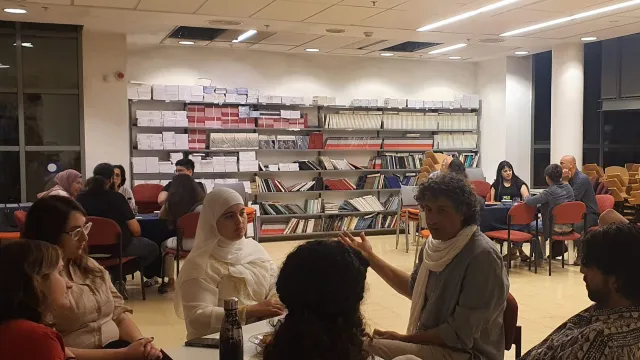
Sharing further thoughts over an evening meal together -
Image
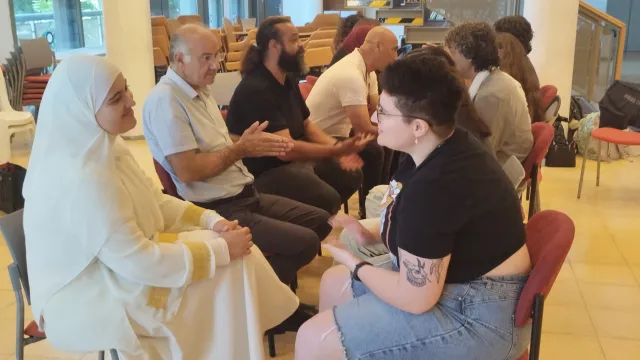
Palestinian and Jewish participants in dialogue over their initial thoughts on the environment
Your contacts
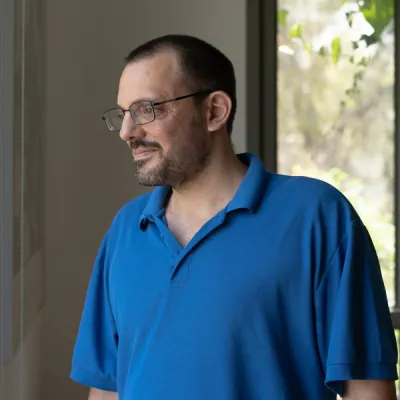
Roi Silberberg