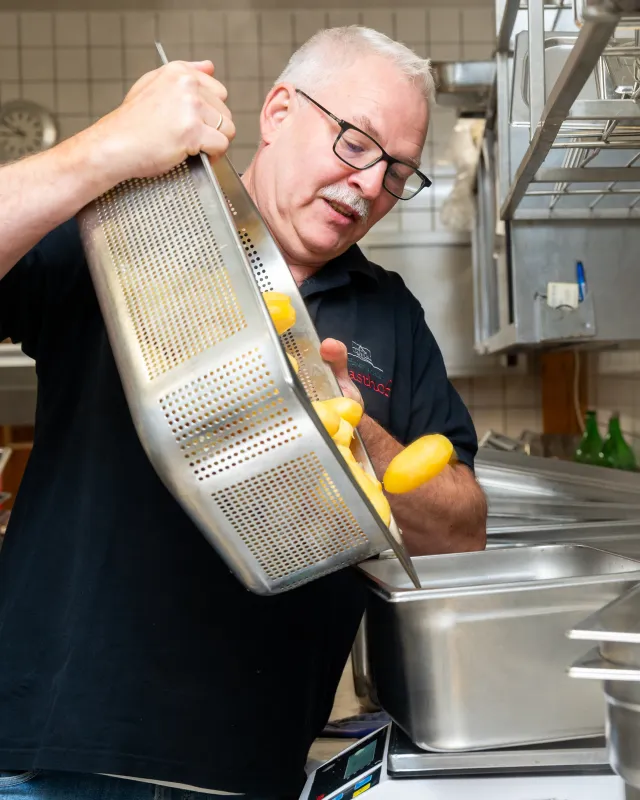
“These are good potatoes,” says Hermann Heitmann. “Unfortunately, they’re too long.” The 56-year-old caterer empties a large colander full of steaming, peeled potatoes of the Annabelle variety into a metal container.
It is a Friday morning in September. In the district of Verden in Lower Saxony, the “Regional Food Weeks” are under way, putting the spotlight on locally produced food. Heitmann is taking part and doing his best to make it work. A trained farmer, he runs a catering business from the inn that has been in his family since 1905, a former farmhouse right on the main road through the village of Kreepen. “Tradition is a good thing,” Heitmann says, “but every now and then, you also have to try something new in life.”
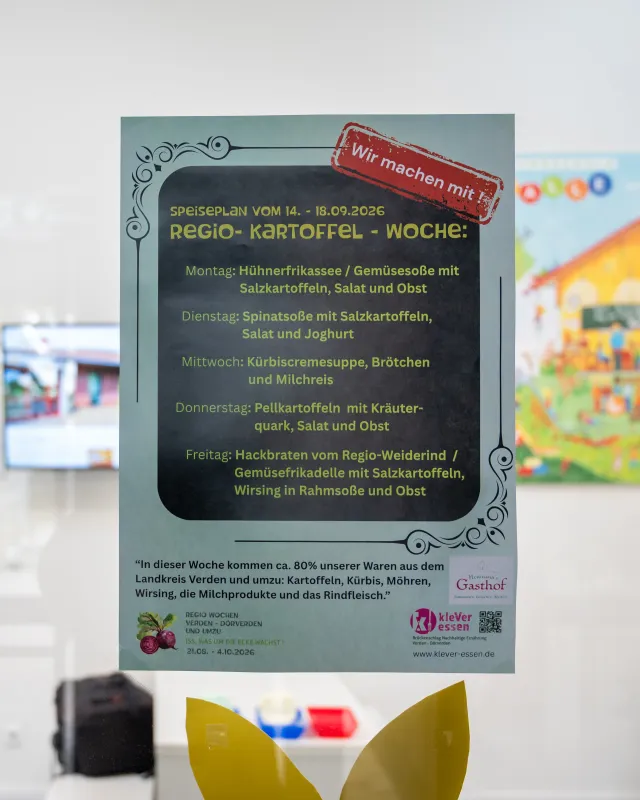
The caterer supplies lunches to 18 daycare centers and schools in the surrounding area, serving 2,000 meals a day. That makes him central to Verden’s Regional Food Weeks: supplying schools and daycare centers with regional food is the highlight of a varied program.
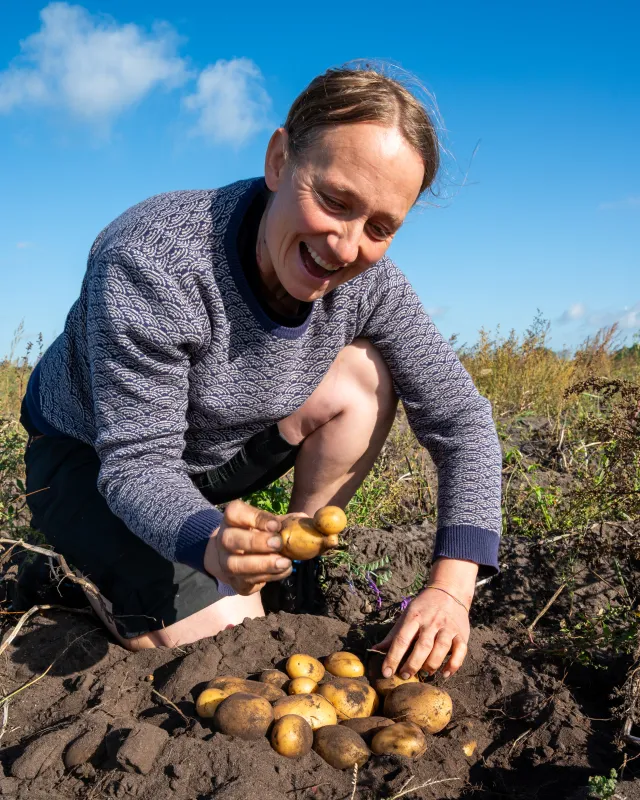
Twenty kilometers from Heitmann’s inn, farmer Amalie Lohmann stands in front of stacks of vegetable crates towering almost as high as the building. She has just returned from the fields. Organic vegetables have been grown here since 1985, but most of the produce is sold to wholesalers outside the region. She is eager to hear Heitmann’s feedback: the potatoes he has been cooking this week came from her farm.
Meanwhile, Heitmann is stirring creamed savoy cabbage in a steel pot the size of an oven. Two male chefs and a female chef work alongside him, filling insulated containers with food and sending them down a roller ramp into the courtyard. From there, five retirement-age part-time workers deliver the meals to the daycare centers and schools.
Building New Structures for Regional Food Supply
The caterer would normally buy his fresh produce from a wholesaler that sources food from across northern Germany and, in some cases, around the world. So if the food on the children’s plates was to come from farms in the district this week, new connections first had to be established.
“In a nutshell, we spent a year and a half bringing people together,” says Lea Unterholzner, who manages the project for KleVer, Verden’s climate protection and energy agency. The agency is owned by the district of Verden and its municipalities.
At the end of 2025, Unterholzner invited local stakeholders to Verden’s first food summit. Lohmann was there, as was Heitmann.
“I was skeptical at first,” the caterer recalls. “I doubted we could get regional organic produce in the quantities we needed, and at an affordable price.”
Unterholzner subsequently visited him several times and brought along offers from organic wholesalers. “Eventually, I let myself be persuaded to give it a try,” Heitmann says with a smile.
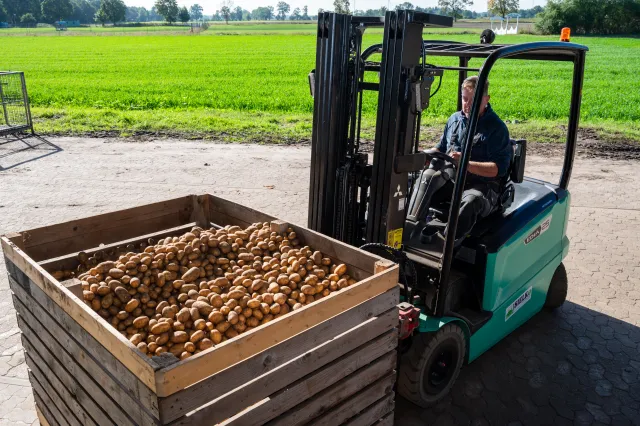
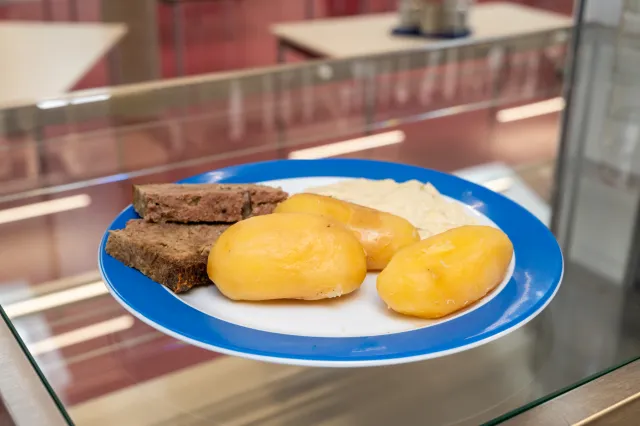
The caterer runs through the ingredients he is using today: 340 kilograms of organic potatoes from the Lohmann farm, peeled in Bremen; 50 kilograms of savoy cabbage from the Ahlers farm, chopped on site; and unpeeled organic fruit from various farms, well over half of it from within the district. The milk and cream come from the Dehlwes organic dairy in Lilienthal, 50 kilometers away.
“And I have a few Galloway cattle, so today I was able to make a regional meatloaf,” he says. The vegan alternative, a vegetable patty, is not locally sourced.
“There had been efforts in the district for some time to build a regional food network. But there was no one who felt centrally responsible for it. In 2024, the ‘Brückenschlag’ (building bridges) project was finally launched for this purpose, and the Regional Food Weeks are part of it,” project coordinator Lea Unterholzner points out.
The project is made possible by the Robert Bosch Stiftung, which is providing almost 150,000 euros in funding between 2024 and 2026. As part of its program called Future is Served! Shaping Food Systems Together, the Foundation supports ten such pilot projects working to transform the food system.
Doreen Buchheiser, who is responsible for the funding, explains the benefits: “Greater regional sourcing and stronger local value chains are desirable for several reasons.” Shorter transport routes and a focus on seasonally available food can help reduce the impact on the climate. At the same time, local relationships develop that strengthen the local economy. “That has a direct impact on social cohesion,” Buchheiser emphasizes. Smaller local farms also tend to rely less heavily on monocultures, which can threaten biodiversity through the intensive use of pesticides.
Future is Served! Shaping Food Systems Together
With this program, we support local authorities to work together with citizens, the (agricultural) economy, and civil society to design more sustainable regional food systems.
How Do the Children Like the Food?
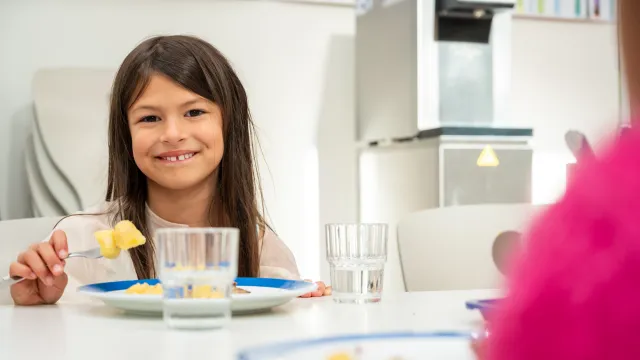
It is 1:30 p.m. Thirty children are sitting in the cafeteria of Verden-Walle Elementary School. Almost all of them have Lohmann’s potatoes and Heitmann’s meatloaf on their plates, while about half are brave enough to try the creamed savoy cabbage. Sliced apples and pears are waiting for dessert.
In June, some of the children visited the farm where the potatoes were grown. They learned which tools and machinery are needed to work the fields, that sheep produce good fertilizer and why the same crop is not grown on a Lohmann farm field again for five years. The children then harvested garlic and early potatoes, made butter from cream, and later ate everything around a campfire as boiled potatoes with garlic butter.
“We have our own little field at school where we grow vegetables,” says fourth-grader Klara. “But it was so great to see a really big field!” What she liked most was that the children were able to harvest and prepare their own food.
For project manager Lea Unterholzner, experiences like these are an important benefit of regional food systems.
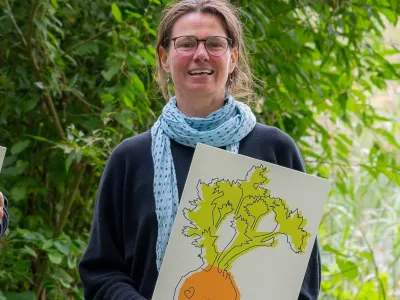
“We need to reconnect with the conditions under which our food is produced.”
“If soy grown for animal feed somewhere in the world is sprayed with chemicals, or animals are mistreated, we don’t see it,” Unterholzner says. Consumers, she argues, would be far less likely to accept the same practices if they were happening locally, right before their eyes.
So how does today’s lunch go down with the children?
“Better than usual,” says nine-year-old Leona. “The potatoes taste fresher.”
Jack and Mira are less impressed: “We’ve had potatoes all week. That’s really too much. And yesterday they still had the skins on!” Even so, hardly any food is left on the plates today.
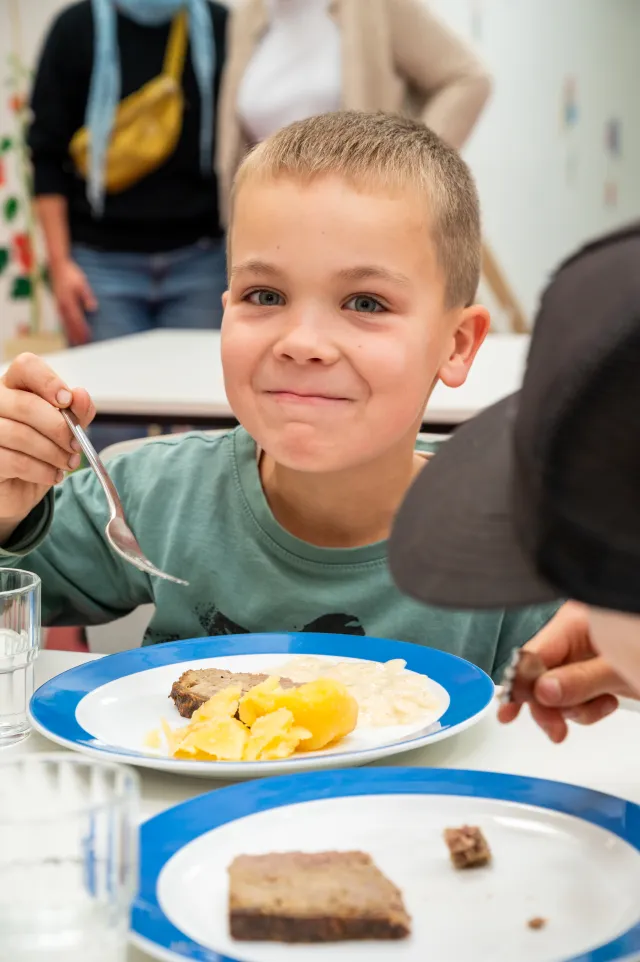
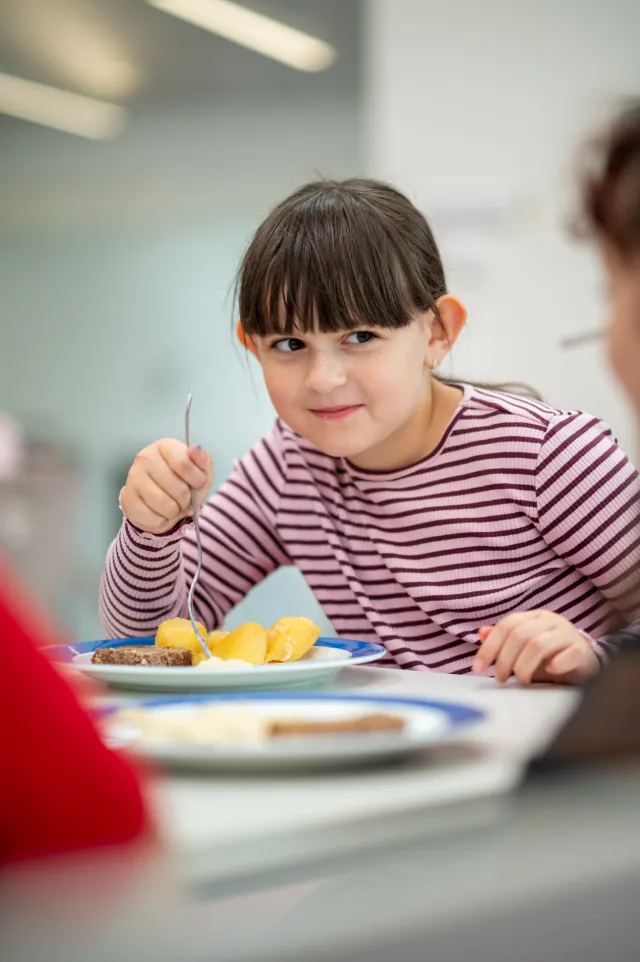
On Thursday, they served boiled potatoes in their skins with quark, Hermann Heitmann confirms, and that did not go down quite as well. “Especially younger children aren’t used to that.”
If he could serve potatoes in their skins every day, though, one problem would disappear: peeling them. “There’s no one around here who does it,” the caterer says. “So we had to send the potatoes to Bremen to be peeled and then bring them back again.”
The problem is that this particular variety is long and narrow, meaning around 40 percent of each potato was lost during peeling. “That’s too much,” he says, frustrated. “It simply doesn’t pay.”
Overall, Heitmann says the meals cost him an additional 60 cents each. Perhaps the farm could supply a rounder variety, he suggests. He plans to discuss it with Lohmann. In the future, he could incorporate regional ingredients into the menu from time to time, potentially working up to one entirely regional meal per month. He is also considering investing in his own potato-peeling machine.
“This week has given me a foundation to build on. The most important thing is that I now know it can work in principle.”
Hermann Heitmann, Caterer
That afternoon, Lea Unterholzner stands outside the school, looking toward the fields. “We’ve built a bridge between a traditional country inn and organic farms,” she says.
Her project ends this year, and she hopes the relationships it has created will endure.
“If we could have one regional food day a week, that would be a huge success!”