It was a brutal incident in his hometown in August 2021 that forced Mohammad G. into hiding, even though it had long been clear that his family would have to leave Afghanistan and flee the advancing Taliban. A group of armed men entered the family home and detained Mohammad G.’s mother, interrogating her about the whereabouts of her children. When she refused to tell them, they slashed the elderly woman’s face.
Had she told them that her son was nearby, talking to farmers, he would have been killed on the spot. All he had wanted was to ensure that the family’s almond trees would continue to be tended after they fled, so that their harvest could help others survive.
Mohammad G. had to flee immediately, leaving behind his severely injured mother and his wife. To avoid putting his family in even greater danger, he went into hiding in Kabul, a city of millions.
A Public Prosecutor in the Crosshairs
By abusing Mohammad G.’s mother, the perpetrators sought to target the entire family. Their targets included not only Mohammad, a public prosecutor who worked on corruption cases and regularly received death threats, but also his brother, an officer in the Afghan army.
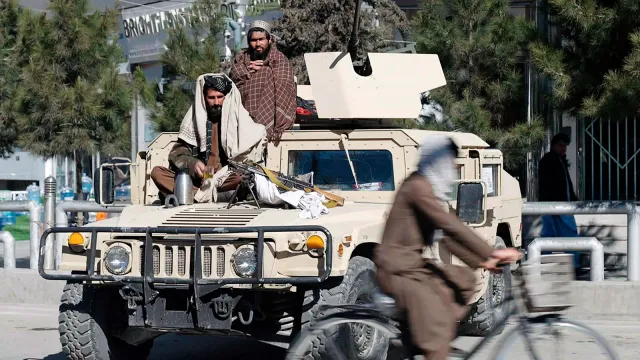
By early 2021, the Taliban had already gained significant power, and hundreds of thousands of people were fleeing from them. The Taliban and their allies were seeking out former opponents to exact their own form of retribution: imprisoning, torturing or killing them. And when they could not reach the people they were looking for directly, they would often target family members to exert pressure or make an example of them.
How did Mohammad G. become a target? “I worked as a public prosecutor for six or seven years,” says Mohammad, who is in his early thirties. “First in Daikundi Province, then at the Anti-Corruption Centre in Kabul, and for a time at Bayram Prison, where I helped ease the workload of the local justice system.”
In the course of his work, Mohammad repeatedly uncovered questionable activities. It was his investigation into fraud involving a powerful warlord that ultimately put him at particular risk. As the investigation progressed, the situation became increasingly uncomfortable for the warlord. Eventually, Mohammad, as the prosecutor responsible for the case, began receiving threatening phone calls. The callers made it clear that they knew exactly where he was. On other occasions, they called him “Hazara boy”, a deliberate form of humiliation, as the Hazara ethnic group has often faced exclusion and discrimination in Afghanistan. The calls were also a clear warning that both Mohammad and his family were at particular risk.
The Pressure Continues to Mount
The case is taken out of Mohammad’s hands and referred to Afghanistan’s Attorney General, bringing the investigation to a standstill. Mohammad himself now becomes a target of the Taliban. Many of the people he investigated have since risen to prominent positions under Taliban rule: “One is a district governor, another works for a district police force,” Mohammad says. He believes that these former defendants brought him to the Taliban’s attention.
The pressure continues to mount, even after the Taliban seize power. Mohammad contacts Imogen Canavan, a European lawyer who now works with the Kabul Airlift. The two first met as colleagues. Now, he has to ask her for help. While hiding with other family members in different cities, Mohammad helps the Kabul Airlift identify and refer other people facing imminent danger.
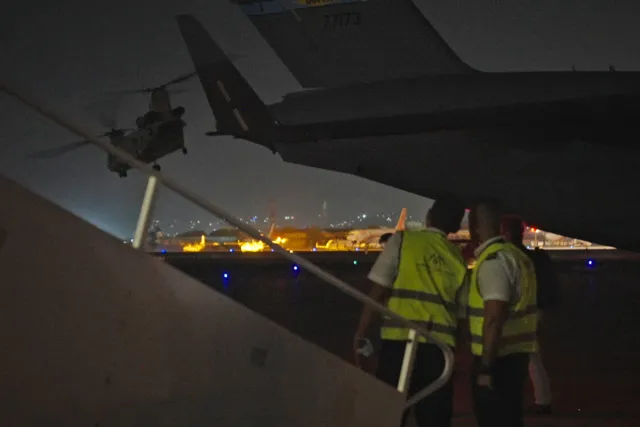
In January 2022, some members of the family manage to cross into neighbouring Pakistan. In May, with the support of the Kabul Airlift, Mohammad is evacuated to Germany. He and some members of his family are now safe, at least.