The global shift from rural areas to cities continues unabated. In 2008, half of the world’s population lived in urban areas. By 2028, according to the United Nations, more than 70 percent will do so. This trend is creating new challenges for health promotion and prevention. Climate change, traffic, pollution, high population density, and socioeconomic inequalities place a particular physical and mental burden on urban populations.
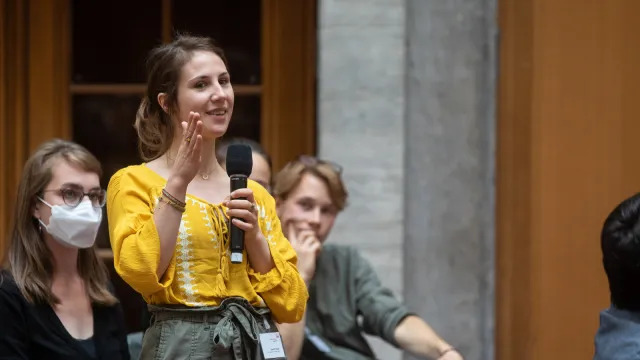
As part of a Summer School on “Healthy Futures, Healthy Cities,” 20 early-career researchers from a range of disciplines came together in Berlin in June with experts from policymaking, academia, and practice to discuss potential solutions. During a two-day field study in the Wedding district, they interviewed local residents about their needs, aspirations, and ideas for healthier urban living.
The Summer School was organised by the Berlin-Brandenburg Academy of Sciences and Humanities, the Robert Bosch Stiftung, the Marburger Bund, and Charité – Universitätsmedizin Berlin.
Four participants share why they took part, the insights they gained, and how they plan to incorporate these lessons into their future work.
Cities Are Places of Opportunity – and Stress
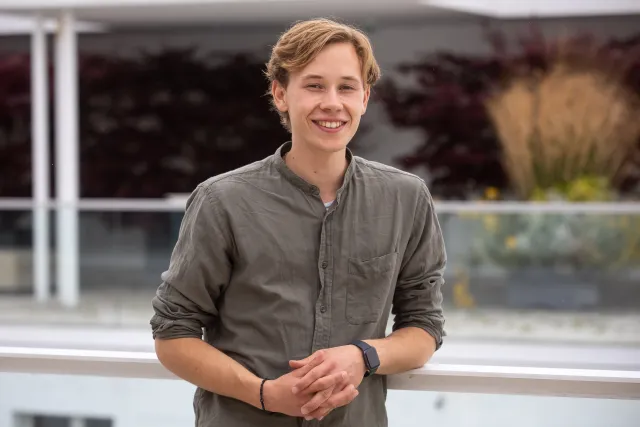
Preventing urban stress has long been a focus for Poul Schulte-Frankenfeld (24). For his degree in International Management, he evaluated a meditation app. He is currently completing a bachelor’s degree in psychology at the University of Amsterdam while also studying medicine in Berlin, a programme he began in April.
“I’ve learned that it is often many small factors that lead people into mental health crises, and I think the same is true for other health problems,” he says. In his view, effective prevention therefore requires an interdisciplinary approach.
“I saw the Summer School as a great opportunity to exchange ideas with people from completely different fields,” he says, describing what motivated him to take part.
What Were Poul’s Biggest Takeaways?
“I found it incredibly inspiring to receive so many perspectives from such a wide range of disciplines on the very first day. It was also a fantastic opportunity to build new connections,” Poul recalls.
At times, this led to unexpected conversations with participants from entirely different fields, such as an anthropologist or a theologian, who explained the historical social role of churches in urban communities. “This was where newcomers to a city were welcomed, where they found guidance and support,” he says. While the state has sought to take over some of these community-building functions, he feels that something may have been lost in the process. “There seems to be something missing,” reflects the aspiring psychologist, adding that it is a question he intends to explore further.
During the field research, he was particularly struck by the social diversity around Leopoldplatz, an area often labelled a “troubled neighbourhood.” “The buildings, the people on the streets, every few hundred metres it felt as though you were entering a completely different world,” he says. Having lived in Amsterdam, where affluent and disadvantaged communities tend to occupy separate districts, he was not familiar with this degree of social mixing.
At the same time, he observed that the more heterogeneous a neighbourhood becomes, the more distinct social groups can emerge, each developing its own dynamics and often remaining largely separate from one another. “That became very clear to me in the interviews we conducted with residents and a community worker,” he explains. Finding ways to bridge these divides and communicate more effectively with different groups remains a major challenge, one that became especially evident during the COVID-19 pandemic.
What Is Poul’s Verdict on the Summer School?
One experience that left a particular impression on Poul was exploring the urban environment through the lens of anthropology. “We tend to say that noise is bad and green spaces are good. But these factors are not inherently positive or negative. What matters is how they affect people,” he explains, describing a perspective he had only recently begun to apply.
In his view, social density becomes a problem only when people lack opportunities to retreat and recharge. Otherwise, it can be a valuable asset. The same applies to noise: it becomes harmful when it restricts people’s lives or drives them away.
Overall, Poul found the combination of disciplinary diversity among participants and the blend of expert input and hands-on research particularly effective. “It’s a format I’d like to adopt for my own projects,” he says. “I’m currently planning a kind of think tank for young people focused on education policy, and I’ll definitely be taking inspiration from what I learned here.”
Adapting to Rising Temperatures
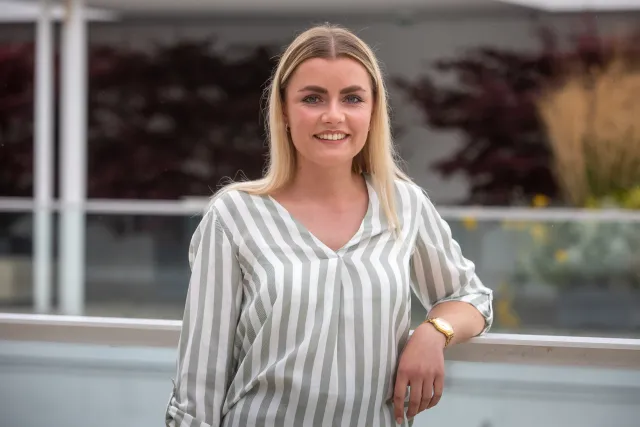
Climate change and increasingly hot summers are not abstract concepts for nursing student Jana Berggötz. She encounters their health impacts firsthand. “The heat is particularly hard on older people,” says the 22-year-old, who is completing the practical component of her Applied Health and Nursing Sciences degree programme in acute geriatrics and trauma surgery at Robert Bosch Hospital in Stuttgart. “The hotter it gets, the more patients are admitted.” The heat also makes work more demanding for nursing staff, who wear masks throughout their shifts.
At university, Jana is involved in a project on adapting to extreme heat. The initiative also explores ways to make hospitals and care facilities more sustainable. “You wouldn’t believe how much plastic waste is generated every day, how many lights are left on unnecessarily, or how many medications are discarded unused,” she says from her own experience. “We need to do better, of course without compromising standards.” She attended the Summer School primarily to deepen her understanding of environmental issues and develop strategies to address these challenges.
What Were Jana’s Biggest Takeaways?
A presentation by physician Sylvia Hartmann of the Climate Alliance Germany confirmed to Jana on the very first day that she was on the right track. Hartmann presented a study showing that the healthcare sector is responsible for five per cent of global CO₂ emissions, more than aviation and shipping combined. “That was something I really had to process,” Jana says. At the same time, she sees a positive implication: “If we can help people stay healthier, we’re also contributing to climate protection.”
Beyond that, the Summer School gave her valuable insights into how different disciplines can work together to promote health. “It was here in Berlin that I truly began to understand the contribution social and environmental sciences, architecture and urban planning can make to creating healthier cities.”
What Is Jana’s Verdict on the Summer School?
Jana was particularly impressed by the neighbourhood fieldwork along the Nordufer in Berlin’s Wedding district, a multicultural area that proved far more welcoming than its reputation as a “troubled neighbourhood” might suggest. Initially, her group had planned to focus on public seating. But once on site, Jana experienced firsthand how research questions developed at a desk do not always align with realities on the ground.
“There were plenty of benches. That simply wasn’t an issue for residents,” she recalls. Instead, other concerns emerged: litter, vandalism, and neglect of public spaces.
In conversations with local residents, Jana encountered both frustration and resilience. Some expressed scepticism, feeling that “nothing ever changes anyway,” while others conveyed a strong sense of initiative and optimism. “It’s remarkable how many nuanced insights you gain from open-ended interviews like these,” she explains.
One conversation in particular has stayed with her. When Jana asked an older migrant woman about her concerns, the woman replied: “Why don’t you ask the Germans?” For Jana, this was the most formative moment of the experience. “What struck me was the realisation that there are people who do not speak up, who are not heard, and who remain invisible,” she says.
Rather than leaving with immediate answers, Jana came away with something else: “I don’t have spontaneous solutions, but I do have many new questions that I want to explore further.”
Rethinking Cities and Health Together
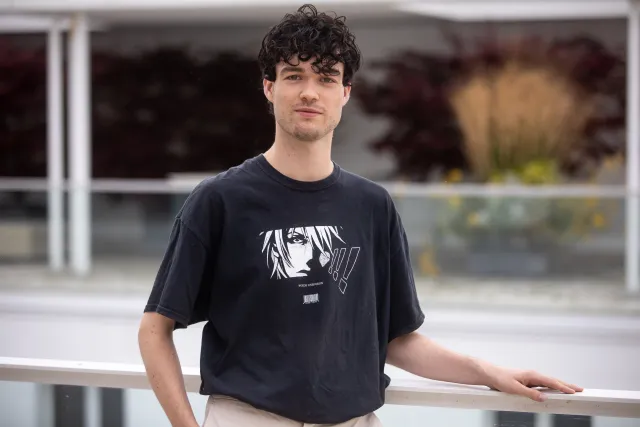
Large cities have fascinated David Gamlin (19) from an early age. “I grew up in a village,” says the son of a German father and a French mother, who spent his school years in France. “Maybe that’s why I have a particular appreciation for the potential of cities. I always found myself wondering what these living spaces could become, how green and people-centred they could be, if only there were the will to make it happen.”
As a medical student at Charité, now in his fourth semester, he has held on to that interest in architecture and urban planning. For some time, he has been looking for ways to bring together his two major interests: cities and health. He is driven by a desire to help people and to be, as he puts it, “useful” to society. The Summer School came at just the right time. “I want to identify goals I can work towards and areas where I might be able to make a difference,” he says, describing his expectations. “And, of course, I’m looking forward to meeting like-minded people.”
What Were David’s Biggest Takeaways?
A lecture by Christiane Falge, Professor at the Hochschule für Gesundheit in Bochum, particularly resonated with David. The anthropologist works in a district of the Ruhr metropolis shaped by migration and poverty, where she seeks to identify residents’ actual needs while also exploring the resources that the community itself can draw on to address local challenges.
“This qualitative research approach, based on in-depth interviews and accompanying families over time, was completely new to me,” says David, whose studies have so far focused primarily on quantitative methods. “In medicine, we tend to classify, generalise and develop broad recommendations.” As a result, the individual and their personal circumstances can sometimes receive too little attention. “I think that’s something some patients miss,” he reflects. “Illness is a complex experience. A patient’s environment, social life, socioeconomic status and mental wellbeing all matter. Doctors need to take these factors into account.”
What Is David’s Verdict on the Summer School?
During a two-day field research project in Berlin’s Wedding district, David had the opportunity to put into practice the approach he had learned about in Christiane Falge’s lecture. Conversations with local residents made one thing clear to him: “There are many small groups in our cities whose needs and concerns often go unheard. We need to reach them, otherwise they risk being left behind.” At the same time, he also recognised the limitations of the method. “This kind of intensive research cannot be carried out in every neighbourhood. Unfortunately, the resources simply aren’t available everywhere.”
The exchange with other Summer School participants also reinforced his awareness of how broad the range of professions and disciplines connected to health really is, and how valuable different perspectives can be. “As a medical student, I’m usually surrounded by fellow students and physicians. Here, many participants came from public health and nursing backgrounds. They bring important knowledge and expertise that we often don’t encounter in medicine. It showed me once again that these challenges have to be addressed through interprofessional collaboration.”
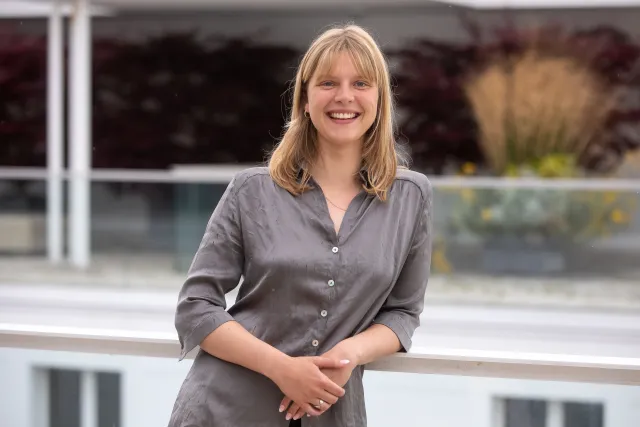
Bringing Marginalised Voices into the Conversation
Pauline Brunner (25) knew she would be something of an outsider at this Summer School. “When it comes to health, medicine, public health and nursing are always strongly represented,” says the Berlin native, who is about to complete her master’s degree in Social and Cultural Anthropology at Freie Universität Berlin. Yet that was precisely what attracted her to the programme. Within her own academic field, she explains, there is often broad consensus on topics and methods. What interested her was learning how other disciplines incorporate social and cultural factors into their understanding of health.
“What role do gender, class and racism play in health outcomes and in the unequal treatment of people? And how do illnesses affect the everyday lives of those experiencing them?” she says, summarising the questions that drive her work. Her goal is to give a voice to people who often remain ‘invisible’ in public discourse. Beyond that, she values interdisciplinary exchange as a way of refining her own thinking: “Explaining your perspective to others helps you understand it more clearly yourself.”
What Were Pauline’s Biggest Takeaways?
The clash of academic cultures was inevitable, and Pauline experienced it most clearly during the neighbourhood fieldwork alongside students from medicine, public health, and nursing. While ethnographic methods such as participant observation and open-ended interviews are an integral part of her daily work, she found that some of the other participants struggled with the value of qualitative research.
“The lack of representativeness and statistical data made some people uneasy,” she recalls. Yet by the end of the project, the group had reached a shared conclusion: engaging with people directly and discussing their needs on an equal footing was a highly productive approach. “A quantitative survey simply cannot capture all the dimensions of such a complex issue.”
At the same time, Pauline came to recognise the limitations of her own discipline. “Quantitative comparisons and methods are largely absent from our field,” she admits. The experience made her realise that combining qualitative and quantitative approaches is essential for addressing questions of health and inclusion effectively.
What Is Pauline’s Verdict on the Summer School?
During a walk through the streets of Wedding, Pauline says she became even more aware that many approaches to improving urban health tend to reach people who already possess a certain level of health literacy. What is needed, she argues, is a stronger focus on those who would benefit most from such initiatives. “That requires persistence, patience and a very local approach,” she says, reflecting on her experience. “There’s little value in developing universal models and simply implementing them in different contexts. Instead, you have to understand the needs of people on the ground and respond to them accordingly.”
Over the course of the four-day programme, Pauline also gained a clearer sense of her professional aspirations. A presentation by the Bochum-based anthropologist Christiane Falge inspired her to pursue applied research, empower communities and co-create knowledge with the people concerned. “Top-down approaches don’t work,” she concludes. “What matters is bringing people’s needs and expectations from the grassroots level into the policy-making process.”
Restart! Reform Lab for Our Healthcare System
As part of the “Neustart! Reformwerkstatt für unser Gesundheitswesen” (“Restart! Reform Lab for Our Healthcare System”) initiative, the Robert Bosch Stiftung partnered with the Berlin-Brandenburg Academy of Sciences and Humanities (BBAW). The collaboration centred on promoting a holistic understanding of health and illness while strengthening a shared commitment to “Health for All” (SDG 3).
The COVID-19 pandemic highlighted that environmental factors and preventive measures are at least as important to maintaining public health as medical treatment itself. Building on this insight, the Summer School “Healthy Futures, Healthy Cities” formed the concluding chapter of a joint event series dedicated to exploring the future of health.


![[DE Copy] 800_600_BO_02161-Verbessert-RR(c)Björn_Hänssler Kopie.jpg](/sites/default/files/styles/bosch_3d2_small/public/images/media/2026-02/800_600_BO_02161-Verbessert-RR%28c%29Bj%C3%B6rn_H%C3%A4nssler%20Kopie.jpg.webp?h=7e1a7138&itok=ARW4Zsfb)