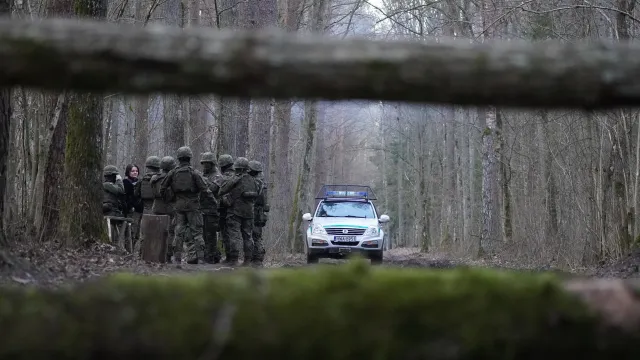
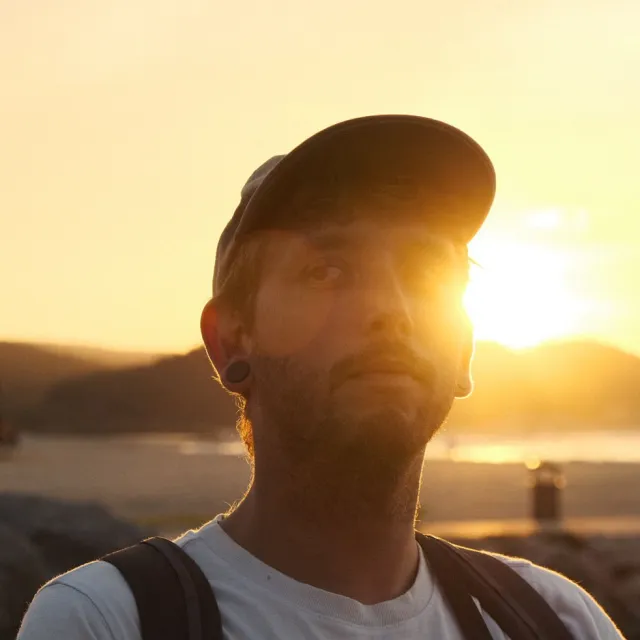
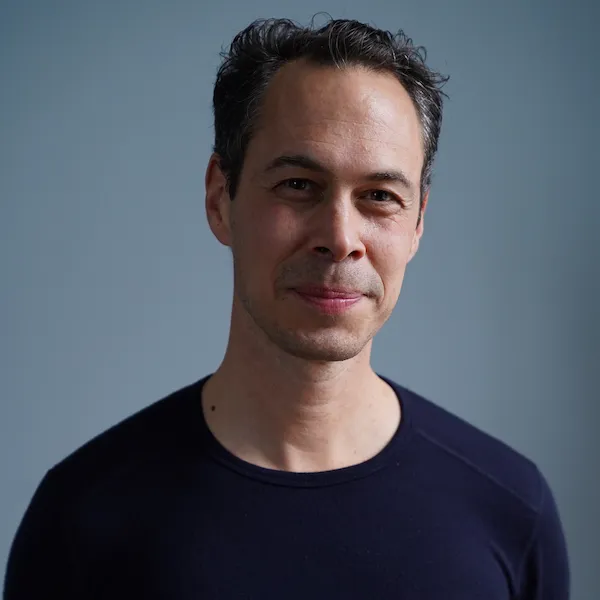
The Dutch border researcher Peter Teunissen spends a lot of time on his computer, analyzing diagrams, temperature curves, and satellite images. But his current project took the 38-year-old scientist deep into the Białowieża Forest on the border between Poland and Belarus, one of Europe’s last primeval forests and home to eagles, lynx, and bison. “The forest is enchantingly beautiful and teeming with life,” he says.
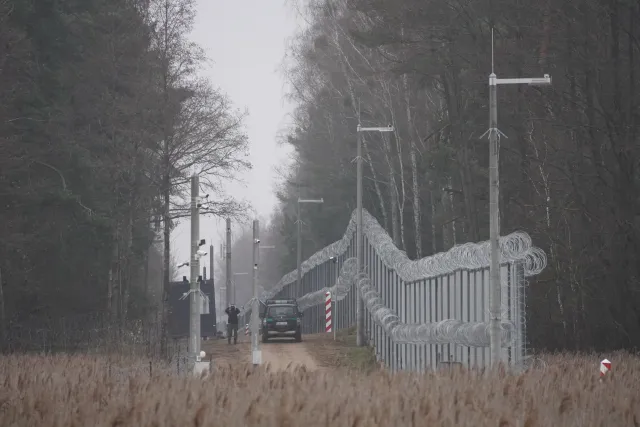
But running through the dense woods and desolate marshlands is a 5.5-meter-high steel fence, equipped with motion detectors and surveillance cameras. Time and again, the researchers have come across old sleeping bags, piles of clothes, and broken cell phones on their walks: “All your senses tell you that something isn’t right here – that you’re dealing with a new kind of danger and violence.”
2021: The Belarusian government opened up a commercial migration route to the EU via Minsk +++ Warsaw spoke of a “hybrid threat” +++ According to Frontex, the number of illegal border crossings into Poland, Latvia, and Lithuania rose from 257 in 2020 to more than 8,000 +++ In September, the Polish government declared a state of emergency in the region and closed off a three-kilometer-wide strip along the border +++ Polish military vehicles drive without license plates, and border officials are masked.
Teunissen is an academic and member of the investigative agency Border Forensics. Using innovative transdisciplinary methods, satellite data, witness testimonies, and spatial analyses, Border Forensics systematically investigated the fate of migrants at the EU’s external borders in the Mediterranean and the Alps.
More About Border Forensics
The Geneva-based research agency Border Forensics was founded in 2021. Its co-founder and President, Charles Heller, also leads “The Circumference of Violence” project at the University of Bern, which aims to unravel the various forms of violence to which migrants are exposed at the EU’s external borders. Satellite image analysis, geodata, and computer models play just as important a role in this work as collecting witnesses’ testimonies.
Heller and his colleagues previously spent over a decade using forensic oceanography to investigate the Mediterranean as a crime scene and coined the term “liquid violence”. Border Forensics has applied this approach to landscapes—mountains, deserts, and forests incorporated into border security measures.
We at the Robert Bosch Foundation support Border Forensics’ work within our migration program in order to expose human rights violations at borders, demand accountability, and raise public awareness of border violence. The goal is to put an end to practices that violate the rights and dignity of migrants and refugees.
New Border Forensics Report Makes Visible What No One Is Supposed to See
Their latest report, “The Death Zone”, which Border Forensics drew up in collaboration with the research projects “The Circumference of Violence” and “Infrastructuring Nature”, analyzes the situation at the EU border with Belarus – “and how a new kind of violent regime has been established and normalized there,” Teunissen points out. According to this report, Belarus has deliberately sent people westward to destabilize the EU. Since 2021, civil society actors have documented at least 102 deaths in the border region, with many more reported as missing and a high number of unreported cases.
“The lack of official statistics is a tactic the authorities are using to deflect responsibility for what is happening,” says Charles Heller, who co-founded Border Forensics and leads “The Circumference of Violence” project at the University of Bern. The new report now provides an initial data basis and brings to light what no one is supposed to see.
June 2022: Poland announced the completion of a 186-kilometer-long border barrier +++ The construction costs of €353 million were partially financed by EU funds +++ Starting in November 2022, a 206-kilometer-long electronic barrier was added and equipped with 3,000 cameras, night-vision devices, heat sensors, and motion detectors.
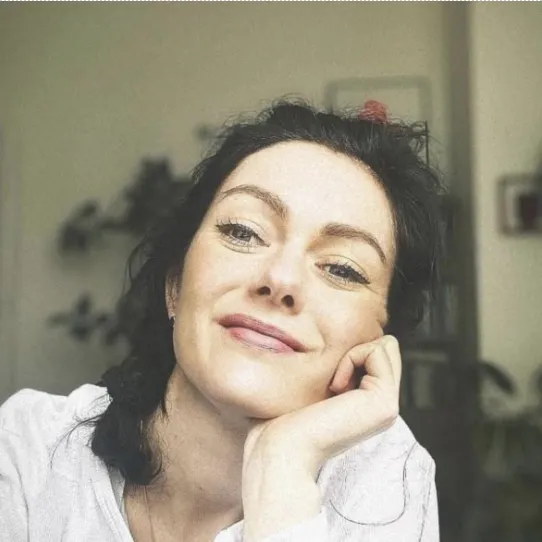
“Just as the government combines archaic batons with AI-powered cameras, we use high-tech methods and old-fashioned interviews,” says Charles Heller. The Polish sociologist Katarzyna Czarnota, a member of Border Forensics and co-author of the report, spent months traveling through the region as a researcher and human rights activist, accompanying aid workers who regularly receive calls from frightened, starving people hiding in the forest. The activists’ phone numbers are passed around within the refugee community—and sometimes those in distress receive warm clothing, food, and an important phrase: Ja proszę o azyl w Polsce (“I am seeking asylum in Poland”). But there is no cell phone reception in large areas of the region and emergency calls often go unanswered.
Katarzyna Czarnota and the research team are also documenting the shift in the social climate. Aid organizations are increasingly coming under scrutiny by the Polish authorities themselves. Several of their staff members have been charged with human trafficking in Poland and had to stand trial. “Refugees are portrayed by politicians and in the media as a threat that must be repelled,” says Czarnota. “By any means necessary.”
In October 2025, a Border Forensics team with Peter Teunissen was traveling through the region with some border guards. Along the Bug River, which forms the Polish-Belarusian border for over 178 kilometers, the team was surprised that, unlike the northern section of the border, there was no fence—only cameras and remote-controlled floodlights. “We don’t need one,” the commander explained, “as the river serves as a barrier.”
“In official reports and the media it’s often stated that a person got lost in the forest and starved to death, that someone froze to death, or died of illness or exhaustion,” Teunissen says. As if these were accidents and tragic individual fates. But it is only in combination with the infrastructure and the border guards’ behavior that the wilderness becomes a hostile, violent force of nature. “We can show how migrants have been knowingly driven into the forests, swamps, and cold of the border region—and that can be fatal,” Heller says.
Making the Death Zone Visible
Border Forensics has geocoded the distress calls and NGOs’ rescue operations, plotted them on a map of the border region, and overlaid them with the 102 documented deaths. It is clear that the incidents are particularly concentrated in wetlands, along rivers, in nature reserves, and in restricted areas—places where it is difficult to make headway and help is far away. The “death zone” becomes visible.
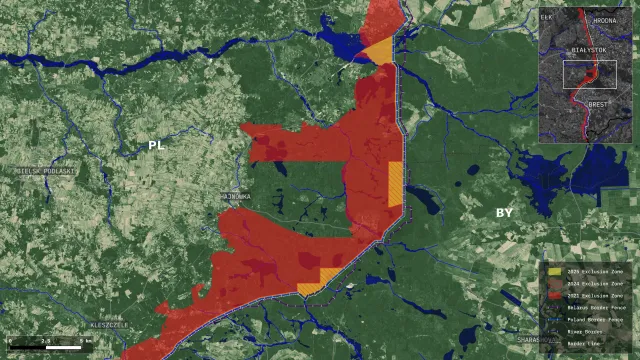
December 2023: Donald Tusk replaced the right-wing populist PiS government—and toughened up the migration policy +++ June 2024: The officials’ powers to use firearms were extended, and their liability reduced +++ March 2025: A regulation restricted the right to apply for international protection and has since been repeatedly renewed, thus effectively suspending the right to asylum.
An Individual Fate That Reflects a Wider Pattern
In late winter 2022, Ahmed Al-Shawafi spent days traveling through the Polish-Belarusian border region. He was 26 years old, came from Yemen, and wanted to reach Europe. On February 21, the Polish biologist Rafał Kowalczyk, who normally works to protect endangered species in the forest, found Ahmed’s lifeless body by the Leśna Prawa River. The official cause of death was hypothermia. Case closed?
On the basis of statements from fellow travelers, geodata, weather data, and documents, Border Forensics and its partners have reconstructed ten such deaths from 2021 to 2025. From February 10-15, 2022, a group of 35-40 people traveling with Ahmed wandered around the border region. They were driven toward Poland by Belarusian forces and forced back by Polish border guards, over and over again for five days. On February 15, the group crossed the Przewłoka River on Polish territory. Their clothes were soaked, their supplies dwindling, and exhaustion setting in. After crossing another river, the Leśna Prawa, Ahmed began to shake violently and lost consciousness. The group tried to make an emergency call but there was no signal.
When trying to get help, they met some Polish border guards and asked them for help in a rescue mission. But the officers forced the group back into Belarus without documenting the incident.
People are trapped between two fences and two border enforcement systems, with no legal recourse and no way out.
This practice of forcing people back across the border—often violently using batons and pepper spray—is known as “pushback”. Polish groups Border Forensics has collaborated with, such as We Are Monitoring, have documented countless cases in which people were shuttled back and forth between the two border facilities for days and weeks. For the report, the research team analyzed 151 interviews with refugees collected by We Are Monitoring. Nearly 80 percent of those interviewed reported being beaten, about two-thirds being exposed to pepper spray or tear gas, and 30 percent the use of firearms or rubber bullets.
People are trapped between two fences and two border control systems, with no legal recourse and no way out. Migrants call the forest between Poland and Belarus the “death zone”. Human rights activists also refer to it as the “ghetto”.
During World War II, the German occupiers committed grave crimes in the forest; yet at the same time, the wilderness offered refuge to Jews and partisans. After 1945, the USSR erected the so-called Sistema along the border with Poland, a control system consisting of barbed wire, watchtowers, and bunkers. “This history of violence, resistance, and flight is deeply inscribed in the landscape,” Charles Heller says – and refers to “sediments of violence”. Each era forms a new layer.
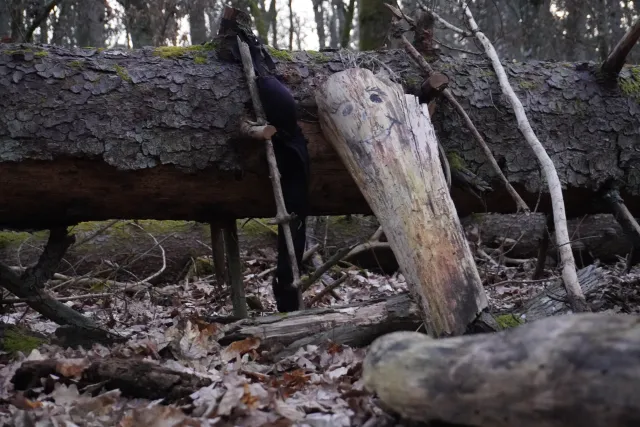
April 2026: Poland’s Interior Minister Marcin Kierwiński reported zero illegal border crossings +++ Border guards observed increased movement along the Lithuanian border +++ The right to asylum at the border with Belarus has remained suspended.
The Białowieża Forest: A Laboratory for Dismantling Refugee Protection
The report’s unequivocal conclusion is that Poland and the EU have “fallen into a trap” of their own making; the Belarusian government just had to trigger it. Only because migrants have long been treated as threats and prevented from accessing the EU through safe and legal means could Belarus “instrumentalize” their crossing the border. Poland put a great deal of effort into erecting a border barrier (partly funded by the EU), enacting emergency laws, and accepting the use of force, thereby undermining the very legal norms that define Europe.
The Białowieża Forest, it is said, served as a testing ground for eroding refugee protection, as can also be seen in the new EU Migration Pact’s crisis regulation. The benefits are said to be more than questionable, Charles Heller says: “When states close a border, the effect is at best temporary because the refugees’ need for a better life in Europe still exists and migrants will always find a way.” In this “mobility conflict” success stories like those put out by the Polish government are “downright absurd”.
With this report, the Border Forensics and its partners aim to ensure that public authorities and states can no longer deny responsibility for the dead, the missing, and the suffering. In late summer 2026, it became clear in Latvia just how relevant the issue is. Since migration routes are shifting there, Riga has stepped up its border security and is talking about a hybrid attack by Russia and Belarus. Familiar news, just 400 kilometers to the north.
The report refrains from offering specific political advice – apart from one uncomfortable statement: The only way to respond to Belarus’s instrumentalization of migration is to stop viewing migrants as a blanket threat—and to open legal pathways for them to safely reach EU territory and apply for protection. Until that goal is achieved, Border Forensics will continue its work of observing, collecting data, and analyzing – before long, probably at a new border.

![[DE Copy] Integration_Weltküche_Frau und Mädchen_800x600.jpg](/sites/default/files/styles/bosch_3d2_small/public/images/media/2026-05/Integration_Weltk%C3%BCche_Frau%20und%20M%C3%A4dchen_800x600.jpg.webp?h=d7a056e9&itok=tGc7Wqj0)