![[DE Copy] PRIO_043_Artikelheader_agglobasel_manuel-frauendorf-fotografie_IMG_0686.png](/sites/default/files/styles/bosch_16d9_medium/public/images/media/2025-08/PRIO_043_Artikelheader_agglobasel_manuel-frauendorf-fotografie_IMG_0686_1.png.webp?h=8abcec71&itok=haQPJwkV)
The Upper Rhine border region is bustling with activity. Every day, people commute between Germany and Switzerland, weaving together a vibrant cross-border rhythm. The landscape—marked by river terraces and bays—is as unique as it is sensitive. This duality poses a challenge: how can the region be developed in a way that preserves its natural beauty while meeting the infrastructure needs of its residents?
To find answers, a cross-border spatial concept was developed—with citizens actively involved from the start. After all, who better to identify everyday challenges than the people who experience them firsthand? For the first time, residents were systematically included in a major spatial planning initiative.
![[DE Copy] PRIO_026_BG_agglobasel_manuel-frauendorf-fotografie_dji_fly_2024.png](/sites/default/files/styles/bosch_original_medium/public/images/media/2025-08/PRIO_026_BG_agglobasel_manuel-frauendorf-fotografie_dji_fly_2024_0.png.webp?itok=7olFsL12)
![[DE Copy] PRIO_112_1600_agglobasel_manuel-frauendorf-fotografie_IMG_0068.png](/sites/default/files/styles/bosch_original_medium/public/images/media/2025-08/PRIO_112_1600_agglobasel_manuel-frauendorf-fotografie_IMG_0068_0.png.webp?itok=rDfBryvj)
Mobility, Housing, Daily Life: What Matters to Citizens
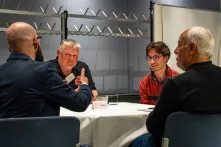
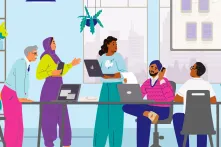
In many ways, this bold approach proved to be a success. Four citizen panels brought together people from both sides of the border to discuss structural improvements and key priorities for the spatial concept—from misaligned bus schedules to a lack of housing near the border. Additional formats, such as joint walks, helped gather ideas and impulses directly from the community.
One key insight: the earlier citizens were involved, the more impactful their contributions became. However, not everything went smoothly. The region’s size—spanning numerous municipalities—posed a structural challenge. The diversity of local contexts made it difficult to ensure consistent and meaningful participation. Many residents felt only marginally affected, which made it harder to connect with the abstract topic of spatial planning.
22 Municipalities Unite Around a Shared Vision
Looking back, it would have been helpful to focus more strongly on topics with immediate relevance to residents—areas where people feel the impact directly and are more motivated to engage. Still, the process helped anchor the municipalities to the shared spatial concept and offered citizens a new sense of regional identity.
In a follow-up survey, all participants expressed interest in taking part in similar projects in the future. Ultimately, 22 municipalities signed a symbolic charter to implement the shared vision. The Common Ground program also launched additional participation initiatives in the region. Looking ahead, a regional participation body could be established to structurally involve citizens in future projects.