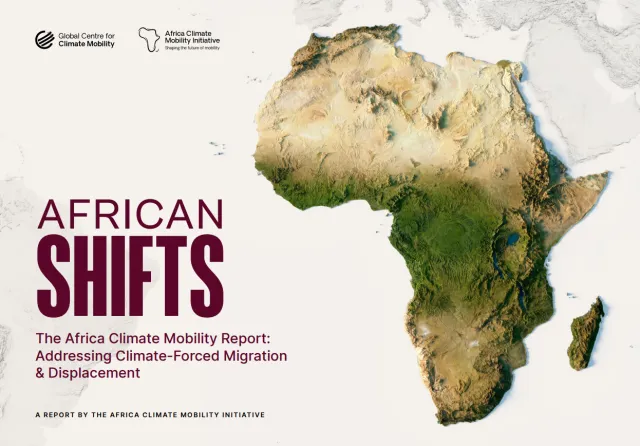
African Shifts Report

Program brochures

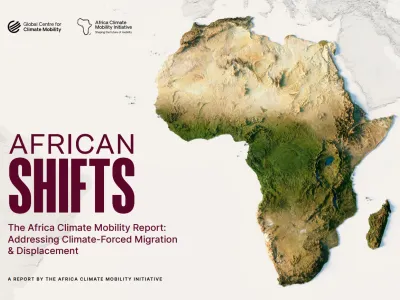
The “African Shifts” report of our partner Global Centre for Climate Mobility documents the current realities of climate-driven migration in Africa and outlines possible future scenarios. The findings show that the consequences of climate change - ranging from biodiversity loss to declining food production - are already being felt today and will intensify under current emission trends. The report shows that increasing heat, droughts, floods, and coastal erosion will render large parts of the continent uninhabitable and force millions of people to flee. At the same time, unplanned migration risks exacerbating tensions over scarce resources and further destabilizing already fragile regions. Those who are unable to move—due to poverty, old age, or disability—are particularly vulnerable, as they remain exposed to increasingly dangerous climatic conditions without adequate protection. The “African Shifts” report highlights these risks but also offers perspectives: Through forward-looking planning and investments in resilience, Africa can use climate-driven mobility as an opportunity to strengthen communities, advance regional integration, and promote development and shared growth despite challenging climatic conditions.
Global Centre for Climate Mobility (GCCM)

Global Report on Internal Displacement

Articles
2026

More than 82 million people worldwide are currently displaced within their own countries – the highest number ever recorded. The Global Report on Internal Displacement 2026 shows that conflict and violence have become the leading drivers, pushing displacement to record levels. At the same time, climate risks and extreme weather continue to force millions from their homes. Internal displacement has thus become a global structural crisis that goes far beyond humanitarian response. The report provides data, analysis and solutions to address root causes and create long-term prospects for those affected.

Internal Displacement Monitoring Centre
Image
Cover Publication Routes in Flux_600x800.png
Download PDF

Routes in Flux: is EU migration policy working?

2026

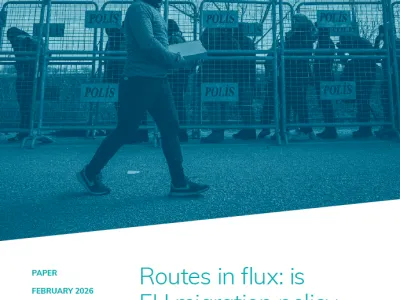
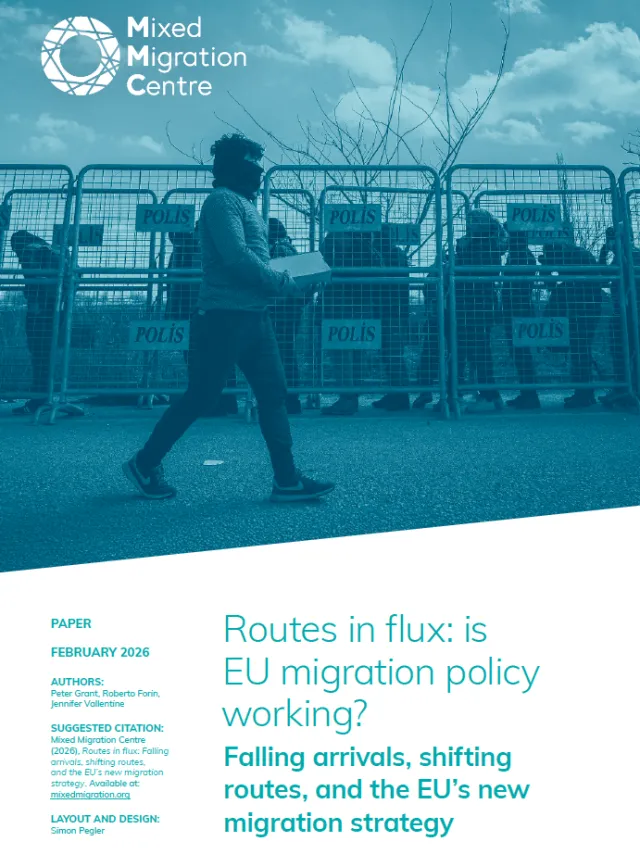
The new paper “Routes in flux: is EU migration policy working?” by our partner Mixed Migration Centre provides an up to date analysis of migration dynamics in Europe against the backdrop of recent policy developments. It examines how arrival numbers and migration routes have evolved in recent years and to what extent European measures have shaped these trends. The report outlines key findings on emerging patterns, governance instruments, and structural challenges, offering an evidence based for assessing the effectiveness of EU migration policy.

Mixed Migration Centre

Authors

Peter Grant, Roberto Forin, Jennifer Vallentine

Image
Cover Report Digital Identity and Migration_600x800.png
Download PDF

Digital Identity and Migration

2026

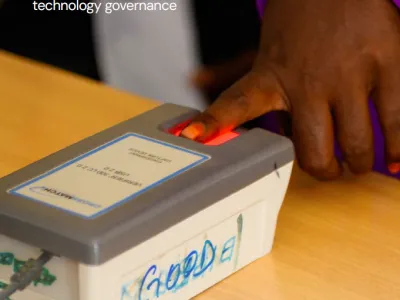
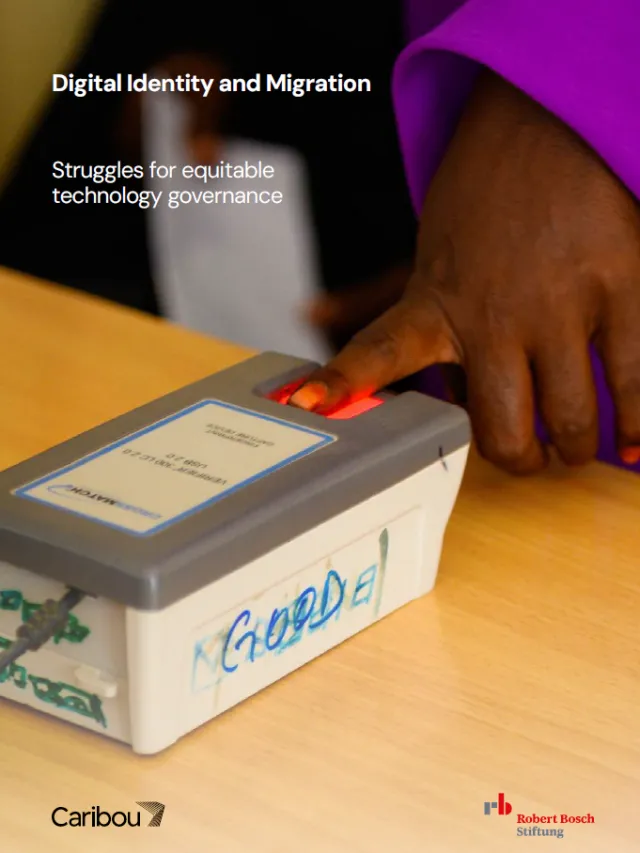
The report “Digital Identity and Migration” analyses how emerging digital identity systems affect migrants, refugees, and other marginalized groups. It shows that new technologies such as digital wallets can improve access to essential services but also risk reinforcing existing forms of exclusions when safeguards and inclusive design are lacking. Drawing on case studies and fieldwork in Kenya and Germany, the report highlights gaps between policy ambitions and practical realities and provides evidence based insights for designing more accessible, rights focused identity systems.

Caribou

Authors

Margie Cheesman

Image
Cover Ukrainian displaced people_600x800.png
Download PDF

Ukrainian displaced people's inclusion in Europe

2026

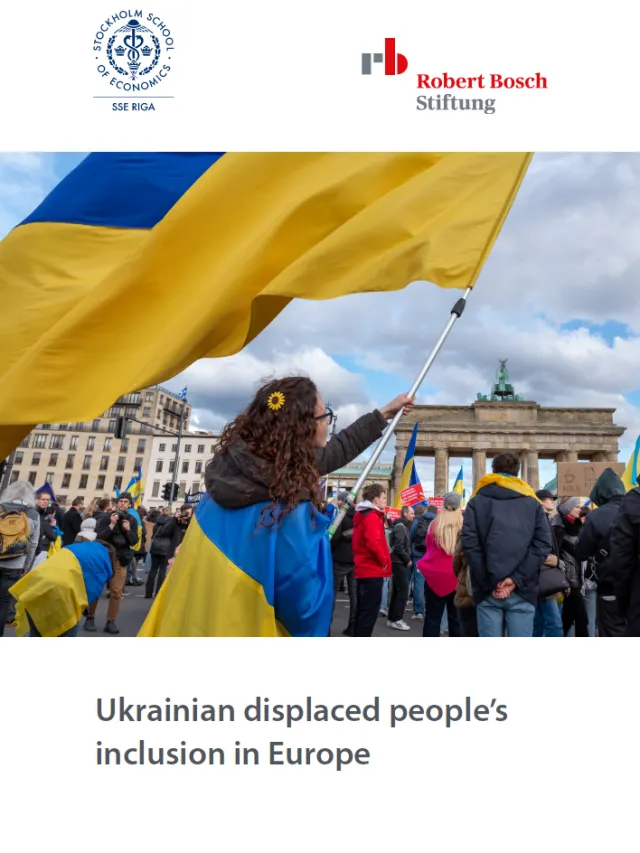
In wake of the Russian full-scale invasion of Ukraine, Europe welcomed over six million displaced people. The initial response was built under pressure. Two years on, the questions changed. What helps people move from arrival to work, school, and stable routines? What breaks down when emergency measures meet long-term needs? What can countries learn from each other when systems, labour markets, and languages differ?

Based on roundtables and discussions involving academics, policymakers, and the business community with active participation from Ukrainian displaced people, this briefing analyses the responses across 12 countries, and points out factors for more sustainable support.

Stockholm School of Economics in Riga

Authors

Kata Fredheim

Image
Cover Publication How smuggling really works_600x800.png
Download PDF

How smuggling really works

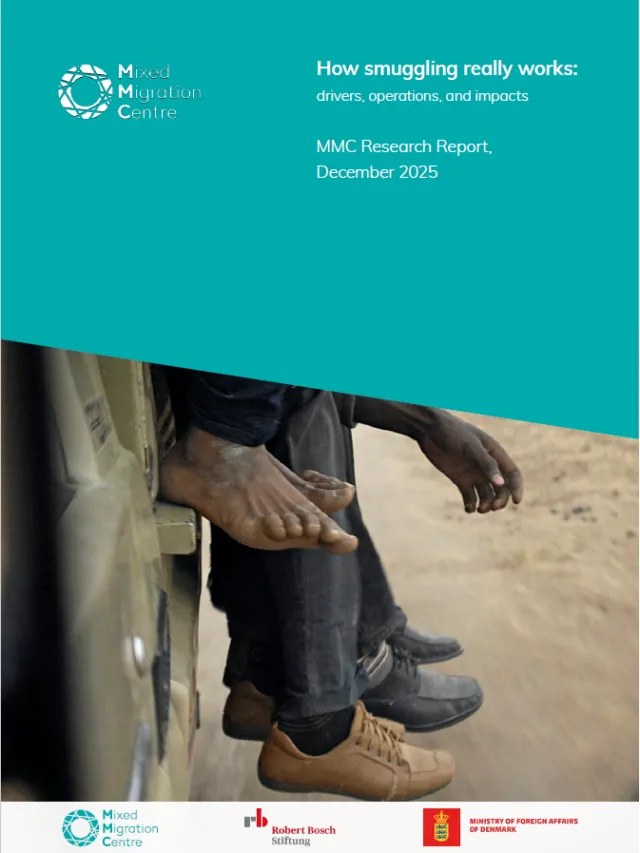
The report from the Mixed Migration Centre analyses how smuggling works – what contributes to a demand in smuggling and what may be effective in addressing it. It brings together evidence from over 80,000 interviews with people on the move along key mixed migration routes worldwide and more than 450 interviews with smugglers in Africa. The researchers find that current policies aimed at curbing smuggling may in fact be contributing to irregular movement and offers key recommendations on how to do better. 

Mixed Migration Centre

Authors

Chloe Sydney, Ndongo Diouf, Jean-Luc Jucker, Francesco Teo Ficcarelli