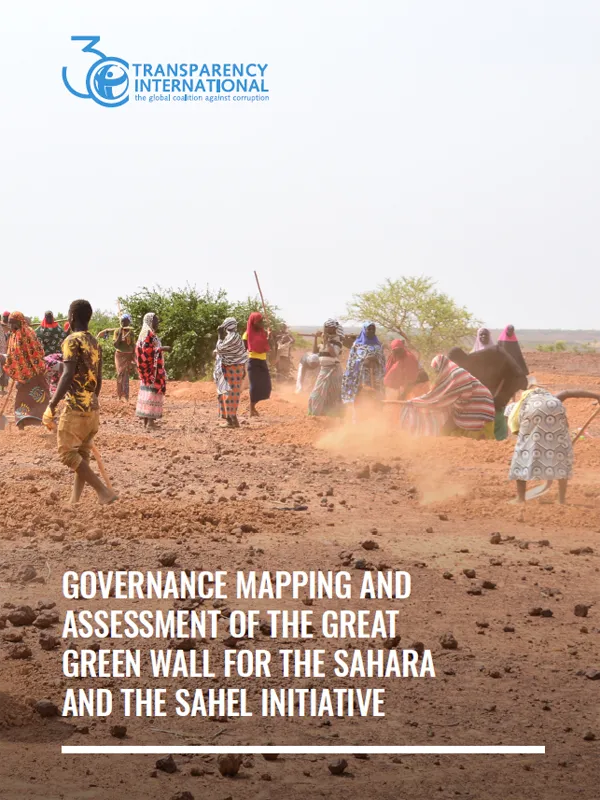
Governance Mapping and Assessment of the Great Green Wall for the Sahara and the Sahel Initiative
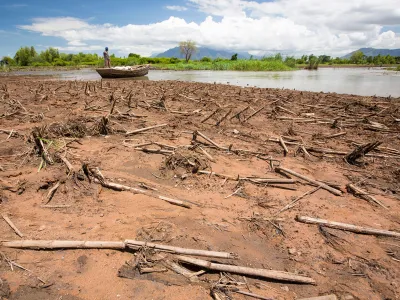
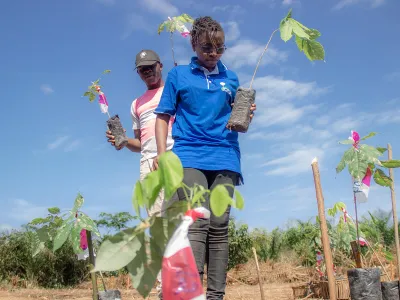
The Great Green Wall for the Sahara and the Sahel Initiative (GGWI) was launched by the African Union in 2007 to build a sustainable future across the vast Sahel region. By 2030, the initiative aims to restore 100 million hectares of degraded land, preserve fertile land for agriculture and strengthen resilience to climate change.
To realise it’s ambitions, however, it must be vigilant about good governance to ensure that resources are used efficiently, transparently and accountably and that policies and projects are designed to benefit the people and environment it should serve. Our partner Transparency International analyses the GGWI in three critical areas: transparency, participation, and accountability and integrity. The report, supported by the Robert Bosch Foundation, focuses on the Pan African Agency of the Great Green Wall and its 11 member states, with a particular focus on Niger and Senegal.

![[DE Copy] GemeinsamVoran-Cover_210 x 297.png](/sites/default/files/styles/bosch_4d3_medium/public/images/media/2025-06/GemeinsamVoran-Cover_210%20x%20297.png.webp?h=6a9e38f6&itok=PSqKuGSE)
![[DE Copy] Climate-Landrights2025-cover.png](/sites/default/files/styles/bosch_4d3_medium/public/images/media/2025-05/Climate-Landrights2025-cover.png.webp?h=0a1a5052&itok=hrW8i-NA)


![[DE Copy] Laura Rahmeier](/sites/default/files/styles/bosch_square_medium/public/images/media/2024-04/20231123_headshot_LauraRahmeier_1200px.jpg.webp?h=dcf17b60&itok=Bk4IXcSp)

![[DE Copy] Youth Negotiators Programme_Projektseite_800x600](/sites/default/files/styles/bosch_4d3_medium/public/images/media/2023-11/Youth%20Negotiators%20Academy_800x600.jpg.webp?h=827069f2&itok=jWspkrqW)
![[DE Copy] Christiane Käsgen_Profilbild](/sites/default/files/styles/bosch_square_medium/public/images/media/2023-07/Kaesgeh_Christiane_02.png.webp?h=d2de68a6&itok=aoG0sCWv)