Demokratie ist keine Frage des Geldes

Das Vertrauen in die Demokratie ist in Deutschland eng ans eigene Einkommen gekoppelt. Ein Bürgerrat für Steuergerechtigkeit könnte helfen, sagt Ellen Ehmke.

Bild
Hallo Bundestag_Gastbeitrag EE_Header

Regelmäßig erscheinen alarmierende Berichte über große Ungleichheit in Deutschland. Deren schädliche Auswirkungen sind bekannt: Große Ungleichheit reduziert die soziale Durchlässigkeit einer Gesellschaft, sie begünstigt Kriminalität, verringert die Lebenserwartung und kann negative Auswirkungen auf die wirtschaftliche Entwicklung eines Landes haben.

Warum ein Bürgerrat zum Thema Steuern und Gerechtgkeit ein Gegenmittel sein könnte, erklärt Ellen Ehmke in einem Gastbeitrag für die Frankfurter Rundschau. Die englische Version finden Sie bei uns (oben rechts EN klicken). 

Majority says wealth and income are not fairly distributed

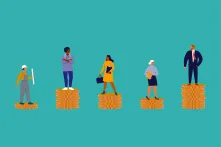
One finding is particularly worrying. The distribution report published by the Hans Böckler Foundation's Institute of Economic and Social Research (WSI) at the beginning of November shows that people living in poverty have particularly low levels of trust in democratic institutions, in parliament, political parties and politicians. This dissatisfaction has a substantive core. People living in poverty have often experienced that their interests count for less and that others look down on them. They are underrepresented in parliaments and their interests are less heard

Dissatisfaction with the distribution of income and wealth, on the other hand, is not a problem limited to people with low incomes. In a study conducted by the Bertelsmann Stiftung in 2022, 79% of respondents said wealth and income were not fairly distributed in Germany. There was broad support for more redistributive measures by the state. At the same time, there was little willingness to raise taxes to provide financial support for people living in poverty. Only 37 percent agreed with this.

Different ideas of justice seem to be in conflict here. Should people receive assistance according to their needs? Or should income and assets always be in proportion to individual performance? And what would that mean in terms of inheritance, for example? Inheritance taxes are unpopular, even though the vast majority of people in Germany never inherit. Only 30 percent of the population receives a gift or inheritance in the course of their lives, while 40 percent of all households have no assets. A more equitable distribution may be widely desired in the abstract, but in reality, the willingness of individuals to participate financially is low. There is also a lack of knowledge about how such participation might take shape. The question of the right measures therefore remains an ongoing controversy. How can this contradiction be resolved and the drifting apart of social worlds be avoided?

A citizens' councils can help

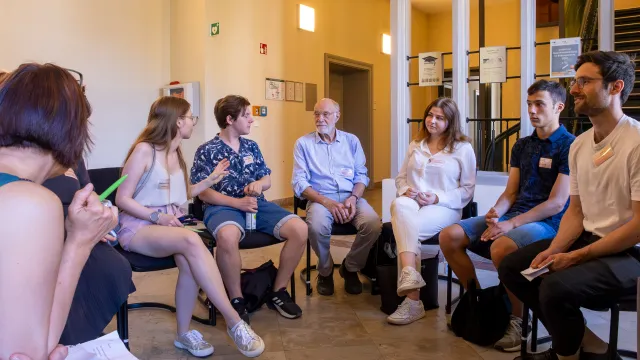
This is where formats for democratic participation such as citizens' councils can help. This is the finding of a recent feasibility study by the Tax Justice Network, funded by the Robert Bosch Stiftung, which was presented on Monday. Citizens' councils create spaces where people can reflect on – and sometimes rethink – their attitudes, even on socially polarizing issues. In Ireland, for example, a citizens' council shed light on a social compromise for the highly controversial issues of abortion and same-sex marriage, which later served as a model for a referendum.

Expert presentations in the citizens' councils offer input from specialists on a given topic, which is important for those perceived as complex, such as taxes and distribution. Even more importantly, this format brings together people from different positions in society, backgrounds and experiences and allows them to engage with each other over a longer period of time. Participants not only learn the potential impact of a tax policy measure for themselves, but also for others.

This, in particular, increases the chances for changing attitudes. In the best case, such formats can actually succeed in finding new, cross-party compromises. Experience from previous citizens' councils shows that the chances for this are good. In addition, a citizens' council could regain the trust of people with low incomes in particular. In a citizens' council, they would be represented in proportion to their share of the population, and their ideas and needs would be included in the final recommendations.  
 

Ähnliche Beiträge

Mensch auf Treppe mit Pride Farben_800x600.jpg
Story

Queerfeindlichkeit nimmt zu – jetzt zählt politisches Handeln

Diversität Unternehmen_Shutterstock_Gvardgraph_800x600.png
Story

Wirtschaft in der Pflicht: Unternehmen müssen sich als Demokratieakteure begreifen

gedreht_imago0102094628h_(c)IMAGO_Panthermedia 800x600.jpg
Story

Wenn stille Gruppen nicht mehr still sind…

Schülerparlament
Story

Demokratie im Kleinen lernen