Common Ground
How can we overcome borders to achieve more together? The Robert Bosch Stiftung’s “Common Ground – Shaping the Future Across Borders” programme strengthens cross-border citizen participation in Germany’s border regions. During the pilot phase from 2022 to 2025, eight innovative participation projects received funding and academic support. The experience gained during this phase shows that when municipalities, civil society and citizens work together across borders as equal partners, new solutions to shared challenges can emerge.
Since 2026, Common Ground has entered its next phase: four of the original eight projects are continuing their work. Until 2027, they will further develop the participatory approaches and structures established so far and work to firmly embed their achievements in their respective border regions.
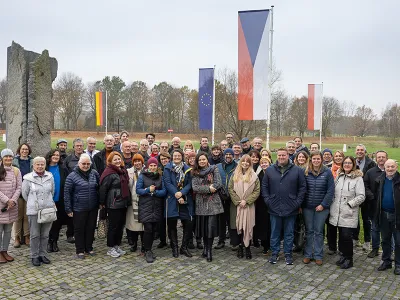
In border regions, a united Europe is part of everyday life. People often live and work naturally on both sides of the border. Yet these areas also face unique challenges - such as differing administrative systems or misaligned public transport schedules.
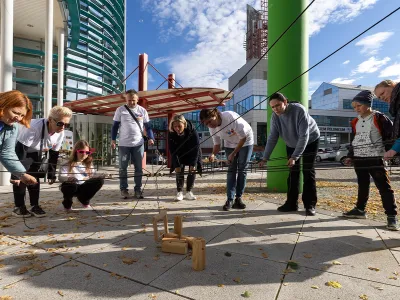
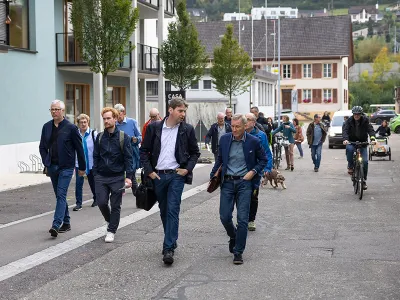
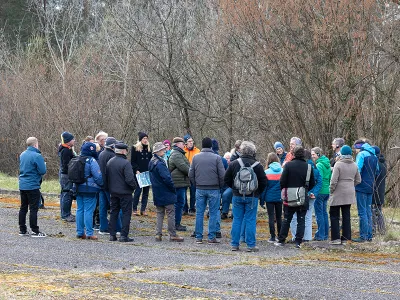
How can regions grow closer together? To strengthen democracy in Germany and Europe, Common Ground brings people together across borders and fosters meaningful participation in local communities. Whether through citizen forums, shared picnics, or cross-border bike tours, residents are actively involved, and new forms of participation are tested—boldly, creatively, and with visible success.
For funding, municipalities and districts, as well as representatives from politics and public administration, joined forces with civil society organisations in neighbouring countries as project partners. During the pilot phase from 2022 to 2025, the eight Common Ground regions received close support. The focus was on testing cross-border participation processes, building expertise in citizen participation and developing lasting participatory structures. Throughout the three-year period, the Common Ground regions were closely supported by our implementation partner, the nexus Institute.In the second phase in 2026/2027, the focus is on ensuring long-term continuity: Four projects are continuing their work, further developing the structures and participatory approaches established during the pilot phase.
In Brief
- Funding period: 2022–2025
- Consolidation phase: 2026-2027
- Goal: Strengthening cross-border citizen participation and democracy
- Participating countries: Germany, France, Belgium, Luxembourg, the Netherlands, Poland, Czech Republic, Swiss
- Success factors: Innovative formats, inclusion of often-overlooked groups, overcoming language barriers, knowledge exchange, and creation of sustainable structures
How can citizen participation succeed when conditions differ from country to country?
A key element of Common Ground was understanding the specific participation cultures in each region. Experts from the participating countries examined legal and cultural differences and documented their findings in country reports. The pilot phase was a shared learning journey, with insights summarized in a scientific report.
Different Perspectives on Citizen Participation
Read the country reports available in multiple languages or the summary that highlights key insights and offers cross-border perspectives.
Overcoming Language Barriers
Language was a central challenge. While simultaneous interpretation was essential for large events, the projects developed creative solutions for smaller groups—such as language buddies or monolingual working groups led by multilingual facilitators. In the tri-national project Climate Change and Health, digital tools and online formats were indispensable due to the region’s size and population of over 4 million.
A Diversity of Formats: Reaching People Across Borders
To engage diverse audiences, the projects used a wide range of formats and methods:
- Agglomeration Concept SaarMoselle held creative pop-up events in supermarket parking lots
- R(h)einforced Connection organized cross-border bike tours
- Climate-Friendly City Center hosted low-threshold citizen picnics
- Borderless Climate Neutrality ran popular workshops on balcony solar panels
- Stronger together showed how even small successes—like a bilingual event calendar—can boost motivation
Strong networks and regular exchange proved essential. In the Hochrhein Planning Region, this led to 22 municipalities signing a charter for joint spatial development. And Trialog in the Tri-Border Region improved cooperation between cities facing major transformations—a vital step forward.
Want to Learn More About Cross-Border Participation? Explore the stories behind the eight pilot projects—their successes, challenges, and the people who made them possible.