Common Ground: Shaping Regions Across Borders

About the Project
Regions that connect neighboring states - border regions - are special areas that offer a great deal of potential. However, although cross-border relations between Germany and its neighboring countries have stepped up, different administrative structures on both sides of the borders still impede the joint shaping of the regions. With Common Ground, we promote the cross-border participation of the population in the shaping and development of their region. The program aims to establish a unifying culture of participation between politics, administration, civil society, and the local population on both sides of the border. During the pilot phase from 2022 to 2025, eight border regions tested different forms of cross-border citizen participation. Since 2026, Common Ground has entered its second phase: four of the original projects will continue their work until the end of 2027. The focus is now on consolidating the progress made so far. Successful participatory approaches are being further developed, while the structures established during the pilot phase are being firmly embedded in the regions for the long term. The aim is to create lasting cross-border participation structures that continue to connect policymakers, public administration, civil society and citizens over the long term.
Why are we running the project?
We are committed to strengthening democracy and the rule of law in Germany and Europe—built on the critical trust of citizens. This trust is rooted in a vibrant democratic culture at the local and regional level. Inclusive participation formats help reinforce this foundation. In border regions especially, cross-border civic engagement fosters openness and solidarity, encourages understanding of different (cultural) perspectives, and strengthens social cohesion across national lines.
How does the project work?
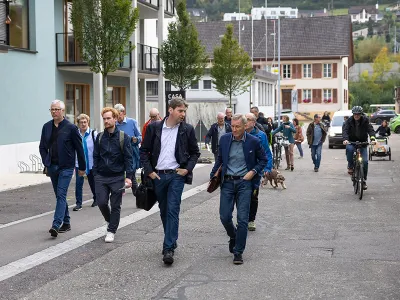
During the pilot phase from 2022 to 2025, we supported citizen participation processes in eight German border regions. The focus was on regions with limited experience of cross-border citizen participation. Policymakers, public administrations and civil society worked together with citizens on both sides of the border to address regional challenges and develop new forms of cooperation. The projects were accompanied by academic research.
Since 2026, successful approaches have been taken forward in a second project phase: four of the original projects are continuing their work until 2027. The focus is now on further developing and consolidating what has been achieved. The participatory structures established during the pilot phase are to become firmly embedded in the regions over the long term, strengthening cross-border cooperation on a lasting basis. Each project has its own academic research partner.
Who is involved and where does the project take place?
The project targets local authorities—such as municipalities and counties—as well as civil society organizations in German border regions and neighboring countries. Eligible areas are those that form a shared cross-border space along Germany’s national borders. The program is coordinated by the nexus Institute for Cooperation Management and Interdisciplinary Research, which supports the selected regions in designing and implementing their participation processes, facilitates peer learning, and organizes training.
News from the project



Your contacts
Sylvia Hirsch
Senior Project Manager
Eva Roth
Senior Project Manager

Nicolas Bach
Research assistant
nexus Institut
Dr. Claudia Bosch
nexus Institut