Machbarkeitsstudie “Gemeinsam voran? Deliberative Beteiligung im Klimaschutz“
![[DE Copy] Klimamitbestimmung_cc Sarah Sakotic-Sondermann_470x577.png](/sites/default/files/styles/bosch_4d3_medium/public/images/media/2025-05/Klimamitbestimmung_cc%20Sarah%20Sakotic-Sondermann_470x577.png.webp?h=35c5d4cc&itok=uYEtnrkL)
About the project
German climate policy faces a double challenge: on the one hand, it must achieve ambitious goals in order to meet the commitments of the Paris Agreement and the requirements of the Climate Protection Act. On the other hand, it is increasingly encountering social tensions – especially when measures deeply affect people's everyday lives, such as in the transport or building sectors. In such situations, it becomes clear time and again that political decisions stall if they do not enjoy broad social support.
This is where the project comes in. The basic idea is that deliberative participation can open up new ways of participation. Randomly selected citizens' assemblies allow for informed, fair and constructive discussions on complex issues, and bring perspectives to the table that are usually not heard in traditional political processes. Combined with stakeholder participation, they can ensure broad support for policies. In other countries and at the municipal level in Germany, such formats have already contributed successfully to resolving controversial issues. At the federal level, however, there is still no structural anchoring.
The project aims to close this gap. Our partner 'Klimamitbestimmung e.V.' is developing scenarios for how deliberative participation can be integrated as an integral part of German climate protection governance - for example in the Climate Protection Act (KSG). In contrast to previous ad hoc procedures, the aim is to create an institutionalized participation mechanism.
To this end, Klimamitbestimmung e.V. is conducting a comprehensive feasibility study. The study is based on interviews with experts from politics, administration, science and civil society, a co-creation workshop, a legal opinion and literature analyses. Each scenario will be evaluated according to specific criteria such as political feasibility, legal feasibility, effort and impact.
The aim is to make climate policy more democratic, more effective and more resilient to social tensions, thereby making a concrete contribution to sustainable transformation and strengthening our democracy.
Why we are running the project?
International commitments, social demands and resistance: Climate policy is under considerable pressure. Conflicts over social justice, burden-sharing and the pace of change complicate political decisions and jeopardize their acceptance. In this situation, new forms of democratic legitimacy are needed that go beyond traditional participatory processes.
The involvement of citizens' panels is particularly valuable in climate policy, a field with long-term implications and short-term conflicts of interest. The need is great: there is currently a lack of structurally anchored, democratically legitimized participation formats at the federal level that are regularly and effectively integrated into legislative processes.
What is our goal?
We want to create a basis for the permanent and systematic integration of deliberative participation in German climate policy. The aim is to ensure that the public's perspective is regularly and bindingly included in key climate policy decision-making processes, especially when updating climate protection programs.
The feasibility study therefore develops various realistic scenarios for how citizen and stakeholder participation can be embedded in existing procedures and designed in a meaningful way. These scenarios are examined in terms of political practicability, legal feasibility, costs and potential impact.
The results will be incorporated into a possible amendment to the Climate Protection Act – or serve independently as a blueprint for future participation formats at federal, state and international level.
How does the project work?
The focus of the implementation is on the development of concrete scenarios. To this end, the project team will analyze at which points in the legislative and consultation process participation would be possible and meaningful - especially with regard to § 9 (3) KSG, which regulates participation in the updating of climate protection programs.
To develop the scenarios, expert interviews, workshops with relevant actors (e.g. from politics, administration, science, civil society and participatory practice) and in-depth literature analyses will be conducted. At the same time, a legal opinion will be obtained to assess the legal feasibility of individual models.
The project is carried out by Klimamitbestimmung e.V., an organization with many years of experience in the field of deliberative participation.
News from the project
![[DE Copy] IMAGO-Guido Schiefer_800x600.jpg](/sites/default/files/styles/bosch_4d3_medium/public/images/media/2025-06/IMAGO-Guido%20Schiefer_800x600.jpg.webp?h=827069f2&itok=lgrHPtP1)
Your contacts
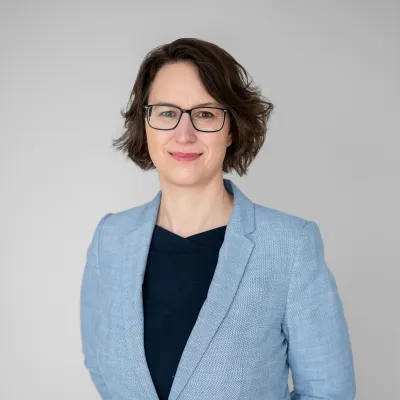
Sylvia Hirsch
Senior Project Manager
![[DE Copy] Leonie Disselkamp_cc Raphael Janzer.PNG](/sites/default/files/styles/bosch_square_medium/public/images/media/2025-05/Leonie%20Disselkamp_cc%20Raphael%20Janzer.PNG.webp?h=04d92ac6&itok=2qirTYgy)
Leonie Disselkamp
Klimamitbestimmung e.V.
![[DE Copy] Simon Wehden_cc Moritz Lafendt.png](/sites/default/files/styles/bosch_square_medium/public/images/media/2025-05/Simon%20Wehden_cc%20Moritz%20Lafendt.png.webp?h=04d92ac6&itok=t6nvFdfv)
Simon Wehden
Klimamitbestimmung e.V.

![[DE Copy] 099_Projektteaser_saarbrücken_manuel-frauendorf-fotografie_IMG_7053.png](/sites/default/files/styles/bosch_4d3_medium/public/images/media/2025-08/099_Projektteaser_saarbr%C3%BCcken_manuel-frauendorf-fotografie_IMG_7053.png.webp?h=827069f2&itok=3UGQSNeO)
![[DE Copy] 063_projektteaser_frankfurt_manuel-frauendorf-fotografie_IMG_4965.png](/sites/default/files/styles/bosch_4d3_medium/public/images/media/2025-08/063_projektteaser_frankfurt_manuel-frauendorf-fotografie_IMG_4965.png.webp?h=827069f2&itok=FdkpyObK)
![[DE Copy] 007_Projektteaser_zittau_dreiländereck_manuel-frauendorf-fotografie_IMG_7235.png](/sites/default/files/styles/bosch_4d3_medium/public/images/media/2025-08/007_Projektteaser_zittau_dreil%C3%A4ndereck_manuel-frauendorf-fotografie_IMG_7235.png.webp?h=827069f2&itok=ZPq9soMl)
![[DE Copy] PRIO_026_Projektteaser_emmendingen_manuel-frauendorf-fotografie.png](/sites/default/files/styles/bosch_4d3_medium/public/images/media/2025-08/PRIO_026_Projektteaser_emmendingen_manuel-frauendorf-fotografie.png.webp?h=827069f2&itok=fZ8IOXS1)
![[DE Copy] PRIO_008_Projektteaser_guben_manuel-frauendorf-fotografie_HYPERLAPSE_0300-2 (1).png](/sites/default/files/styles/bosch_4d3_medium/public/images/media/2025-08/PRIO_008_Projektteaser_guben_manuel-frauendorf-fotografie_HYPERLAPSE_0300-2%20%281%29.png.webp?h=827069f2&itok=x-wFzoh6)
![[DE Copy] PRIO_093_projekt teaser_eupen_manuel-frauendorf-fotografie_IMG_2869.png](/sites/default/files/styles/bosch_4d3_medium/public/images/media/2025-08/PRIO_093_projekt%20teaser_eupen_manuel-frauendorf-fotografie_IMG_2869.png.webp?h=827069f2&itok=SJIQdZeM)
![[DE Copy] PRIO_070_Projektteaser_agglobasel_manuel-frauendorf-fotografie_IMG_0831.png](/sites/default/files/styles/bosch_4d3_medium/public/images/media/2025-08/PRIO_070_Projektteaser_agglobasel_manuel-frauendorf-fotografie_IMG_0831.png.webp?h=827069f2&itok=CZ1HdHTU)
![[DE Copy] Projektteaser_rbs_cgr_ralingen_manuel-frauendorf-fotografie_IMG_0165.png](/sites/default/files/styles/bosch_4d3_medium/public/images/media/2025-08/Projektteaser_rbs_cgr_ralingen_manuel-frauendorf-fotografie_IMG_0165.png.webp?h=827069f2&itok=YTnG-Aqs)