Evgenia, why is it so important to you and your team to bring literature specifically to cities on the front line?
Evgenia Lopata: The literature festivals are a way of telling the people who live there: You have not been abandoned. You are still part of Ukraine’s cultural life. Writers, publishers and readers come here. Ukraine comes here.
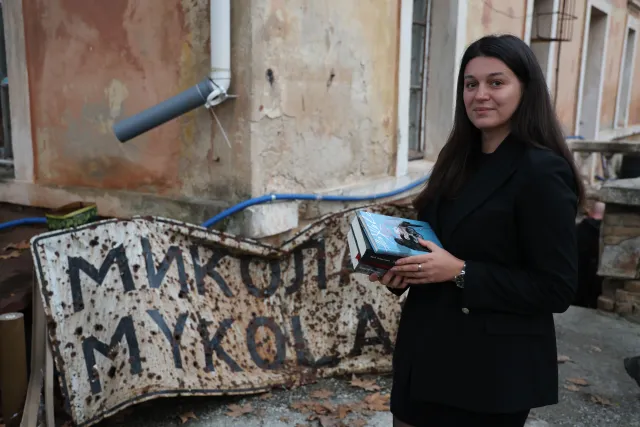
Culture needs to be there, especially where people are facing the greatest hardship. It matters to us that the war does not come to define life in these cities entirely. That Kharkiv, Zaporizhzhia and other cities near the front line are associated not only with shelling, destruction and war, but also with books, poetry, music, conversations and encounters.
Perhaps most importantly, we want people in these cities not just to survive, but to live. To read books, listen to poetry, meet each other, debate, fall in love and make plans for the future. Because the possibility of living such a life is exactly what Ukraine is fighting for.
Given the security situation in frontline cities, how is it possible to hold literature festivals there at all?
Evgenia Lopata: Our approach is to hold the events directly in air-raid shelters whenever possible. This means we do not have to cancel individual sessions because of attacks, while at the same time ensuring the highest possible level of safety for everyone involved.
We often receive support from the military with logistics and transfers between festival locations, as travelling on roads and highways in frontline regions can be extremely dangerous.
But of course, the risks remain. We still stay in regular hotels, move around in public spaces and travel by train, which can also come under attack from Russian drones. The constant threat and the tension that comes with it are probably the biggest challenges in our work.
And yet, in my view, holding literature festivals in frontline cities has nothing to do with heroism or with taking risks for the sake of making a symbolic gesture. It is simply ordinary cultural work under extraordinary circumstances. We are just trying to do our work where it is needed most today.
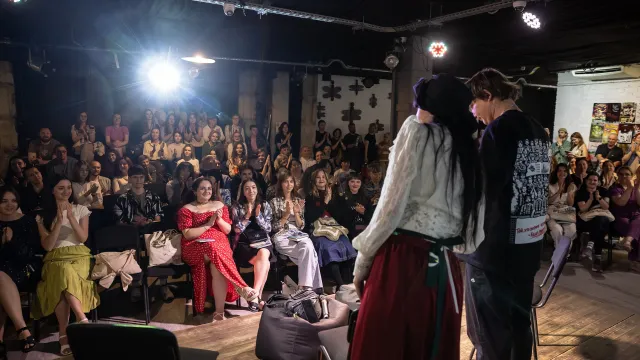
The literature festivals in Odesa and Mykolaiv have just come to an end. What is your impression now: What can the festivals give to people living through war?
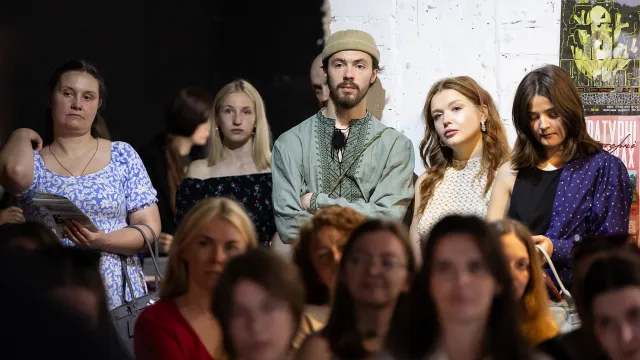
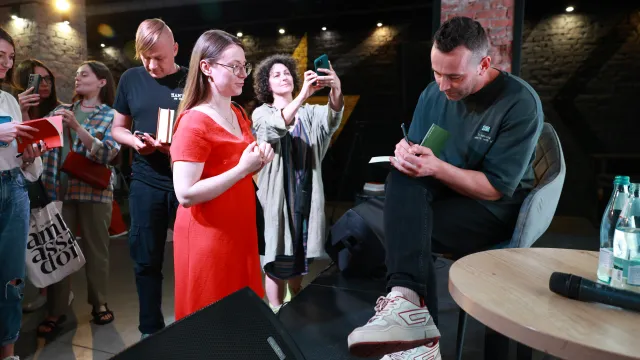
Evgenia Lopata: Our audiences, young and old, people from all kinds of professional backgrounds, including many members of the military and teachers, are looking for a little light and warmth in these encounters, a glimpse of the life they had before, when cultural events were simply part of everyday life. Today, there are hardly any literary events left in a city like Mykolaiv. Many visitors told us that they wait all year for our festival because it is one of the few opportunities they have to meet writers in person.
I believe that culture gives people hope during the war. Hope for a future, for an end to the war and for a Ukrainian victory. But also hope that, until then, we will not lose our culture, our knowledge or our humanity.
Because even under fire, we come together, read books, share experiences, discuss and reflect. We create spaces where people can meet and feel that they are not alone. And to me, that is perhaps the greatest value of our festivals.
Meridian Literature Forums
Since 2024, our special division Ukraine has supported the Meridian Literature Forums in Ukrainian frontline cities. Find out more about the festivals and read international media coverage here: