![[DE Copy] Vielfaltsbarometer 2025_Repraesentation_Header_imago826811224.jpg](/sites/default/files/styles/bosch_16d9_medium/public/images/media/2026-01/Vielfaltsbarometer%202025_Repraesentation_Header_imago826811224.jpg.webp?h=8abcec71&itok=pdZRYRet)
Germany is diverse. Whether you welcome this or view it critically, diversity is a fact of our society. This is underscored by the Robert Bosch Stiftung's Diversity Barometer 2025. For the representative survey, 4,761 people were interviewed nationwide. They gave their opinions on various dimensions of diversity such as age, gender, disability, sexual orientation, socioeconomic situation, ethnic background, and religion.
The results show clearly that almost half of all respondents feel underrepresented in politics. Specifically, 48% of respondents believe that people like themselves are marginalized in politics.
48 %
of the population feel unrepresented
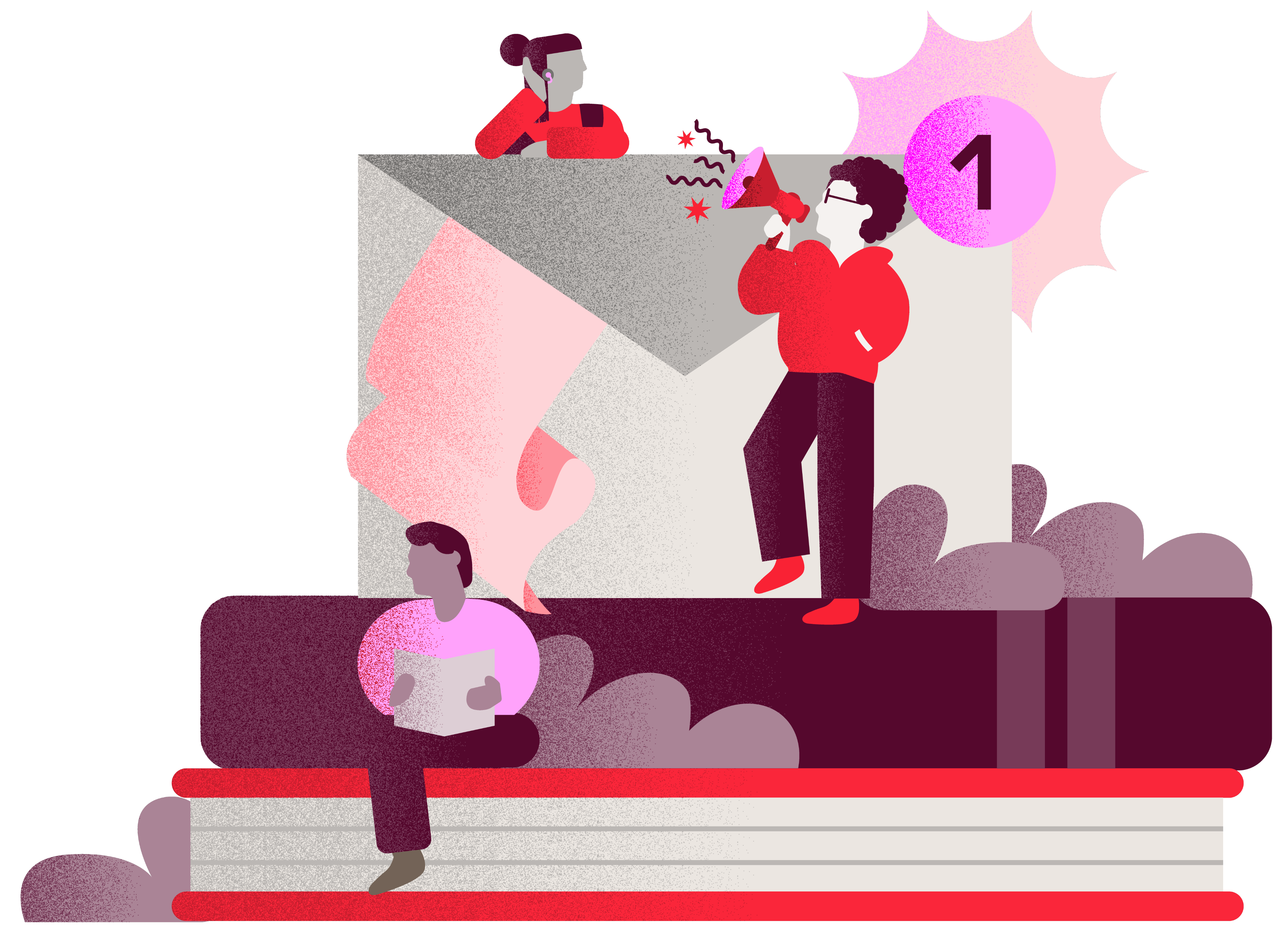
Der typische Abgeordnete: Männlich, 47 Jahre, Jurist
This feeling is not unfounded. Large population groups are in fact systematically underrepresented. A glance at the make-up of the German Bundestag illustrates this: The “typical” member of parliament is a 47-year-old male lawyer.
Women currently comprise only 32.4% of the Bundestag, even though they account for 50.7% of the total population. The share of those with university degrees in parliament has risen steadily over the decades to more than 80%, in contrast to only around 14% of the general population. People without a university degree are therefore severely underrepresented in the Bundestag. The discrepancy is even more striking among occupations. While only 0.5% of the German population are lawyers, they make up a considerable 15.9% of the Bundestag.
There are also significant differences in income. In 2025, the average gross salary for full-time employees in Germany was €4,784. In contrast, the basic salary for members of the Bundestag was €11,833, plus a monthly expense allowance of €5,467. And almost half the members of parliament have additional income, some of which is considerably higher than their compensation.
Members of parliament are older, more male, better educated, and have considerably higher incomes than most Germans. Less privileged groups, on the other hand, are seriously underrepresented in parliament. The Bundestag therefore does not represent a cross-section of the population.
Representation versus representativeness: An important distinction
So how representative is representative democracy in reality if parliaments so inadequately reflect the diversity of our country? To answer this question, it is essential to consider the different meanings of the word “representative.”
In terms of representation, our democracy is, of course, representative. In terms of representativeness, however, it is not. Although these two meanings are often confused in debates, both principles are of great importance for the functioning of a democracy.
Balanced decisions that are widely accepted and exclude no one can only be made when a diversity of perspectives and the needs of all are brought into the democratic decision-making process. Furthermore, diverse participation promotes innovation through the exchange of different ideas and prevents the dominance of individual interest groups.
If makes a difference if only well-off university graduates take part in the discussion about rising energy and living costs, for example, or if nurses, delivery drivers, and hairdressers also contribute their lived experiences and knowledge to shaping solutions.
What can be done?
Although the share of women in the Bundestag has over time grown significantly from a very low 6.8%, it is likely that, for various reasons, our parliaments will not reflect social diversity in terms of representativeness for some time to come.
It is therefore all the more important to further develop our parliamentary democracy and support it with bodies that better reflect social diversity. Lottery-based dialogue formats such as citizens' councils, citizens' forums, constituency days, and planning groups have proven successful in this regard. A two-stage process of randomly selecting participants ensures that these formats are actually comprised of a representative sample of citizens. Similar to a commission of experts, such bodies have an advisory function, but decisions continue to be made by democratically legitimized institutions. They are therefore not in competition with parliament, but rather a supplementary enrichment.
The Robert Bosch Foundation has long supported projects that enable broader participation by the population in the democratic decision-making process. Among other things, we currently support the projects Hello Bundestag and Climate meets local government.
About the author
PD Dr. Gordian Haas is a senior expert in the Democracy Team at the Robert Bosch Foundation and a research associate at the University of Erfurt. He emphasizes that he is male, 56 years old, and an academic, and thus belongs precisely to the group that he believes should be less strongly represented in parliament.

![[DE Copy] Integration_Weltküche_Frau und Mädchen_800x600.jpg](/sites/default/files/styles/bosch_3d2_small/public/images/media/2026-05/Integration_Weltk%C3%BCche_Frau%20und%20M%C3%A4dchen_800x600.jpg.webp?h=d7a056e9&itok=tGc7Wqj0)