For the first time, food and agriculture top the agenda at the World Climate Conference. This means specifically that food systems in the context of climate change are a topic of discussion amongst heads of states and ministers, and they will be the subject of official negotiations and final agreements. A transformation of food systems and the transition to regenerative agriculture are essential to achieve climate goals. A recent study by the Global Alliance for the Future of Food underscores that food systems currently account for at least 15 percent of global fossil fuels use annually. As such, food systems are responsible for more than one third of global greenhouse gas emissions.
In response, we, alongside other foundations in the Global Alliance, are supporting around 40 actors in agriculture, the food sector and civil society from Africa, Asia and the Americas to amplify their perspectives on the transformation and decarbonization of food systems and to foster networking opportunities in Dubai and beyond. This is because interests at the COP are diverse, influence is distributed unevenly and civil society voices, especially from the Global South, are underrepresented.
![[DE Copy] Ottilie Bälz rund](/sites/default/files/styles/bosch_4d3_medium/public/images/media/2022-05/Ottilie_Baelz_rund.png.webp?h=775c664f&itok=36rbyj3S)
"Our engagement surrounding the Framework Convention on Climate Change mainly aims at making perspectives and issues that are often underrepresented in the UNFCCC process more visible and influential."
The negotiations at the 28th World Climate Conference will also focus on setting a framework in support of the “Global Goal on Adaptation.” In addition, financing for the Loss and Damage Fund has been the subject of tough negotiations in recent months – with the major issue of climate justice taking center stage. Critical to these discussions is the development of structures to make funds from the compensation fund quickly and easily accessible to those most affected by the consequences of climate change at local level. Ahead of the COP, our Kenyan partner organization Power Shift Africa has aligned positions with numerous civil society organizations, which will be communicated at side events and background discussions in Dubai.
Just as last year, the Robert Bosch Stiftung is supporting the Climate Youth Negotiator Programme, which empowers youth negotiators from various sectors to participate meaningfully in COP negotiations, among them 13 young delegates from African countries. They benefitted from a leadership and negotiation training in advance and have built networks with international key players from politics and civil society. As full members of their respective national delegations, they will actively strive for ambitious negotiation outcomes.
Climate-related migration and climate justice
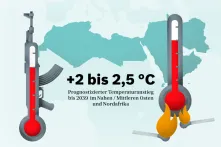
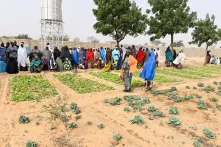
The consequences of climate change are already dramatic for millions of people, including more frequent and more severe droughts, floods, or slow-onset impacts of climate change, such as the spread of deserts. Millions of people are already affected by climate-related migration, especially within their own national borders. Migration and mobility, the permanent or temporary movement of people within countries and across borders, can be one adaptation strategy for dealing with the consequences of climate change. At the same time, people have a "right to remain", a concept that has been increasingly acknowledged in recent years at the international level. The United Nations Human Rights Council’s resolution on a clean, healthy, and sustainable environment as a universal right is one important example. Evidence shows that most people want to stay where they live, despite growing climate risks.
Our partner Global Center for Climate Mobility is bringing together high-level political decision-makers, leading civil society actors and those affected by climate-related migration at its pavilion at COP28. This forum was very well received last year and was instrumental in establishing the topic at the global climate conference. Climate-induced migration should play an even more important role in discussions on climate action than it has in the past – from mitigation and adaptation to the issue of loss and damage.

![[DE Copy] Mythen_Migration_800x600](/sites/default/files/styles/bosch_3d2_small/public/images/media/2023-11/MigrationMyth_AdobeStock_%28c%29Paper%20Trident_537183177_CD-Farben__Teaser%20800x600px.png.webp?h=c6cbd989&itok=8WFH16tg)