The EU’s AI Act and its Human Rights Impacts on People Crossing Borders

Fachartikel
2022
The EU’s AI Act and its Human Rights Impacts on People Crossing Borders

In April 2021, the European Commission tabled its proposed Regulation on Artificial Intelligence (AI Act) which attempts to regulate a broad group of technologies that can be classified as automated or that employ artificial intelligence. Migration technologies, particularly when partially or fully automated, pose significant human rights risks to people crossing borders, seeking refugee status, or immigrating. In this brief, Petra Molnar outlines these risks and calls together with others for amendments to the act. The brief is part of the “Dialogue on Tech and Migration, DoT.Mig.” paper series by the “Migration Strategy Group”, an initiative by the German Marshall Fund of the United States, the Bertelsmann Foundation, and the Robert Bosch Stiftung. 

The EU’s AI Act and its Human Rights Impacts on People Crossing Borders

Authors

Petra Molnar

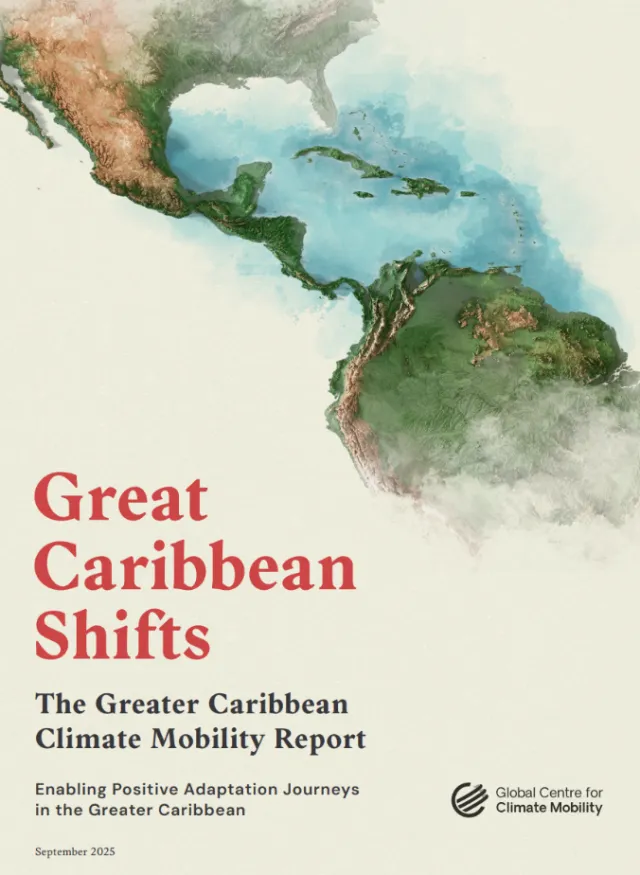
Great Caribbean Shifts Report

Programm- und Projektbroschüren
Great Caribbean Shifts Report

In the Caribbean, rising sea levels, higher temperatures, and ocean acidification are not only destroying fragile ecosystems but also leading to a significant decline in per capita GDP. On the one hand, this is forcing many people to migrate; on the other hand, nearly 6 million people - particularly older, less educated, and poorer populations - could remain trapped in their vulnerable hometowns without the means to relocate.The report of our partner Global Centre for Climate Mobility examines three scenarios for the future of climate mobility in the Greater Caribbean: from the “Green Road” scenario of cooperative decarbonization to the “Rocky Road” of regional rivalry, which predicts dramatic shifts. The findings lead to an urgent call to action to improve access to climate risk information and enable positive adaptation processes, while also protecting the right to remain and supporting humane resettlement. The report offers a roadmap to prepare the region for a future in which climate mobility will be an inevitable part of life and will have a positive impact on development and integration.
 

Global Centre for Climate Mobility

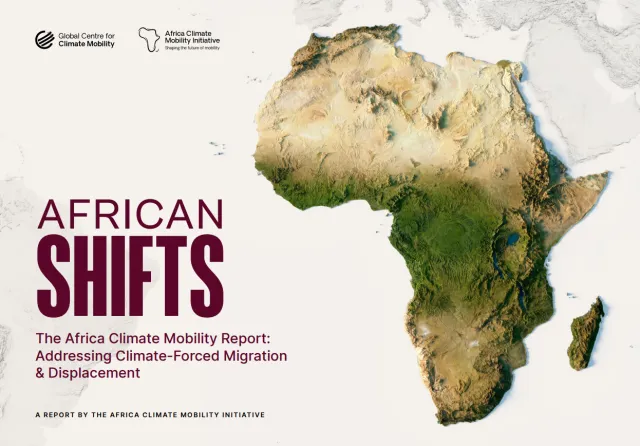
African Shifts Report

Programm- und Projektbroschüren
African Shifts Report

The “African Shifts” report of our partner Global Centre for Climate Mobility documents the current realities of climate-driven migration in Africa and outlines possible future scenarios. The findings show that the consequences of climate change - ranging from biodiversity loss to declining food production - are already being felt today and will intensify under current emission trends. The report shows that increasing heat, droughts, floods, and coastal erosion will render large parts of the continent uninhabitable and force millions of people to flee. At the same time, unplanned migration risks exacerbating tensions over scarce resources and further destabilizing already fragile regions. Those who are unable to move—due to poverty, old age, or disability—are particularly vulnerable, as they remain exposed to increasingly dangerous climatic conditions without adequate protection. The “African Shifts” report highlights these risks but also offers perspectives: Through forward-looking planning and investments in resilience, Africa can use climate-driven mobility as an opportunity to strengthen communities, advance regional integration, and promote development and shared growth despite challenging climatic conditions.

Global Centre for Climate Mobility (GCCM)

Global Report on Internal Displacement

Fachartikel
2026
Global Report on Internal Displacement

More than 82 million people worldwide are currently displaced within their own countries – the highest number ever recorded. The Global Report on Internal Displacement 2026 shows that conflict and violence have become the leading drivers, pushing displacement to record levels. At the same time, climate risks and extreme weather continue to force millions from their homes. Internal displacement has thus become a global structural crisis that goes far beyond humanitarian response. The report provides data, analysis and solutions to address root causes and create long-term prospects for those affected.

Internal Displacement Monitoring Centre
Image
Cover Publication Routes in Flux_600x800.png
Download PDF

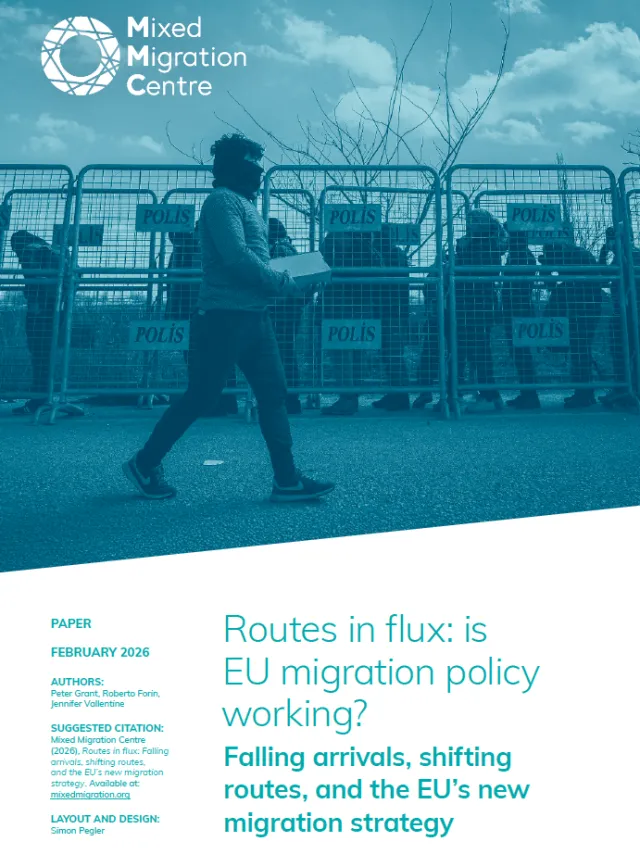
Routes in Flux: is EU migration policy working?

Routes in Flux: is EU migration policy working?
2026
Routes in Flux: is EU migration policy working?

The new paper “Routes in flux: is EU migration policy working?” by our partner Mixed Migration Centre provides an up to date analysis of migration dynamics in Europe against the backdrop of recent policy developments. It examines how arrival numbers and migration routes have evolved in recent years and to what extent European measures have shaped these trends. The report outlines key findings on emerging patterns, governance instruments, and structural challenges, offering an evidence based for assessing the effectiveness of EU migration policy.

Mixed Migration Centre

Authors

Peter Grant, Roberto Forin, Jennifer Vallentine

Image
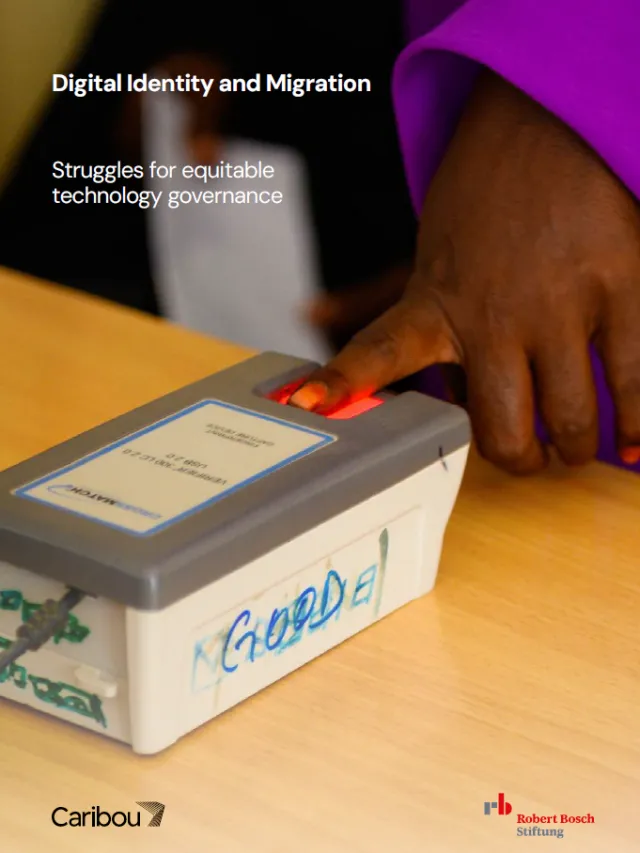
Cover Report Digital Identity and Migration_600x800.png
Download PDF

Digital Identity and Migration

Digital Identity and Migration
2026
Digital Identity and Migration

The report “Digital Identity and Migration” analyses how emerging digital identity systems affect migrants, refugees, and other marginalized groups. It shows that new technologies such as digital wallets can improve access to essential services but also risk reinforcing existing forms of exclusions when safeguards and inclusive design are lacking. Drawing on case studies and fieldwork in Kenya and Germany, the report highlights gaps between policy ambitions and practical realities and provides evidence based insights for designing more accessible, rights focused identity systems.

Caribou

Authors

Margie Cheesman