When Angela Merkel said “We can do it” in the summer of 2015, I didn't see it as a dramatic appeal to humanity, but rather as a sober management promise. In my memory, it was a small, casual sentence – very much in the style of that pragmatic chancellor.
But one question was overlooked: Do we want to get it done? And why? Partly because there was no discussion about it and politics became purely about problem solving, the reality of the integration system in Germany became disconnected from public opinion. And we feel this all the more clearly today, ten years later.
![[DE Copy] Geflüchteter-Selfie mit Merkel 2015-Bernd von Jutrczenka-dpa_1600x900.jpg](/sites/default/files/styles/bosch_4d3_medium/public/images/media/2025-07/Gefl%C3%BCchteter%20Selfie%20mit%20Merkel%202025_Bernd%20von%20Jutrczenkadpa_1600x900.jpg.webp?h=fbfc7356&itok=gVKwizxq)
Yet a lot has been achieved. While hundreds of thousands of people were arriving in the country in just few months, structures were put in place, new offices created, professional expertise developed, and civil society involved. I always say that Germany trained and built up its muscles – and was therefore able to take in even more people in a shorter period of time in 2022. Municipalities knew what to do, and round tables and foundations were ready to help.
However, the major advances were and often are technical in nature, involving skills, resources, and workflows. The Land.Zuhause.Zukunft program, which advises and connects rural communities with a view to integrating refugees, provides numerous examples of how integration works better through cooperation. Since migration affects so many different levels of administration, silos must be broken down. From Brandenburg to Baden-Württemberg, rural districts have written success stories from which cities can learn, too.
But there is still a lot to be done. Whereas the Federal Office for Migration and Refugees was the bottleneck in 2015 and the processing of asylum applications stalled, today it is the immigration authorities. In 2025, more than twice as many foreign nationals are living in Germany as in 2015, and migration law has become even more complex – yet the personnel capacities of the authorities have remained virtually unchanged.
There are many reasons why the mood in our society has deteriorated and little remains of the famous “welcoming culture”. For example, we now have a “migrantization” of social issues. When classrooms are overcrowded or there is a shortage of housing, migration is quickly blamed. But even without migration, there would still be a shortage of affordable housing – and the education system would still be in need of reform.
“In 2035, people will ask themselves whether migration was the trigger for an authoritarian turning point or the catalyst for renewing our liberal democracy.”
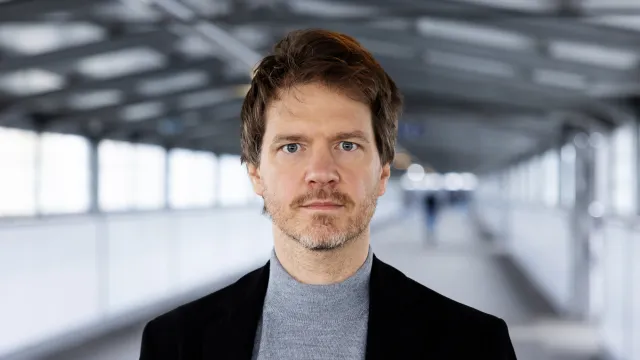
Prof. Dr. Hannes Schammann, Migration Researcher, University of Hildesheim
In this age of multiple crises – climate change, economic restructuring, war in Europe – migration seems like a problem that can be solved, at least on the surface. And that is being exploited politically.
In the past, the party political affiliations of mayors and district administrators played no role in the orientation and quality of integration policy. That is now changing. Fear of the AfD is clouding the perspective of pragmatic approaches, and restrictive measures at the local and federal level – from benefit restrictions to border closures – are being legitimized as “saving democracy”.
Some of the proposals currently under discussion, such as a more lax interpretation of human rights or the abolition of refugee protection, can only be implemented in the long term in a more authoritarian state. The consequences of migration policy therefore affect not only refugees, but all of us. Of course we can change migration policy, but please do so with your eyes open to the side effects. In 2035, people will ask themselves whether migration was the trigger for an authoritarian turning point or the catalyst for renewing our liberal democracy?

![[DE Copy] Beteiligte der Projekts "Integrationsmacher:innen"](/sites/default/files/styles/bosch_3d2_small/public/images/media/2024-05/20240424_Lokalprojekte_People_003_Teaser.jpg.webp?h=ac414d4f&itok=CWX8tlvX)