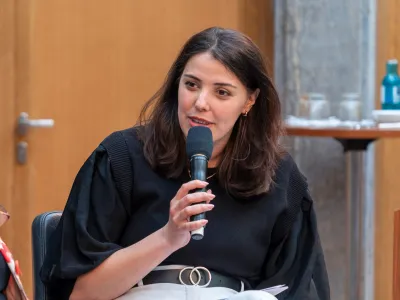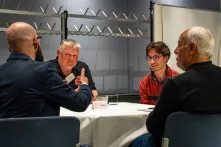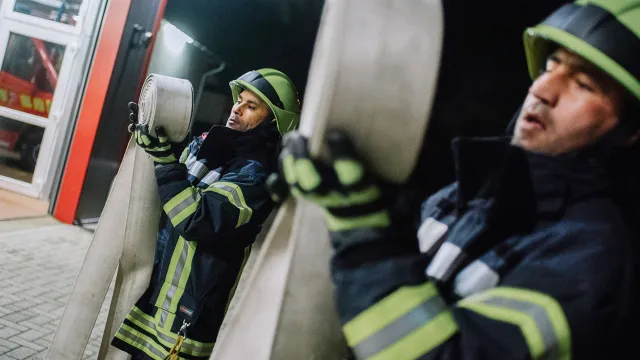
“We can do it,” said German Chancellor Angela Merkel on August 31, 2015 at the government’s summer press conference. In the weeks and months that followed, more and more refugees arrived in Germany day after day via Austria and the Balkan states. And a total of around 890,000 people sought asylum that year – the highest number to that date.
Ten years later, we asked experts and partners from our projects: What has Germany actually achieved when it comes to integration?
The background is: The Robert Bosch Stiftung has been working on migration and participation since the 1970s and intensified this work in 2012. The goal has been to promote integration through concrete projects on the ground – and to bring expertise and impetus to political practice.
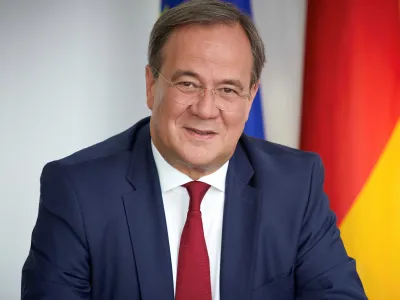
Since it was foreseeable in 2014 that the number of refugees would rise sharply, the foundation established an Expert Commission to Consider a Realignment of Refugee Policy. This commission, which was chaired by the German politician Armin Laschet (CDU), began its work in March 2015 – not in an ivory tower, but in the midst of a storm of world history. And instead of a traditional final report, a total of 99 ad hoc recommendations were published, ranging from asylum application to repatriation. Some of the commission's recommendations were implemented in the Integration Act in Germany, especially with regard to easier access to the labor market.
![[DE Copy] Geflüchteter-Selfie mit Merkel 2015-Bernd von Jutrczenka-dpa_1600x900.jpg](/sites/default/files/styles/bosch_original_medium/public/images/media/2025-07/Gefl%C3%BCchteter%20Selfie%20mit%20Merkel%202025_Bernd%20von%20Jutrczenkadpa_1600x900.jpg.webp?itok=isDEwd2-)
![[DE Copy] Ankunft Geflüchtete auf Borkum_Credits Dominik Butzmann-laif-1600x900_1.jpg](/sites/default/files/styles/bosch_original_medium/public/images/media/2025-07/Ankunft%20Gefl%C3%BCchtete%20auf%20Borkum_Credits%20Dominik%20Butzmann-laif-1600x900_1.jpg.webp?itok=Ny0s7pZv)
So where do we stand today? Almost two-thirds of the refugees who came to Germany in 2015 have a paid job in 2025 (source: Mediendienst Integration). Is that a lot? Or too little?
One thing is certain: even in times of heated debate about immigration and asylum, the Robert Bosch Stiftung remains committed to its cause. The foundation's team working on migration and integration issues is now three times the size it was in 2015, with projects at both the local and global levels. After all, everything is interconnected in that the issues of migration and immigration society relate to the foundation's other areas of support, such as education and health.
In her statement Merkel also said “Germany is a strong country (...) where something stands in our way, it must be overcome.” How can we rediscover this optimism today? What have we achieved since 2015? What has been left undone? And what needs to be done now? The story of flight and immigration is not over yet in Germany. How it continues is in our hands.
![[DE Copy] Frauke Frech_Credits Elena Kaufmann_800x600.jpg](/sites/default/files/styles/bosch_4d3_medium/public/images/media/2025-07/Frauke%20Frech_Credits%20Elena%20Kaufmann_800x600.jpg.webp?h=7b600376&itok=dPwivBT0)
![[DE Copy] Ayse Özbabacan_Credits Stadt Stuttgart-Martin Lorenz_800x600.jpg](/sites/default/files/styles/bosch_4d3_medium/public/images/media/2025-07/Ayse%20%C3%96zbabacan_Credits%20Stadt%20Stuttgart-Martin%20Lorenz_800x600.jpg.webp?h=2498f255&itok=ymGTNVa7)