There were already more than one million Ukrainians living in Poland long before Russia began its invasion of Ukraine on 24 February 2022. Many of them had fled or immigrated to Poland because of Russia’s annexation of the Crimean Peninsula and the armed conflict in the Donbas in 2014. However, nothing could prepare Poland’s civil population for the number xof refugees who crossed the Ukraine–Poland border in the weeks and months following the start of the Russian invasion. There were 10 million border crossings between March and June 2022. By the end of 2024, there were 980.000 Ukrainian refugees registered in Poland as a result of the crisis.
How did Poland overcome this exceptional situation? We retrace the developments and, while doing so, outline the community sponsorship model for integrating refugees which has become increasingly established in Poland.
Civic engagement as a foundation
Many of Poland’s residents decided to act with solidarity. The findings of a study by the Polish Economic Institute in summer 2022 present clear figures about this civic engagement. In the first few months of the Russian invasion, 77 per cent of Polish citizens provided help for refugees. Ten per cent even offered a temporary place to live. This wave of solidarity in the Polish population came at a time when the government structures in Poland were severely overextended. The Poles’ engagement plugged a gap in the system, even though the people supporting refugees did not have a central strategy in the ensuing chaos after the outbreak of war. Rather, they improvised. They collected donations of toys and clothes, organised soup kitchens and set up spaces for mothers and young children in railway station halls in which refugees could rest.
The contact between help organisations on the ground, voluntary helpers and international stakeholders solidified quickly, too. With so many people involved, it helps to develop structures. Ideally, a structure that looks not only at the present challenges, but also those of the future.
Turning spontaneous help into fixed networks
“Poles are very good at managing crisis situations,” says Dorota Wanat, “However, our model aims to create long-term solutions for supporting refugees.” Dorota Wanat, Poland Programme Lead at the organisation Pathways International, is referring to the community sponsorship model here. It is based on local communities getting involved in the integration of refugees and taking on responsibility. The aim is not just to support refugees when they arrive, but also to guide them with the first steps in a new country: looking for work, learning the language and developing a local social network. People supporting refugees and those needing help are both intended to develop an equal feeling of community. And, according to the idea, volunteers are less likely to feel overwhelmed as multiple people take on responsibility.
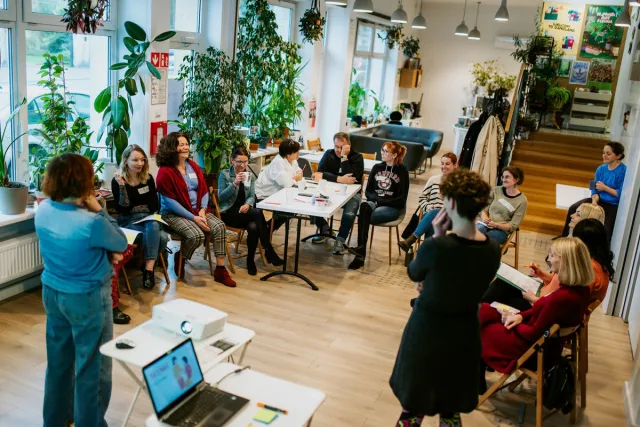
The model promotes close cooperation between civil society groups, organisations, local authorities and national government. Project coordinator Dorota Wanat sums it up like this: “Welcoming refugees should involve all segments of our society. Community sponsorship isn’t just about going to the train station and inviting a stranger to your home. It’s about building a community and a support system around that person where we all have our part to play.“ Dorota Wanat reports that hundreds of people from local authorities, institutions, and community groups in Poland participated in meetings organized by Pathways International about the community sponsorship model. As a result, these institutions and individuals are now leading welcoming efforts in their towns and communities.
What community sponsorship looks like in practice
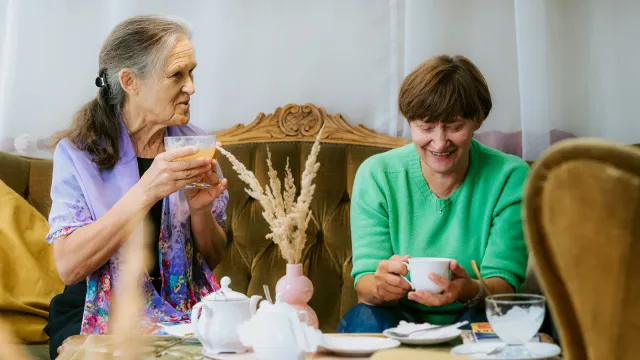
An example of community sponsorship in practice is Dom Sąsiedzki or, in English, Neighbours House, in the town of Kalisz in central Poland. Three community sponsorship groups have met here since December 2024. Kalina Michocka is leading this pilot project where two Ukrainian women as well as a family from Latin America receive support. ‘Spanish-speaking migrants come to Poland through a labour hire agency. They work a lot and don’t have much contact with the Polish population,’ says Michocka, ‘Now they’ve shown us Christmas carols from Venezuela and they swap recipes with the Ukrainians and us in our WhatsApp group. It’s nice to see little things like this.’ The idea of community sponsorship, Michocka emphasises, is a very organic one. It is about asking who can help, whom they can help and in what way they can help. ‘In 2022, we all acted based on the community sponsorship model even if no one was calling it that back then.’
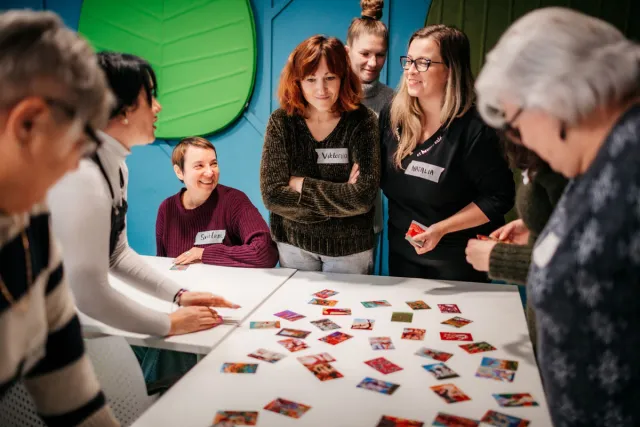
Nadia Virych, a 66-year-old retired teacher, fled from her home town of Mykolaiv in Ukraine to Kalisz in spring 2022. Her health is not the best, and she has spent the last few years living on a modest Ukrainian pension. ‘For me as an elderly woman, the Dom Sąsiedzki project is an enormous gift. I’ve met wonderful, interesting people, and Kalina is a great driving force.’ Virych wants to use the next few months to improve her Polish skills.
Yet the social and political climate in Poland, where Pathways International wishes to entrench community sponsorship further, is not a straightforward one. Hostility is rising towards refugees and migrants in Poland, like everywhere in Europe. On top of that, there is also the unstable security situation in Ukraine. Since the onset of winter last year, the numbers of Ukrainian refugees have risen again due to the increased Russian attacks and constant power outages.
Community Sponsorship in Poland
In Poland, Pathways International is a key player of Community Sponsorship. The organisation works with five established CSO partners providing training and know how on the sponsorship model, supporting local welcoming initiatives, and building crucial relationships between all parties involved in Community Sponsorship. Furthermore, Pathways International promotes Community Sponsorship at the national level both as an integration model and a basis for safe and legal pathways for migrants. Its partner organizations in Poland are Polish Migration Forum, Association of Creative Initiatives “ę”, Homo Faber, Nomada, and the Club of Catholic Intelligentsia (KIK).
Community sponsorship: an integration model for eastern Europe?
What has the community sponsorship approach inspired at a political level? ‘We are seeing the first few positive signs from the Polish government of taking a more strategic, community-sponsorship inspired approach towards migration and integration of refugees. We are also noticing that they are more open to our concepts for legal and safe migration routes,’ says Dorota Wanat. However, tangible government support – through a reliable legal framework for receiving refugees or through government funding for civil society engagement – remains unclear.
Nonetheless, community sponsorship has become established as a successful concept in Poland in just one-and-a-half years. Public officials and decision-makers, leaders and experts in civil society and academia as well as media representatives show a growing interest in the model and a strong momentum was created to scale-up activities and develop a nation-wide program. Pathways International hopes that the community sponsorship structures in Poland can also contribute to the goal of creating safe and legal migration pathways to Europe, connecting Polish communities with people seeking protection, educational opportunities or employment.