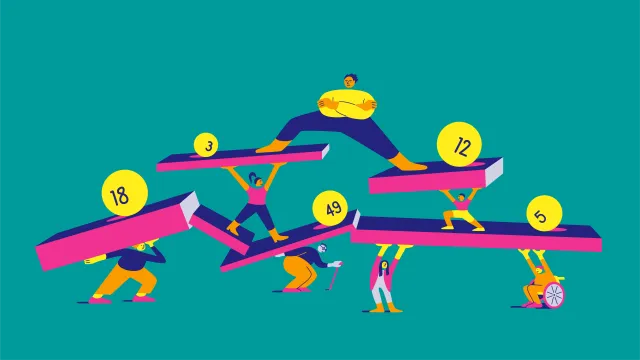
Inequalities appear in various forms and dimensions, including the unequal distribution of wealth and political power as well as inequalities linked to attributes such as gender, ethnicity, or (dis)ability. These different inequalities are not isolated phenomena; they coexist, overlap, and reinforce one another.
Such overlaps and interactions are referred to as “the fabric of inequalities” or intersectionality. For example, a woman who is part of an ethnic minority and also has impaired hearing, experiences discrimination at multiple intersections. For people in this position, more and more “threads” of inequality intertwine, creating a fabric that makes it difficult for them to live a self-determined life free from discrimination.
Social inequality makes society poorer as a whole
Structural inequalities in income and wealth as well as discrimination, prevent people from being able to realize their full potential. But the negative consequences of inequality go far beyond the individual level.
The extent of inequality we face today makes us poorer as a society because many talents remain undiscovered. Research shows that, across all social classes, people who perceive high levels of inequality report lower subjective wellbeing. In societies with high levels of inequality, health problems are more prevalent, crime rates are higher, and social cohesion declines. Inequality, thus, affects all members of society.
A high degree of inequality also undermines trust in democratic institutions and fuels political polarization. When people feel that the system is unfair and that they have no opportunities despite their efforts, this can boost support for populist parties. In the end, inequality severely weakens our ability to work together as a society and to find fair, effective solutions to collective challenges such as climate change and poverty.
How the Robert Bosch Stiftung acts on inequality
Through its funding, the Robert Bosch Stiftung supports organizations in which people directly affected by inequality come together, articulate their interests, and make their voices heard. In Germany, for example, the foundation supports the Initiative Selbstbestimmt Leben (“Living Independently”). Another example is its support for the European Anti Poverty Network (EAPN), where people with experience of poverty contribute their perspectives to policymaking, such as in the EU’s planned anti-poverty strategy.
People disadvantaged by inequality organize in many other movements and groups. Local initiatives are often connected to global networks, such as the Fight Inequality Alliance or War on Want, where they can collectively bring their interests to international forums.
How to tackle inequality at a systemic level
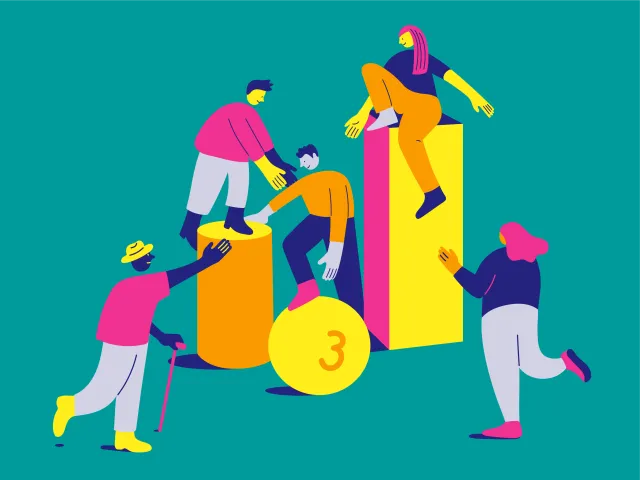
Given the serious social consequences of inequality, it is not only those directly affected who must take action. Privileged groups and institutions – those who do not personally experience disadvantages due to inequality – also bear responsibility. Inequalities are the result of unequal distributions of power: not everyone has the same access to resources and decision-making. The task is to open up these avenues and share power.
This requires action on three levels: recognition, representation, and redistribution. Recognition means valuing the knowledge and perspectives of groups that are currently excluded. Representation requires ensuring that marginalized groups have a stronger voice in decision-making processes. Redistribution is needed to provide fairer access to material and immaterial resources. By combining these approaches, deep systemic change can be achieved to effectively combat inequality.