Governance Mapping and Assessment of the Great Green Wall for the Sahara and the Sahel Initiative

Governance Mapping and Assessment of the Great Green Wall for the Sahara and the Sahel Initiative
2023
Governance Mapping and Assessment of the Great Green Wall for the Sahara and the Sahel Initiative

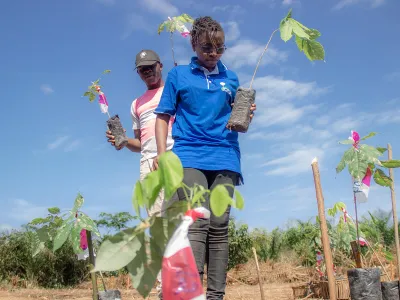
The Great Green Wall for the Sahara and the Sahel Initiative (GGWI) was launched by the African Union in 2007 to build a sustainable future across the vast Sahel region. By 2030, the initiative aims to restore 100 million hectares of degraded land, preserve fertile land for agriculture and strengthen resilience to climate change.

To realise it’s ambitions, however, it must be vigilant about good governance to ensure that resources are used efficiently, transparently and accountably and that policies and projects are designed to benefit the people and environment it should serve. Our partner Transparency International analyses the GGWI in three critical areas: transparency, participation, and accountability and integrity. The report, supported by the Robert Bosch Foundation, focuses on the Pan African Agency of the Great Green Wall and its 11 member states, with a particular focus on Niger and Senegal.

Transparency International

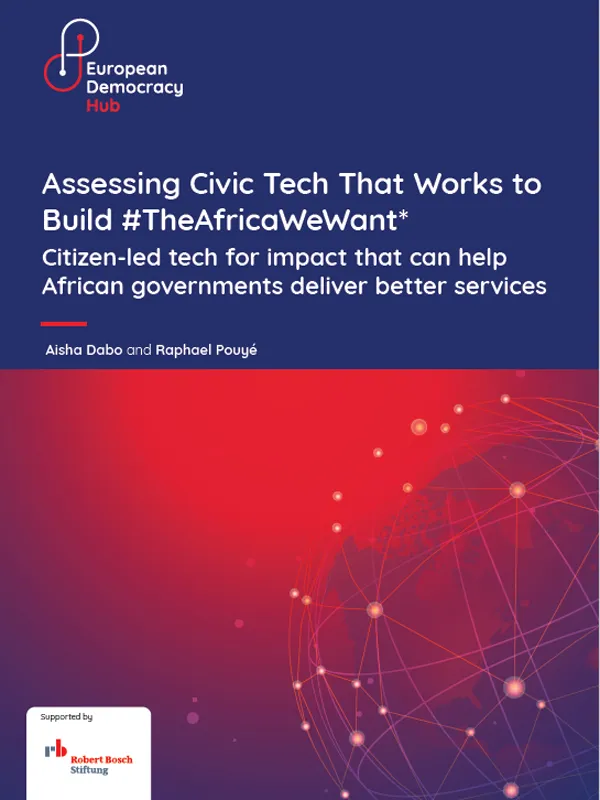
Assessing Civic Tech That Works to Build #TheAfricaWeWant*

Assessing Civic Tech That Works to Build #TheAfricaWeWant*
2022
Assessing Civic Tech That Works to Build #TheAfricaWeWant*

The case study focuses on democratic innovations in civic tech across Africa. Civic tech is technology created by citizens to have a positive social impact on democratic public services. Not all civic tech innovations are effective, so it’s important to focus on "civic tech that works". The case study addresses specific challenges that Africa faces in civic tech.

European Democracy Hub

Authors

Aisha Dabo and Raphael Pouyé

Research on Sustainable Land Use and Rights for Climate Adaptation and Resilience among Marginal Communities in Kenya and Tanzania

Bücher und Studien
2022
Research on Sustainable Land Use and Rights for Climate Adaptation and Resilience among Marginal Communities in Kenya and Tanzania

This report presents the findings of a study conducted in Kenya and Tanzania. It consolidates communities’ and stakeholders’ views on and perceptions of structural barriers that hinder communities’ effective participation in international debates on sustainable land use and rights and climate adaptation and hence resilience.
The study is part of a project with Power Shift Africa on effective African leadership in sustainable land use and rights for climate resilience.


Robert Bosch Stiftung

Authors

Mohamed Adow, Emmanuel Siakilo

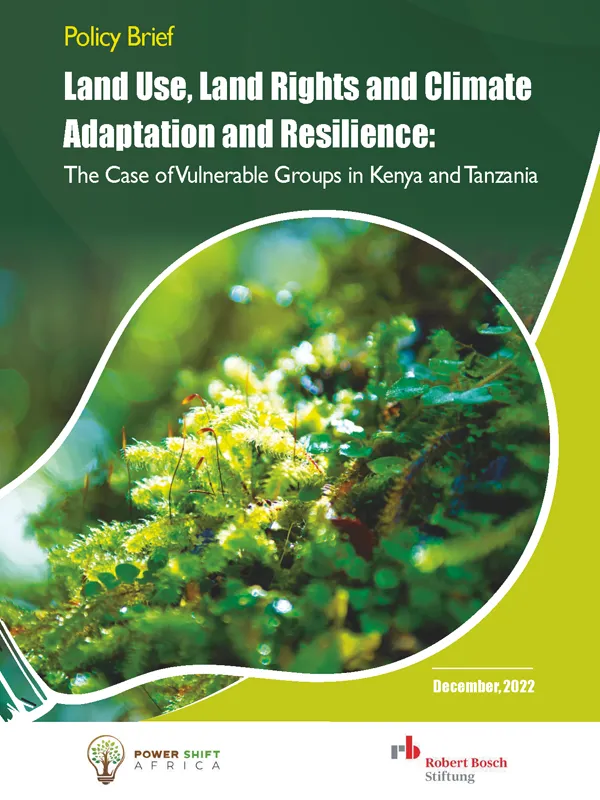
Policy Brief: Land Use, Land Rights and Climate Adaptation and Resilience

Policy Brief: Land Use, Land Rights and Climate Adaptation and Resilience
2022
Policy Brief: Land Use, Land Rights and Climate Adaptation and Resilience

This policy brief presents the key findings of a study supported by the Robert Bosch Stiftung and conducted by Power Shift
Africa in Kenya and Tanzania on structural barriers that hinder communities’ effective participation in key adaptation and resilience
discourses at regional and international level.

Robert Bosch Stiftung

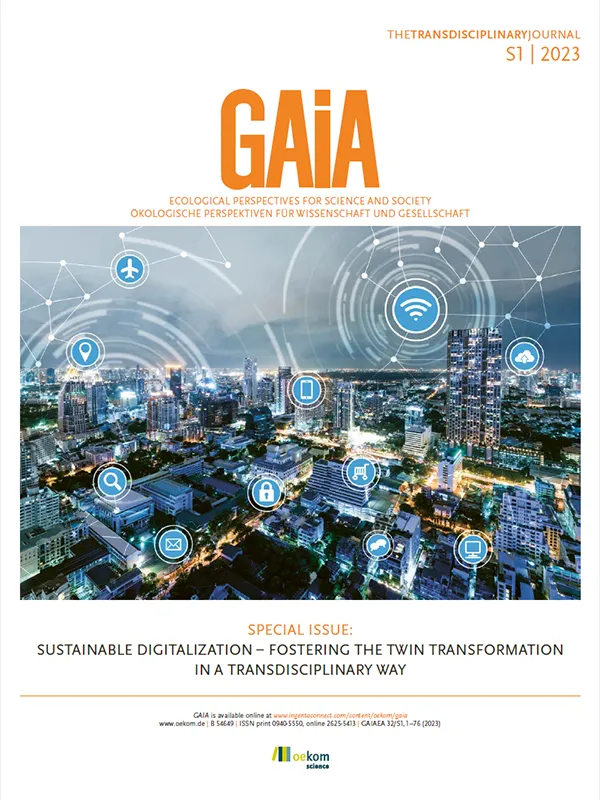
How sustainable is the digital world?

Programm- und Projektbroschüren
Wie nachhaltig ist die digitale Welt?

The question of how digitalization can support a green transformation has become more and
more common in public discourse, scientific research and political agendas. At the same time,
direct environmental harm caused by digitalization, as well as its contribution to the promotion
of unsustainable lifestyles, is critically discussed. Moreover, issues of data governance and innovative forms of participation are controversial topics in digitalization and social sustainability. In this GAIA special issue, theoretical and empirical papers are presented that aim to address digitalization and sustainability in an integrated way. The collection connects scientific and political discourses and
provides both analysis and recommendations for action.
The issue was published as a follow-up to the workshop series "Sustainability and Digitalization - a European perspective", a project of Leuphana University of Lüneburg and supported by Robert Bosch Stiftung. Also available on the ingenta website.

oekom Verlag