hide in contenthub
Aus
Image
Cover Surfacing Systemic (In)justices: A Community View
Download PDF

Surfacing Systemic (In)justices

Program brochures
2024

The report shares findings from an extensive Europe-wide consultation undertaken by Systemic Justice that seeks to learn from the perspectives and experiences of affected community groups and organizations, in order to inform potential litigation and other strategies for change. The report provides an insight into priorities as reflected on by marginalized communities themselves. The report highlights six key areas in which marginalized communities see great potential for strategic litigation: climate justice, access to justice, policing, social protection, anti-racism, free movement. Furthermore, Systemic Justice is planning a second round of discussion to explore possibilities for strategic litigation in central Europe and the Balkans, as well as its connection to new technologies.
 

Systemic Justice

Authors

Patrick Williams, Adi Kuntsman, Emeka Nwankwo, Danella Campbell

Image
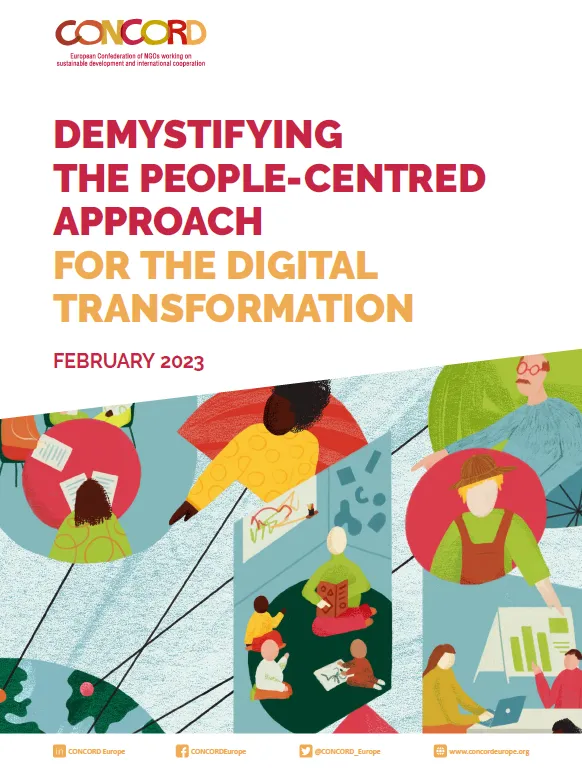
Concord_Cover_Demystifying
Download PDF

Demystifying the people-centred approach for the digital transformation

This paper encourages stakeholders involved in EU external digital policy and actions to prioritise a people-centred approach in their implementation. It includes mechanisms such as development of concrete frameworks, guidance, and tools to support implementation as well as evaluating and reporting on impact. Such an approach is a key concept to translate commitments into action and ensure digital equality for all. The report was published as part of the project “Forging a Path to Equality in a Digital World”, supported by Robert Bosch Stiftung.

Concord
Image
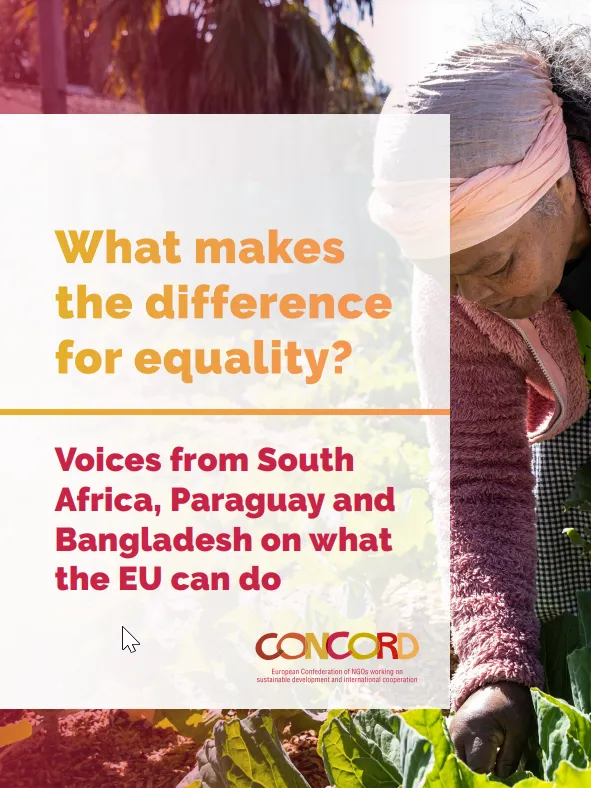
Concord_Cover_Difference
Download PDF

What makes the difference for equality?

Inequalities persist at high levels throughout the world and they affect individuals in a wide range of ways. Europe has a particular responsibility with respect to inequalities. Indeed, inequalities are increasingly recognized as a key global challenge by the European Union (EU) and many EU Member States. In these case studies CONCORD shows that partnerships, focused on equality, are possible and feasible. This report looks at case studies in South Africa, Paraguay and Bangladesh which show how Europe can engage constructively with communities and marginalised groups and support their struggle for equality. The report was published as part of the project “Forging a Path to Equality in a Digital World”, supported by the Robert Bosch Stiftung.
 

Concord
Image
Concord_Cover_Road_Equality
Download PDF

The road to equality

On several occasions, such as the adoption of the Agenda for Sustainable Development, EU Member States have committed themselves to tackling inequalities. In this report, CONCORD provides an EU-wide analysis based on an assessment of how Member States’ organizations and their international cooperation strategies respond to the challenge of this endeavor. The research focuses on five key aspects: (1) Member States’ political commitment to reducing inequalities, (2) mainstreaming tools and practices, (3) redistributing wealth to partner countries, (4) targeted action within partner countries and (5) Policy Coherence for Sustainable Development. The report was published as part of the project “Forging a Path to Equality in a Digital World”, supported by the Robert Bosch Stiftung.

Concord