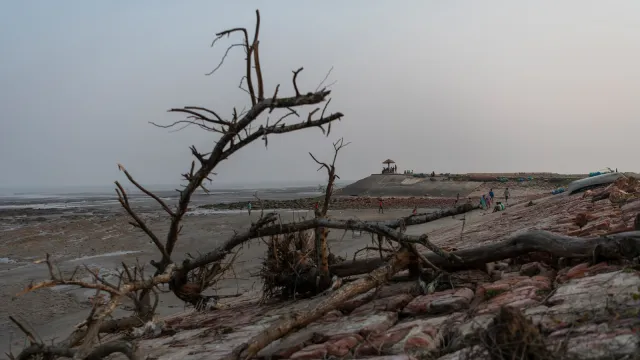
Today, climate change is already driving displacement – and these numbers are expected to increase in the coming years. By 2050, an estimated 216 million people may be compelled to leave their homes due to disasters such as floods, gradual environmental changes like rising sea levels, or declining crop yields caused by droughts and floods. The international community is still insufficiently prepared for these developments. Currently, a discourse of deterrence dominates migration policy, undermining the rights and dignity of those who are and have been forced to migrate and complicating the effective organization of climate migration for both affected individuals and host societies.
In the context of the UN Ocean Conference and the June Climate Meetings (SB62) in Bonn, the Robert Bosch Stiftung, in collaboration with the Global Centre for Climate Mobility (GCCM), will host the first Berlin Climate Mobility Forum from June 16-17, 2025. The forum aims to foster practical collaboration across various sectors to develop joint strategies for addressing the consequences of the climate crisis and to leverage opportunities for multisectoral partnerships and funding for solutions.
app. 216 Mio.
Climate Migrants until 2050
Supporting Affected States – Including at the Sub-National Level
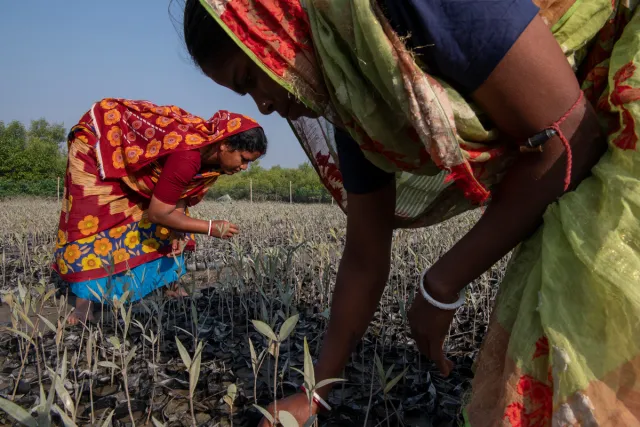
Currently, the vast majority of those affected remain in their home countries, often migrating to densely populated cities, which already face climate-related challenges. Based on this dynamic, the international community must provide more direct technical and financial support at the city level. An example of such efforts is the Global Cities Fund for Inclusive Climate Action (GCF), led by the Mayors Migration Council and the C40 Cities Climate Leadership Group. Through mayor-led diplomacy, the GCF assists cities in implementing inclusive solutions and provides a framework for representatives from affected cities to exchange successful strategies for urban adaptation to climate change and associated migration movements.

"We must recognize that migration can be a viable adaptation strategy to climate change when affected individuals can act autonomously. International agreements must support those who choose to leave climate-vulnerable regions, whether it is across or within borders."
Expanding and Advancing Regular Pathways
Current legal norms and international cooperation are insufficient to protect individuals whose home countries have become temporarily or permanently uninhabitable due to climate change. Affected communities must be granted access to other countries where they can seek assistance. This should happen safely, orderly, and regularly through legal pathways to protection.
In regions where climate change is causing gradual changes, regional mobility can be an adaptation strategy for affected individuals, as seen within the ECOWAS free movement area in West Africa. Opportunities for labor migration outside their immediate neighboring countries represent another avenue for communities particularly affected by climate change. By promoting education and improving conditions for labor migration from "climate hotspots," industrialized nations could better address both skilled labor shortages and climate migration. Training partnerships can ensure that qualified workers and their families find better prospects either locally or in another country.
To assist those affected by climate change, adequate international climate financing is essential. Climate impacts are already causing annual losses of $38 trillion, with a projected global income decline of 19% until 2050. The planned start of the Fund for Responding to Loss and Damage (FRLD) marks a significant milestone in international climate negotiations as is its mandate to support “just, safe, and dignified mobility in the form of displacement, resettlement, and migration.” Set to begin operations between 2025 and 2026, it is however currently largely underfunded, with total commitments of $765 million.
38 Trill.
US-Dollar losses per year
Financing and Organizing Climate Mobility More Effectively
In the area of adaptation, funding remains far below needs and commitments as well. It is crucial that financial support reaches affected communities quickly and unbureaucratically. Community needs and expertise must be more prominently considered in international negotiations. For this reason, the Robert Bosch Stiftung supports the Climate Communities Adaptation Facility (C-CAF), a fund for quick-impact grants for community-led adaptation.
Furthermore, it is necessary for the international community to better coordinate various global actors and create a lasting structure that can operate effectively even in times when international cooperation is increasingly under pressure. Attention to the issue of climate migration at the international climate conferences has significantly increased from 2022 to 2024. This positive momentum should be harnessed for the upcoming UNFCCC COP30 in Brazil, especially in light of multiple crises and political upheavals.

![[DE Copy] COP29_Klimafinanzierung_800x600](/sites/default/files/styles/bosch_3d2_small/public/images/media/2024-11/shutterstock_rustamli%20photos_800x800.png.webp?h=827069f2&itok=WhcjCd-E)
![[DE Copy] 800x600 Global Centre for Climate Mobility _ Rising Nations Initiative _ Josh Orter.jpg](/sites/default/files/styles/bosch_3d2_small/public/images/media/2026-02/800x600%20Global%20Centre%20for%20Climate%20Mobility%20_%20Rising%20Nations%20Initiative%20_%20Josh%20Orter_1600x900%20%281%29%20Kopie.jpg.webp?h=8abcec71&itok=nrxKqCcm)