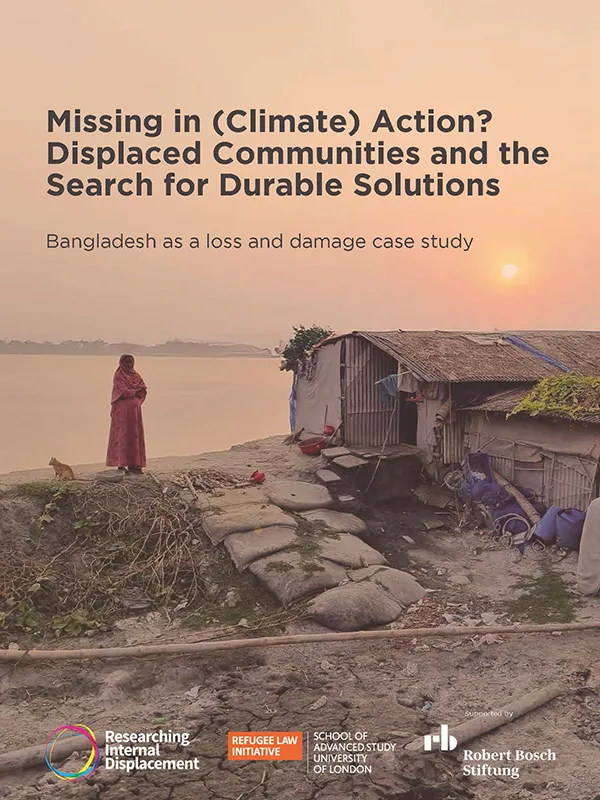
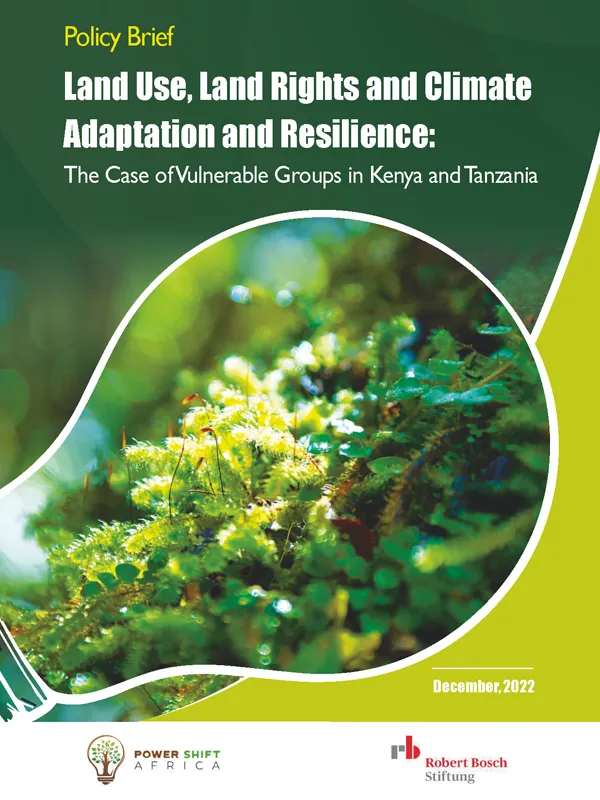
Policy Brief: Land Use, Land Rights and Climate Adaptation and Resilience

2022

This policy brief presents the key findings of a study supported by the Robert Bosch Stiftung and conducted by Power Shift
Africa in Kenya and Tanzania on structural barriers that hinder communities’ effective participation in key adaptation and resilience
discourses at regional and international level.

Robert Bosch Stiftung

How sustainable is the digital world?

Program brochures

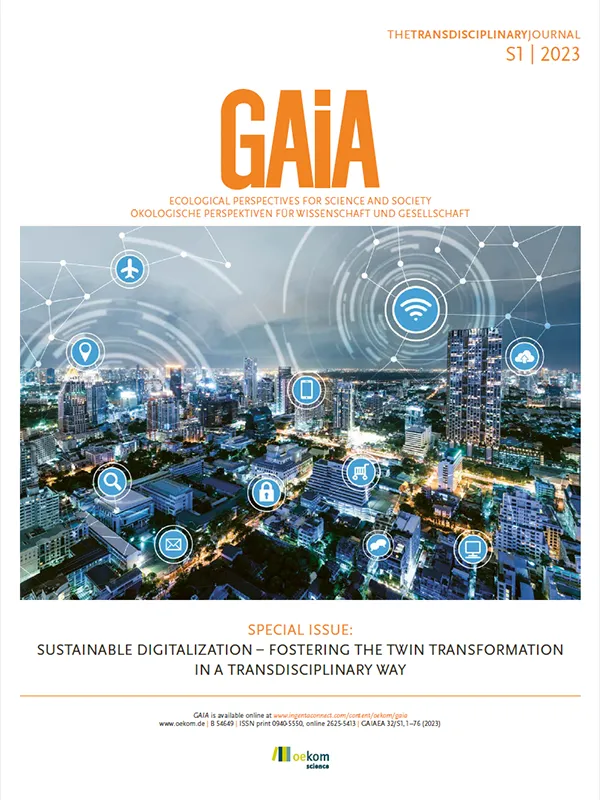
The question of how digitalization can support a green transformation has become more and more common in public discourse, scientific research and political agendas. At the same time, direct environmental harm caused by digitalization, as well as its contribution to the promotion of unsustainable lifestyles, is critically discussed. Moreover, issues of data governance and innovative forms of participation are controversial topics in digitalization and social sustainability. In this GAIA special issue, theoretical and empirical papers are presented that aim to address digitalization and sustainability in an integrated way. The collection connects scientific and political discourses and provides both analysis and recommendations for action.
The issue was published as a follow-up to the workshop series "Sustainability and Digitalization - a European perspective", a project of Leuphana University of Lüneburg and supported by Robert Bosch Stiftung. Also available on the ingenta website.

oekom Verlag

Mixed Migration Review 2025

Program brochures

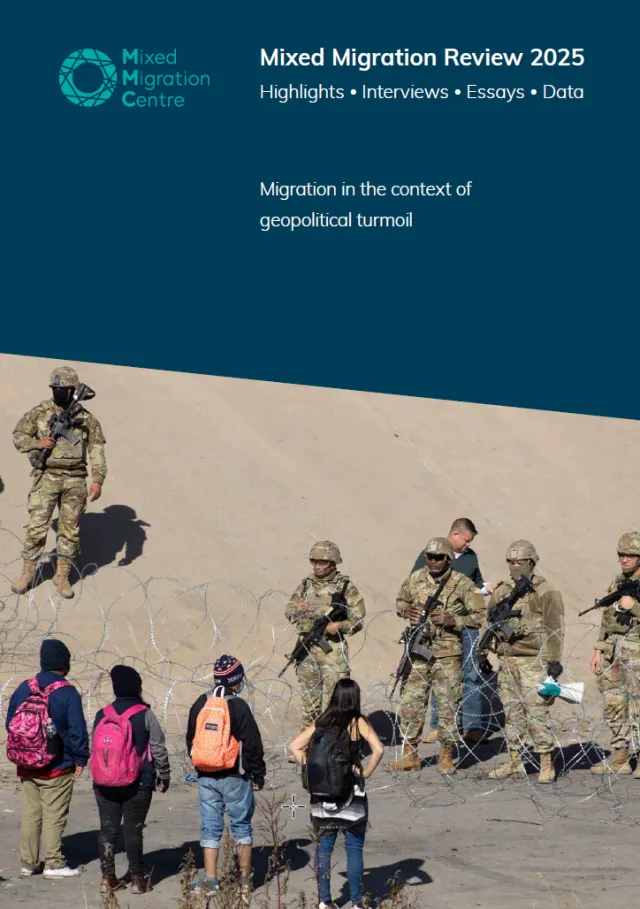
In 2025, the world grapples with profound political shifts, a strained humanitarian system, widening inequality, an accelerating climate crisis and technological transformation. This year's Mixed Migration Review (MMR) delves into migration amidst this intensified geopolitical turmoil, featuring insights from policymakers, UN leaders, academics, and activists to stimulate debate. 

The report highlights persistent and intensifying drivers of migration, from escalating conflicts in the Middle East, the Sahel, and Sudan, to instability in Myanmar, climate shocks in South Asia, and economic crises in Venezuela and Lebanon. "Keeping Track" sections offer regional overviews of shifting routes and risks, while "Voices on the Move" shares personal stories of five migrants, illustrating how geopolitical events shape their lives and offering suggestions for improving migration systems. As 2025 draws to a close, the outlook for global migration governance is bleak, with hardening policies and an alarming trend towards viewing migrants as threats rather than rights-bearing individuals, a trajectory that risks the inevitable erosion of their rights.
Mixed Migration Center
Image
[DE Copy] Climate-Landrights2025-cover.png
Download PDF

Net Zero and Land Rights

Books and studies
2025

The report analyses the impact of global climate strategies on land rights, biodiversity, and social justice. It highlights the potential risks of emissions trading in the pursuit of net-zero targets. Offset projects require vast amounts of land, which could exacerbate land use conflicts, undermine indigenous rights and threaten food security, particularly in regions where land rights are insecure. The authors therefore advocate recognising the land rights of indigenous and local communities, and including them as equal partners in climate projects. Furthermore, land rights must be incorporated into national climate strategies, and robust standards must be established for CO₂ offset projects to prevent land grabbing and social injustice.

TMG Research & Robert Bosch Stiftung

Authors

Moritz Hauer, Joanna Trimble u.a.

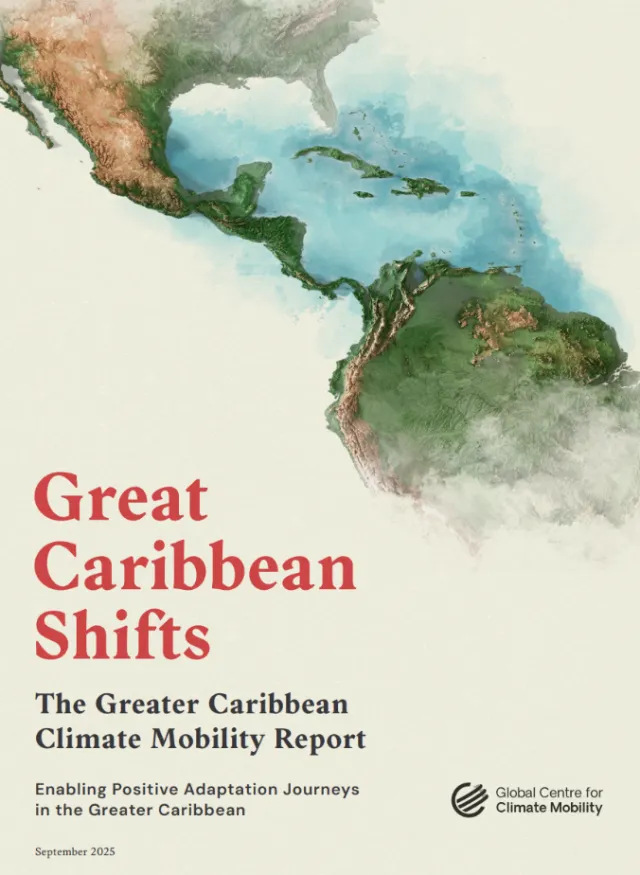
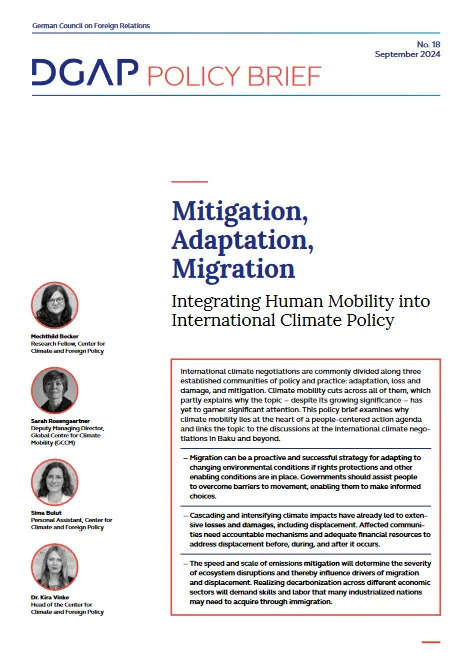
Mitigation, Adaptation, Migration

As international climate negotiations unfold, the conversation often focuses on three key areas: adaptation, loss and damage, and mitigation. However, one critical issue remains underexplored - climate mobility. This policy brief examines why climate mobility is essential to a people-centered action agenda and its relevance to discussions at the UNFCCC. It demonstrates how migration can serve as a proactive strategy to adapt to environmental change, provided that rights protections and enabling conditions are in place. The paper discusses why governments must facilitate movement and empower individuals to make informed choices, and the urgent need for accountable mechanisms and financial resources to support communities facing displacement due to escalating climate impacts. Finally, it considers the pace of emissions reductions and how this will affect ecosystem stability and influence migration drivers, highlighting the need for skilled labor through migration in the transition to a decarbonized economy.

German Council on Foreign Relations (DGAP)

Authors

Mechthild Becker, Sarah Rosengärnter, Sima Bulut, Dr. Kira Vinke