Image
[DE Copy] Climate-Landrights2025-cover.png
Download PDF

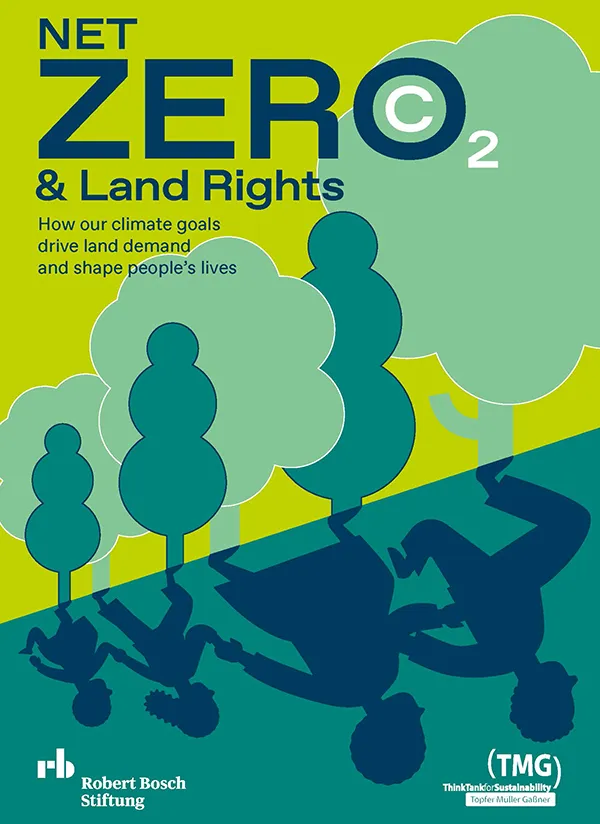
Net Zero and Land Rights

Books and studies
2025

The report analyses the impact of global climate strategies on land rights, biodiversity, and social justice. It highlights the potential risks of emissions trading in the pursuit of net-zero targets. Offset projects require vast amounts of land, which could exacerbate land use conflicts, undermine indigenous rights and threaten food security, particularly in regions where land rights are insecure. The authors therefore advocate recognising the land rights of indigenous and local communities, and including them as equal partners in climate projects. Furthermore, land rights must be incorporated into national climate strategies, and robust standards must be established for CO₂ offset projects to prevent land grabbing and social injustice.

TMG Research & Robert Bosch Stiftung
Authors

Moritz Hauer, Joanna Trimble u.a.

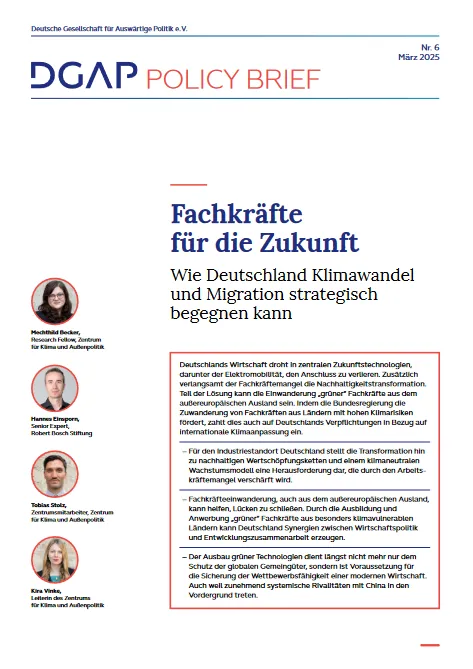
Skilled workers for the future

Program brochures

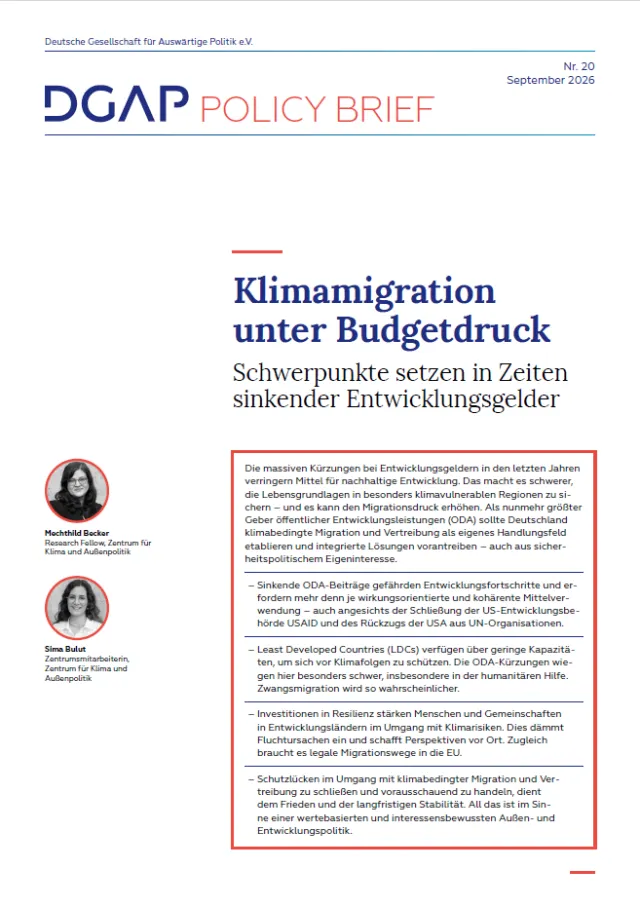
In view of the current shortage of skilled workers and the urgent challenges of climate change, the immigration of skilled workers with “green skills” from climate-vulnerable countries will be crucial over the next 20 years. In this brochure, our expert Hannes Einsporn and our partner the German Council on Foreign Relations (DGAP) describe concrete measures that the next German government can take to harness the potential of skilled labor immigration and shape a sustainable future for Germany and the countries of origin. In German language. 


Deutsche Gesellschaft für Auswärtige Politik (DGAP)

Authors

Mechthild Becker, Hannes Einsporn, Tobias Stolz, Kira Vinke

Image
Cover_ParticipatoryApproaches_800x800
Download PDF

Participatory Approaches to Conflict, Climate Change and Environment

Books and studies
2025

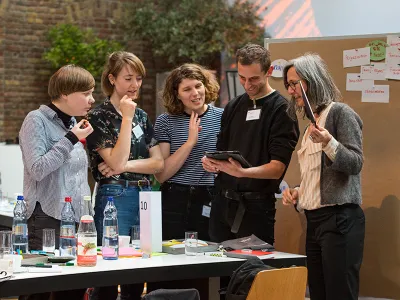
The Middle East and North Africa are one of the regions most affected by conflict worldwide. These conflicts result in massive environmental damage, while climate change and environmental degradation also give rise to new injustices and conflicts at the local level. Despite this, affected groups and stakeholders are often not involved in decision-making processes. This publication analyzes the implementation of participatory approaches in 7 countries in the region, particularly with regard to the potential for a better understanding of their implications for human security.
The dossier was produced in close collaboration with the Arab Reform Initiative.

Arab Reform Initiative & Robert Bosch Stiftung GmbH
Authors

Abdalftah Hamed Ali, Abeer Butmeh, Ahmed Alwadei, Asma Khalifa, Hussam Hussein, Sammy Kayed, Sarine Karajerjian, Shivan Fazil, Tobias Zumbraegel