Syrbanism - Introducing Climate Justice in Early Recovery in Syria
About the project
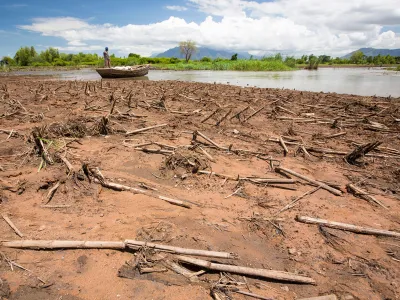
The West Asia region is extremely vulnerable to climate change and resulting rises in temperatures and changes in rainfall. We support Syrbanism as a women-led and Syrian-led organization which aims to integrate climate-consciousness and environmental justice into the early recovery programs in Syria. Climate change has been one of the main drivers of the Syrian Civil War, and it continues to severely impact Syria. Marginalized neighborhoods and conflict-affected areas disproportionately bear the burden of pollution, rubble, degraded green spaces, and climate-related risks, while having little voice in recovery and reconstruction processes this far. Therefore, it is crucial for Early Recovery to take into account the impact of climate change on reconstruction and social cohesion. The project enables communities, professionals, and institutions to better integrate local concerns regarding climate and environment into recovery decisions. Syrbanism has compiled a handbook with recommendations on how stakeholders can implement principles such as community participation and equitable access to resources in recovery efforts. During a second phase, Syrbanism works directly with communities through participatory methods to document everyday environmental concerns and develop practical guidance sheets and policy-oriented notes for environmentally responsible recovery practices.
Why are we running this project?
Syria and the broader MENA region are increasingly facing the consequences of climate change. Especially communities already affected by the consequences of the conflict in Syria, like internally displaced persons, are vulnerable to prolonged droughts, floods, and a general rise in temperatures.
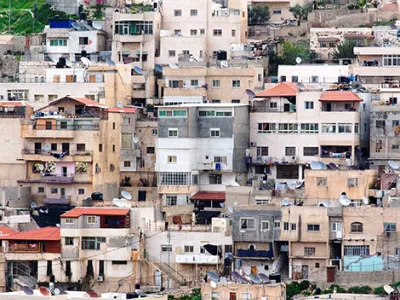
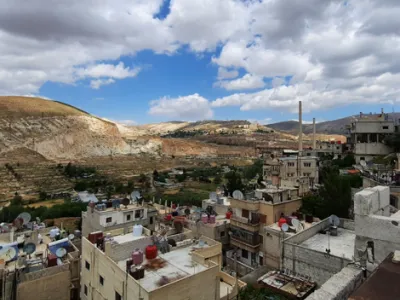
At the same time, the war has had a heavy impact on physical infrastructure and housing.
These combined challenges from climate change and the civil war manifest themselves in the lack of access to safe drinking water and food insecurity. These issues need to be jointly addressed in the upcoming recovery process in order to make Syrians resilient to further climate change.
What are our goals?
The aim of the first phase of the project was to bring experts regarding climate justice and early recovery together and develop strategies on how environmental and social challenges can be addressed in the Syrian recovery process. This serves the broader goal of creating sustainable development and strengthening the resilience of communities that are particularly vulnerable to climate change.
In the process, issues of human rights, equitable access to resources and community participation in the recovery efforts were explored.
The second Phase of the Project aims to translate the conceptually developed knowledge from the first phase into applied tools and to support institutions, professionals, and other relevant actors in using these tools.
How does the project work?
The first phase of the project relied on research, in working groups and on the expertise of Syrbanism and the connections to the network of Young Syrian Urbanists. Syrbanism organized dialogues for young professionals and activists, workshops, and interviews with experts, stakeholders, and communitiesto ensure that the voices of communities affected the most by climate change are heard and their in-depth knowledge can be implemented in future recovery projects.
In the second phase, Syrbanism works directly with different groups within the communities to document environmental concerns and local knowledge. This community generated knowledge is then refined through co-creation workshops and validated with local councils, professionals, and experts. Syrbanism will develop practical guidance sheets and policy-oriented notes with realistic steps for environmentally responsible recovery and construction projects.
Who organizes and supports the project?
The project is organized by Syrbanism. Syrbanism was founded in 2017 and is a Berlin-based and Syrian-led organization dedicated to a just and inclusive reconstruction of urban spaces in Syria.
News from the project
Your contacts
![[DE Copy] Sarah Müller_Profilbild](/sites/default/files/styles/bosch_square_medium/public/images/media/2023-07/Mueller_Sarah_02.png.webp?h=45202834&itok=VObbmh0r)
Sarah Müller
Project Manager
![[DE Copy] Klimamitbestimmung_ cc Sarah Sakotic-Sondermann_800x600.png](/sites/default/files/styles/bosch_4d3_medium/public/images/media/2025-05/Klimamitbestimmung_%20cc%20Sarah%20Sakotic-Sondermann_800x600.png.webp?h=827069f2&itok=69K7dfNw)
![[DE Copy] Wasser Boden Agroforst](/sites/default/files/styles/bosch_4d3_medium/public/images/media/2025-02/800x600.png.webp?h=827069f2&itok=Zv8KJMPU)
![[DE Copy] Weaving_Lab_Projektseite_800x600](/sites/default/files/styles/bosch_4d3_medium/public/images/media/2023-12/Weaving_Lab_Projektseite_Antonio%20Garc%C3%ADa%20Guerrero%20800x600.jpg.webp?h=827069f2&itok=3d18Gte4)
![[DE Copy] Youth Negotiators Programme_Projektseite_800x600](/sites/default/files/styles/bosch_4d3_medium/public/images/media/2023-11/Youth%20Negotiators%20Academy_800x600.jpg.webp?h=827069f2&itok=jWspkrqW)
![[DE Copy] Marburg_Rural Gatherin_800x600](/sites/default/files/styles/bosch_4d3_medium/public/images/media/2023-11/03_BauernhofClemensGabriel_quer.jpg.webp?h=827069f2&itok=lQmJqRdO)
![[DE Copy] Zukunft_aufgetischt_800x600](/sites/default/files/styles/bosch_4d3_medium/public/images/media/2023-12/Zukunft_aufgetischt_800x600.png.webp?h=827069f2&itok=x3mOGabD)