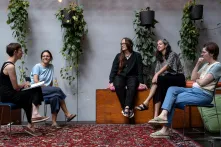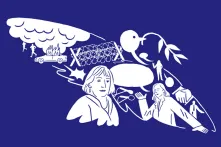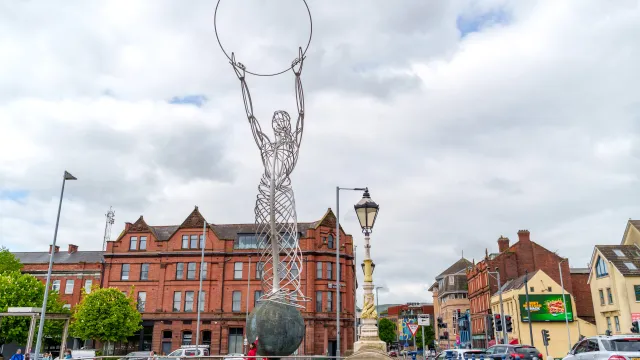
I have spent much of my career moving between two places that seem to have little in common: Belfast and Jerusalem. Yet sit in a community hall in West Belfast where former paramilitaries now run a youth program together, or in a shared classroom in Jerusalem where Israeli and Palestinian children learn side by side, and you feel an odd sense of deja-vu:
“Peace, it turns out, is not something leaders simply sign into being.”
Societies have to build it, relationship by relationship, long before and long after any agreement is reached.
The Good Friday Agreement that sealed the bloody conflict in Northern Ireland is remembered as a triumph of political negotiation. But it was also the product of years of patient, largely invisible work by people who refused to accept that Catholics and Protestants, unionists and republicans, could only ever be enemies.
Fundbuilding: the unsung hero in the back
Twelve years before the Agreement, in the darkest days of the Troubles, the British and Irish governments and international partners established the International Fund for Ireland. Its job was unglamorous: fund cross-community projects, keep dialogue alive between people who had every reason to distrust each other and grow a constituency for peace before the politicians – who refused to even enter the same room, never mind negotiate – were ready to deliver one. Jonathan Powell, today National Security Advisor of the British prime minister Andy Burnham and chief negotiator for the UK at that time, has called the Fund “the great unsung hero” of the peace process. Without that groundwork, there would have been far less public space for compromise, and fewer communities prepared to make peace hold, once the ink dried.
For close to two decades, I have worked on the conviction that Israelis and Palestinians are living through the part of this story before the breakthrough: the long, underfunded, unglamorous part. Hundreds of thousands of Israelis and Palestinians already take part each year in joint education, trauma recovery, economic cooperation, community dialogue and youth leadership. This work continues even in the middle of war; indeed, the past three years of escalating violence have also produced a surge in peacebuilding activity. Yet it remains funded at a fraction of what Northern Ireland’s peace infrastructure received per person during its own darkest years.
Northern Ireland is not unique. In South Africa and Colombia, civil society helped reduce tensions, sustain communities through fragile transitions, test ideas politicians could not yet touch and build constituencies able to support difficult compromise. None of that appears in a peace agreement – its value becomes visible later, in whether an agreement survives.
Why a peace fund for West Asia would help
That lesson was brought home to me again this September in Brussels, where more than 80 Israeli, Palestinian and international peacebuilders, practitioners and policymakers gathered to compare experiences from other conflicts. We saw there that across very different conflicts, civil society repeatedly does the work that makes political breakthroughs possible: widening what people can imagine, sustaining constituencies for peace and building the foundations on which political agreements eventually have to stand.
That is why the launch this June of an International Fund for Israeli Palestinian Peace by the UK, Canada and Australia matters so much. Modelled on the Northern Ireland fund, it is an idea our organisation first proposed in 2004 and has advocated ever since. Its launch is real progress, but to match the impact of its Irish namesake, it will need sustained funding alongside more governments, foundations and philanthropists willing to make the same bet Ireland’s backers made decades ago: fund the infrastructure for peace before the breakthrough, not after it.
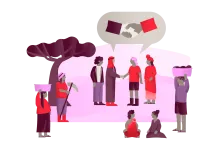
Political leaders can end wars and sign agreements. But if peace is to last, societies must already have built enough trust, relationships and public will to sustain it – which is precisely the unglamorous, long-term work that Northern Ireland's peacebuilders did, and that Israeli and Palestinian civil society is doing today, with a fraction of the support it needs.
The lesson is simple: invest before the breakthrough. It can be the difference between an agreement that survives its first hard year and one that does not.
John Lyndon is the Executive Director of the Alliance for Middle East Peace (ALLMEP), a locally-rooted, internationally-supported network of over 200 Palestinian and Israeli organizations dedicated to building peace from the ground up.