Strengthening Europe’s Climate Ambition in the Land-Use Sector
About the project
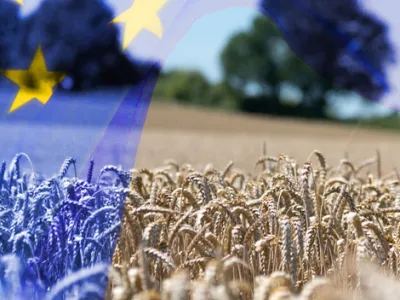
The European Union has pledged to transition to a net-zero greenhouse gas emissions economy by 2050. This goal requires the land use sector to deliver both steep emissions reduction and enhanced carbon sequestration. The EU Green Deal offers a unique political momentum to raise EU-wide awareness for a fundamental reform of the food system that also addresses the challenges of protecting carbon sinks and halting deforestation. The program aims at reducing Europe’s greenhouse gas emissions by reforming policies towards a sustainable food system, the protection of carbon sinks and deforestation-free supply chains within and outside of Europe. The program supports policy analysis, strategic communications and coalition building between citizens, civil society actors, farmers, consumers and progressive industry to articulate and enable holistic solutions and socially just transition pathways.
Why are we running this project?
As a German foundation, we seek to support European climate goals in line with the Paris Agreement, while also addressing existing environmental and social challenges within and beyond EU borders. Pressure on land is strong because the need to increase carbon sinks and protect biodiversity is in direct conflict with the dominant agricultural production model we have today. At the same time, Europe’s efforts to address these needs should not create negative externalities and increase the pressure on land and production in other global regions. Engaging with a broad range of actors, from farmers and unions to food producers and consumers, we want to contribute to a just transition in the land use sector.
What are our goals?
Through coalition building, policy analysis and strategic communications, the program aims at aligning the Common Agriculture Policy (CAP) with the goals of the EU Green Deal, the Biodiversity and the Farm to Fork strategies. It also aims at motivating key member states to adopt much more ambitious national strategic plans that include pathways for a socially just transition out of unsustainable agri-industrial models.
How does the project work?
The program strengthens and initiates efforts by key civil society actors working on climate and land use in Brussels and in key member states to reform EU land use policies. It supports the development and sharing of common resources such as relevant scientific research, policy analysis, and communication tools. Beyond this direct support, the program aims at convening actors across sectors that help develop integrated approaches and draw support from different stakeholder groups.
More information
To the website of European Climate FoundationYour contacts
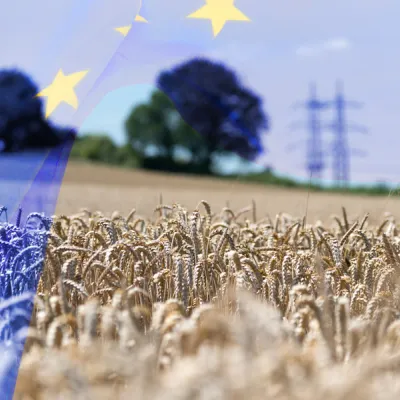
Strengthening Europe’s Climate Ambition in the Land-Use Sector
![[DE Copy] Ana Bojadjievska_Profilbild](/sites/default/files/styles/bosch_square_medium/public/images/media/2023-07/Bojadjievska_Ana.png.webp?h=d2de68a6&itok=tFZQN6N4)
Ana Bojadjievska
Senior Project Manager
![[DE Copy] Weaving_Lab_Projektseite_800x600](/sites/default/files/styles/bosch_4d3_medium/public/images/media/2023-12/Weaving_Lab_Projektseite_Antonio%20Garc%C3%ADa%20Guerrero%20800x600.jpg.webp?h=827069f2&itok=3d18Gte4)
![[DE Copy] Zukunft_aufgetischt_800x600](/sites/default/files/styles/bosch_4d3_medium/public/images/media/2023-12/Zukunft_aufgetischt_800x600.png.webp?h=827069f2&itok=x3mOGabD)
![[DE Copy] Klimamitbestimmung_ cc Sarah Sakotic-Sondermann_800x600.png](/sites/default/files/styles/bosch_4d3_medium/public/images/media/2025-05/Klimamitbestimmung_%20cc%20Sarah%20Sakotic-Sondermann_800x600.png.webp?h=827069f2&itok=69K7dfNw)
![[DE Copy] Wasser Boden Agroforst](/sites/default/files/styles/bosch_4d3_medium/public/images/media/2025-02/800x600.png.webp?h=827069f2&itok=Zv8KJMPU)
![[DE Copy] Youth Negotiators Programme_Projektseite_800x600](/sites/default/files/styles/bosch_4d3_medium/public/images/media/2023-11/Youth%20Negotiators%20Academy_800x600.jpg.webp?h=827069f2&itok=jWspkrqW)
![[DE Copy] Marburg_Rural Gatherin_800x600](/sites/default/files/styles/bosch_4d3_medium/public/images/media/2023-11/03_BauernhofClemensGabriel_quer.jpg.webp?h=827069f2&itok=lQmJqRdO)